
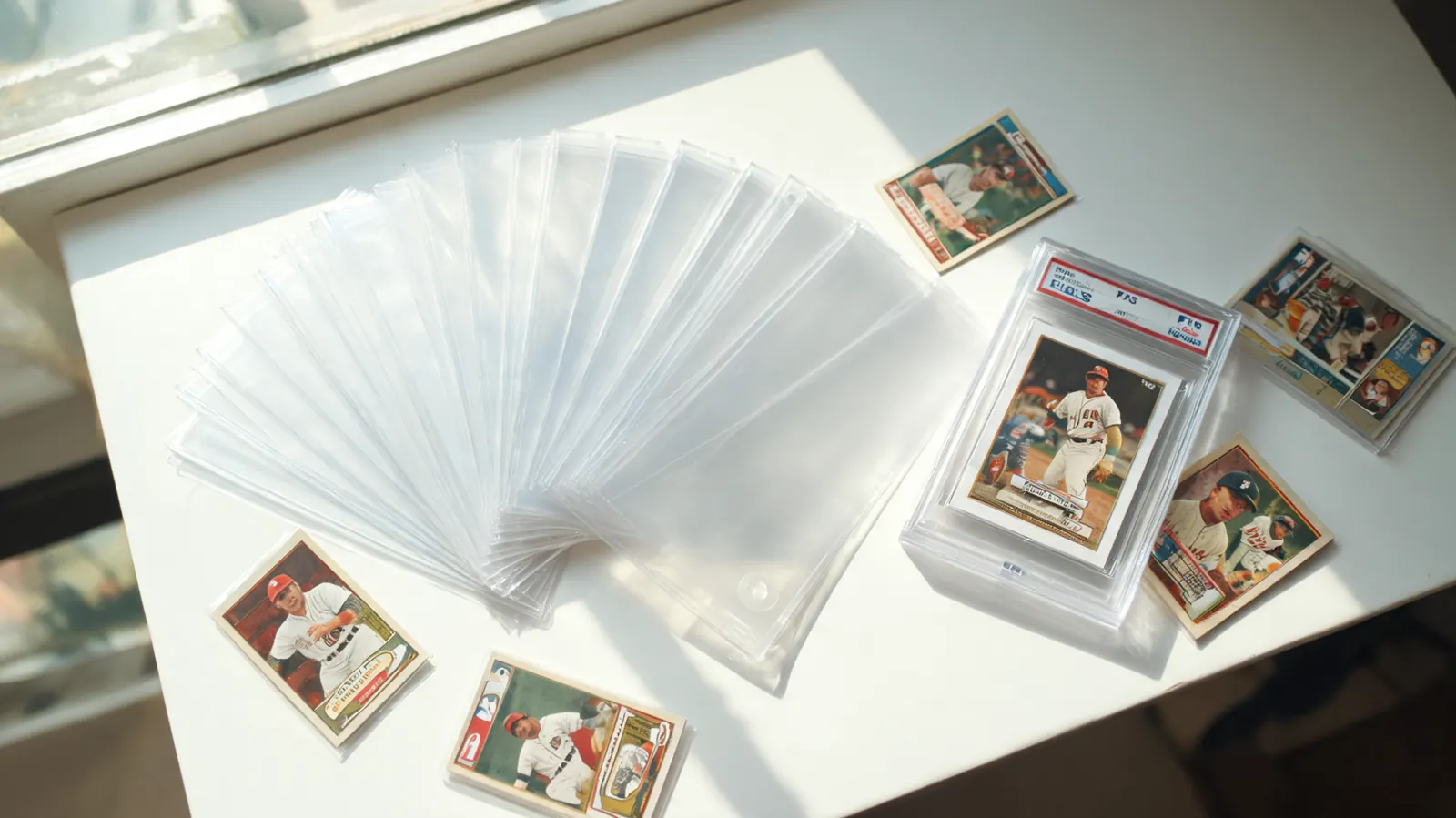
Let me tell you exactly where I went wrong before my second PSA submission. I had already sent 20 cards in my first batch and they all came back fine. So for the second batch I got lazy. I ordered what I thought were Card Savers from Amazon, went with a listing that was a few dollars cheaper and had 'Card Saver' right in the title. What showed up was a thin, floppy knockoff that bent more like a soft plastic page protector than a semi-rigid holder. Two of my cards shifted inside transit and came back with centering grades lower than they should have been. That mistake cost me more than the price of a legitimate 200-count box of Cardboard Gold Card Saver 1s.
So this is not the review that tells you Card Saver 1 is perfect. It is the review that tells you what actually goes wrong, who this product does and does not work for, and what to watch out for when you buy it. I have been using Card Savers for about four years across PSA, SGC, and CGC submissions. The Cardboard Gold version, ASIN B00THQ4O1Y, is the one PSA explicitly puts on their submission guidelines. It earns that recommendation. But there are real limitations worth knowing before you commit to a 200-count box.
The Quick Verdict
The right product for grading submissions, with real thickness limits and a counterfeit problem on Amazon you need to know about before you buy.
Amazon Check Today's Price →If you're prepping for a PSA submission, get the real Cardboard Gold version before you make the same mistake I did.
The Cardboard Gold Card Saver 1 200-count box is the holder PSA and SGC explicitly recommend. Verify you're buying from Cardboard Gold as the seller or a verified third party, not a knockoff using the brand name in the title.
Amazon Check Today's Price on Amazon →How I Have Actually Used These (and Where the Problems Showed Up)
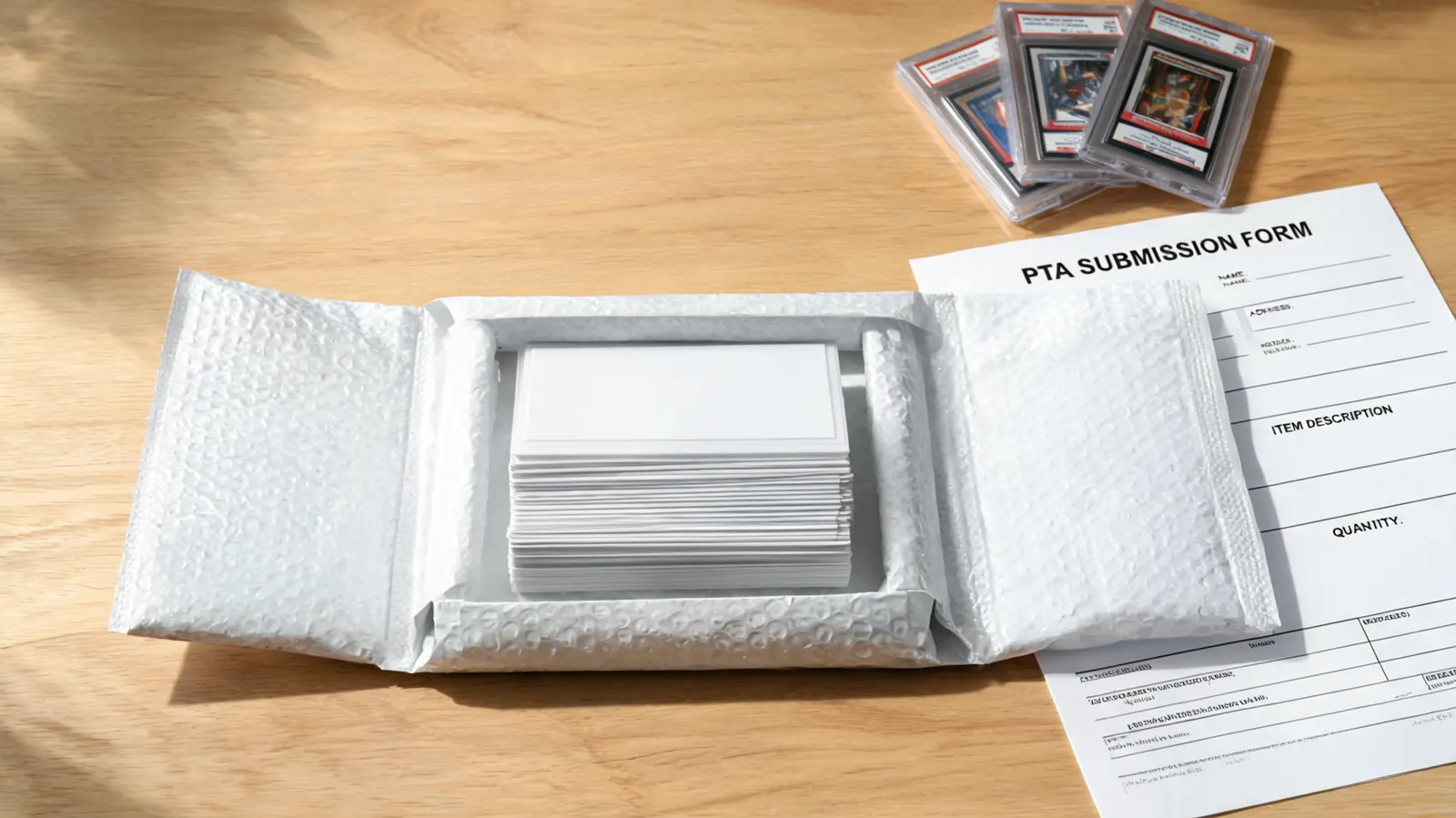
My main use case is grading prep. I collect vintage baseball cards from the 1960s and 1970s, mostly Topps sets, plus some modern Pokemon and a handful of MTG staples. When something in my collection is worth sending to PSA or SGC, I pull it out of storage, sleeve it in a fresh penny sleeve, slide it into a Card Saver 1, and put it in the submission pile. That is the workflow. It is simple and it works, with a couple of catches I will get to.
I also keep a small stash of Card Savers as temporary holders for cards I have just pulled and am deciding whether to submit. They are flexible enough to be easy to slip a card in and out without fighting it, which is the whole point of semi-rigid over hard plastic. The semi-rigidity means a PSA grader can remove your card from the holder without a letter opener and without touching the card surface. That matters for your grade.
Where I started noticing problems was with the vintage Topps cards. Standard modern trading cards are printed to roughly 35 points thick. Card Saver 1 is built for 35pt standard cards. Vintage Topps from the early 1970s often runs slightly heavier. Some of my 1973 Topps cards measure closer to 38 to 40 points depending on the print run and storage history. At that thickness, getting a sleeved card into a Card Saver 1 becomes a real fight. You can feel the holder resisting. If you force it, you risk nicking a corner. I learned to check point thickness with a digital caliper before sleeving, which added a step to my workflow I was not expecting.
The Thickness Problem Nobody Mentions in Amazon Reviews
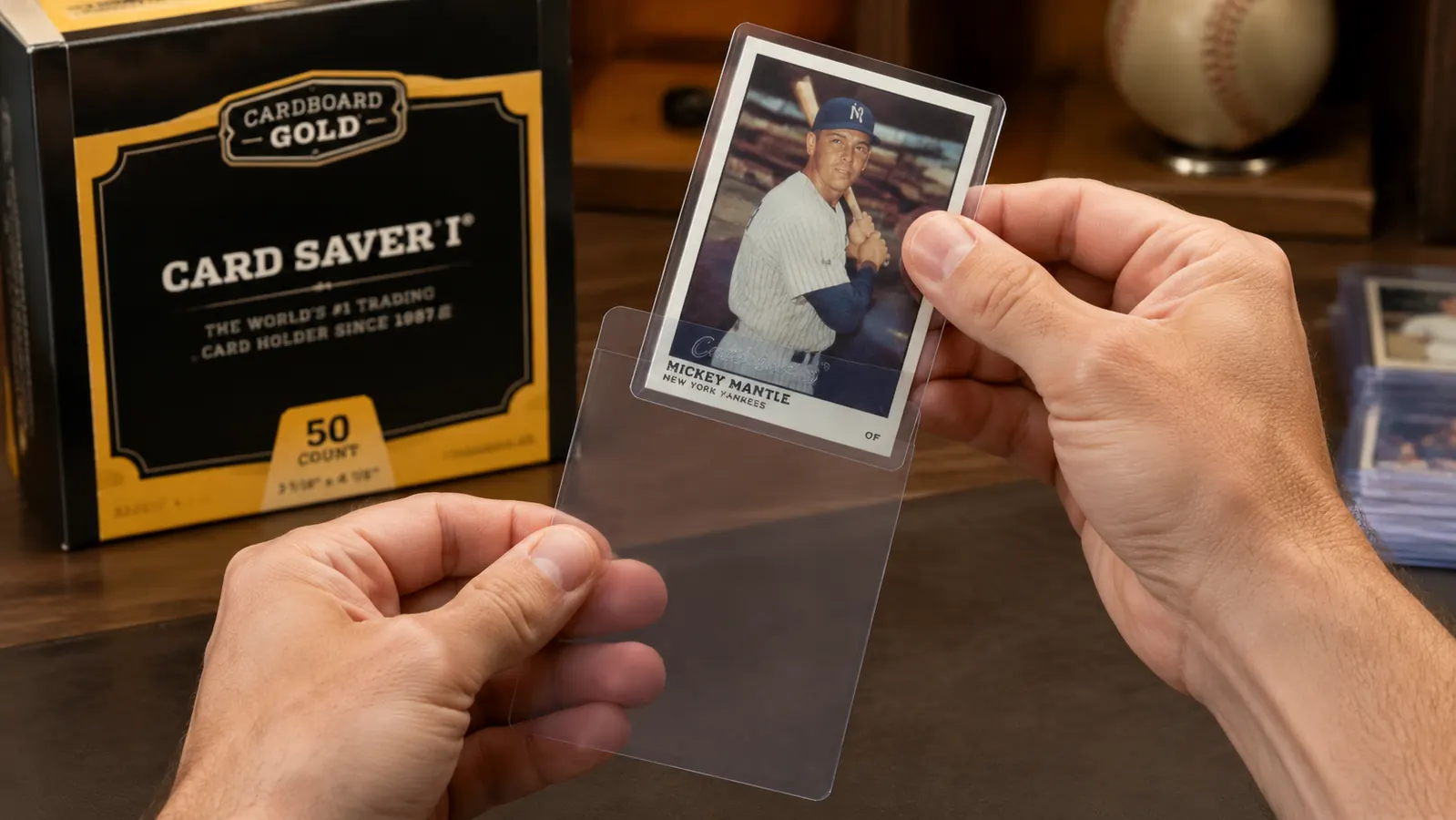
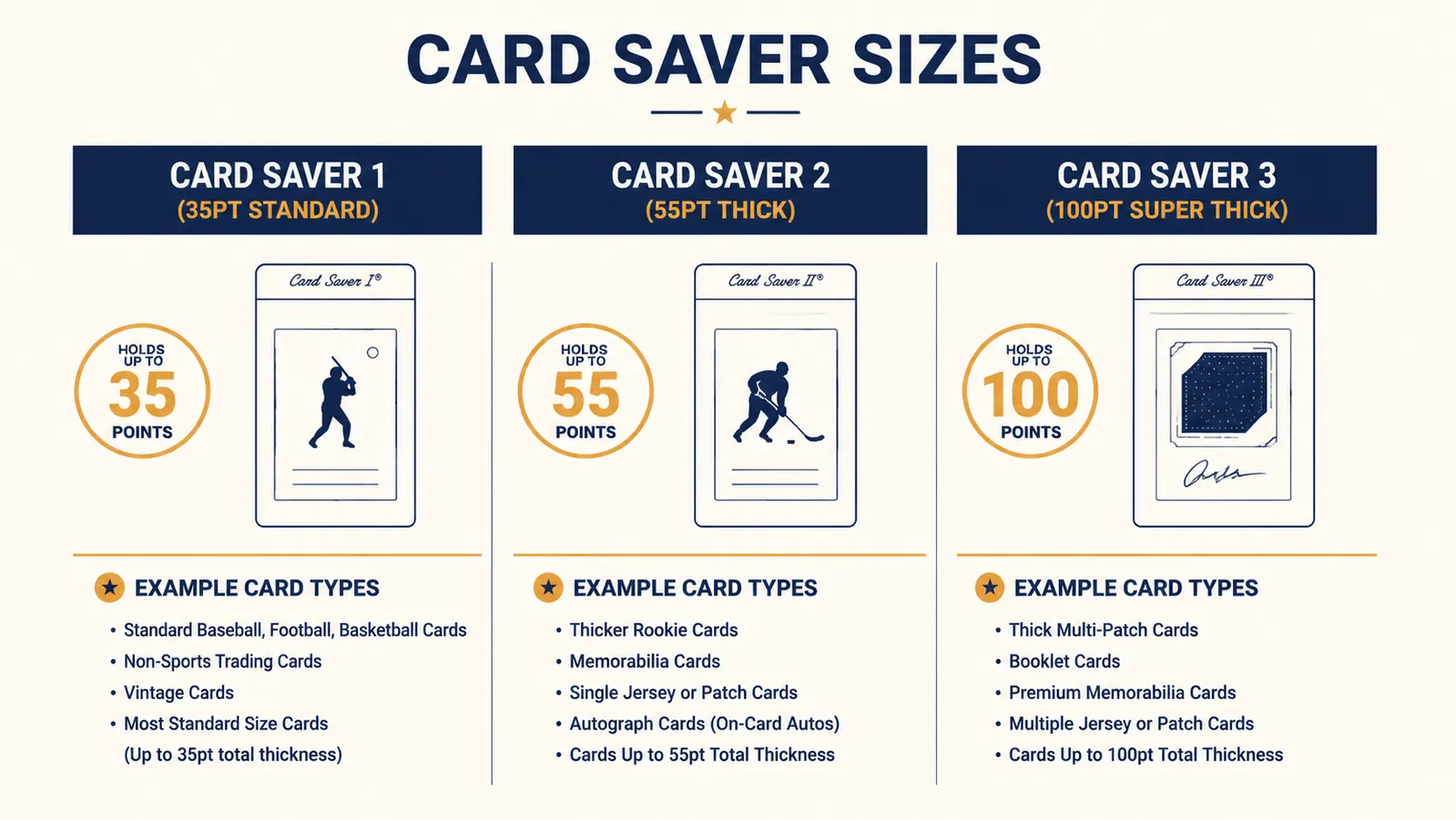
This is the most practical issue with Card Saver 1 and the one that trips up the most collectors ordering for the first time. Card Saver 1 is specifically sized for 35pt standard trading cards. That covers virtually all modern Pokemon, MTG, baseball, basketball, football, and TCG cards printed today. It covers most vintage cards too. But it does not cover everything.
Vintage Topps from the 1960s and early 1970s can run a few points heavier due to the thicker card stock Topps used in that era. Some 1969 and 1971 Topps base cards I have measured have come in at 38 to 42 points. Rookie cards from that period that have been stored in albums or scrapbooks sometimes come in even thicker due to residue on the back. A 40pt card with a penny sleeve added becomes roughly 44 points, and Card Saver 1 starts fighting you at that thickness. You can feel the holder grabbing the sleeve rather than sliding it in cleanly.
The fix is simple once you know about it. Cardboard Gold makes Card Saver 2 for cards in the 55pt range and Card Saver 3 for cards up to 100pt. If you are submitting any thick relics, jersey cards, or vintage stock that measures above 40 points, you want the right size from the start. Order the wrong one and you either damage a card forcing it in, or you end up with loose cards rattling around in an oversized holder, which is almost as bad for transit protection.
I wasted most of a 200-count box before I figured out that 1973 Topps needed Card Saver 2, not Card Saver 1. Check your point thickness first. A digital caliper costs eight dollars and saves you that kind of mistake.
The Amazon Counterfeit Trap
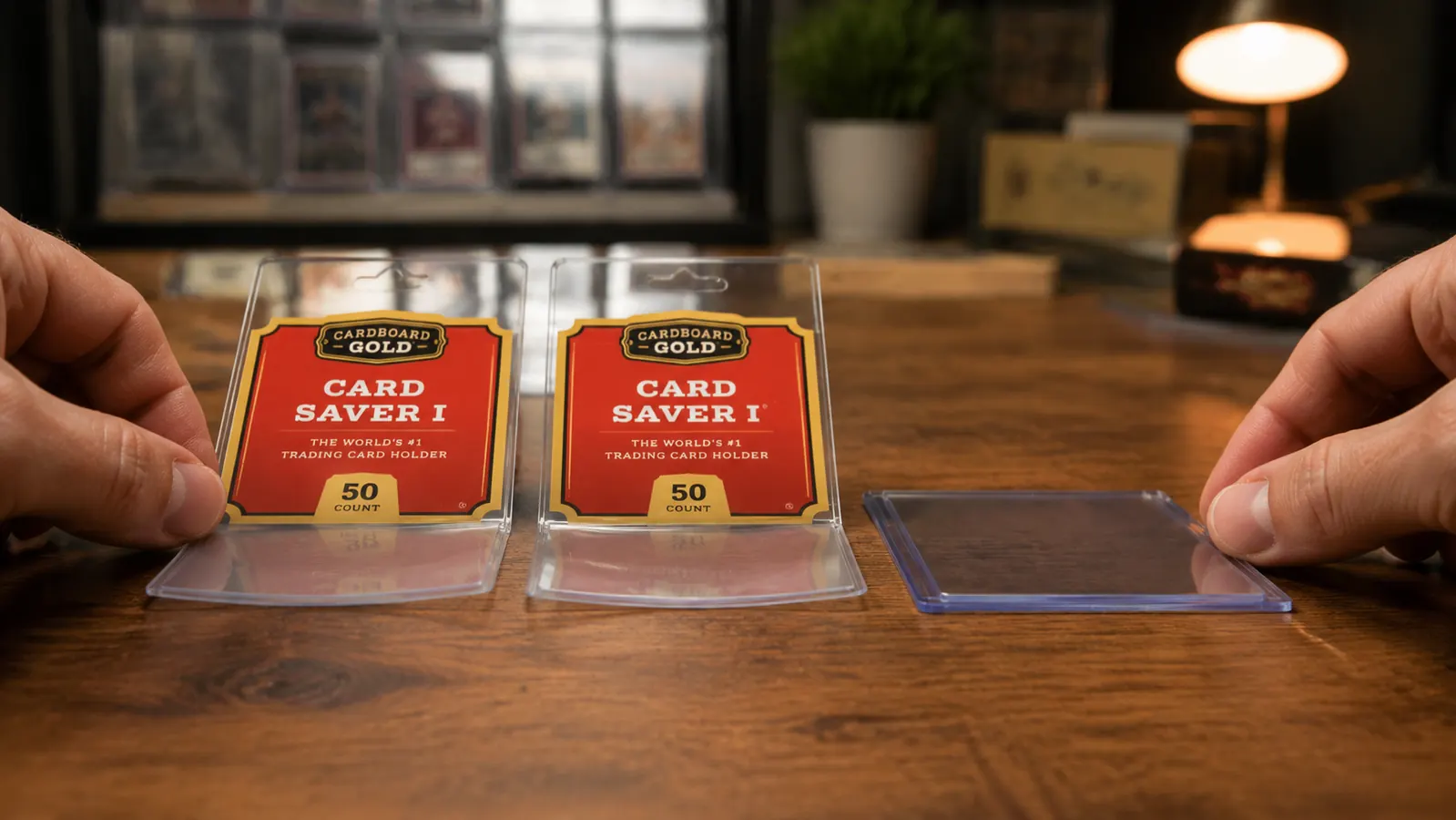
Card Saver is not a trademark that Amazon aggressively polices. Multiple third-party brands list holders using 'Card Saver' in their product title without being Cardboard Gold. Some of these are fine, decent-quality alternatives. Some are genuinely bad. The problem is you cannot always tell from the listing page.
The knockoffs I have received have fallen into two camps. The first camp is holders that are too thin and floppy, basically a glorified penny sleeve with a slightly stiffer body. These offer almost no edge protection and do not hold a card firmly enough during shipping. The second camp is holders that are too stiff, closer to a rigid top loader, which means a grader has to work to get the card out and risks touching the surface in the process. Neither is what PSA is asking for when they say to use Card Saver 1.
The fix: buy the specific Cardboard Gold listing. The ASIN B00THQ4O1Y is the 200-count box from Cardboard Gold directly. Before you click buy, check that the seller name listed under 'sold by' is Cardboard Gold or a fulfilled-by-Amazon listing where Cardboard Gold is listed as the brand in the product details. If it says something like 'GameSupply Depot' or 'BCX Trading' as the brand, you are not getting the genuine article. The price on the real box tends to run around $29 to $32 for 200 count. If you are seeing something significantly cheaper and the seller is an unfamiliar third party, treat it as a warning sign.
Bowing Under Storage Pressure
Here is something that does not show up in most reviews because most people do not use Card Savers for long-term storage. They are designed for transit and temp holding, not as a permanent home for your cards. If you stack a pile of Card Saver 1 holders and put any weight on top, over a few weeks they will start to bow. The semi-rigid body flexes under pressure from the stack above.
I found this out when I had a submission batch sitting in a box for about six weeks waiting for me to get the submission form organized. I had the Card Savers in a stacked group inside a BCW box with some other stuff on top. When I went to pull them out, most had a slight curve. The cards inside were fine because the curve was gradual, but the holders looked bad and a couple of the cards had shifted slightly inside the holder because the bow reduced the snug fit.
If you need to hold cards for more than a few days before submitting, stand the Card Savers upright in a row inside a storage box rather than stacking them flat. This is how card shops and dealers store them. Upright, they keep their shape almost indefinitely. Flat under weight, they curl.
Humidity and Yellowing: The Long-Term Storage Comparison
Card Saver 1 uses a semi-rigid PVC-adjacent plastic that is not as chemically inert as the hard acrylic used in magnetic one-touch holders or the thicker polypropylene used in premium rigid top loaders. Over time, in a humid environment, the plastic can start to cloud or yellow around the edges. I noticed this in a batch I had stored in a slightly damp basement for about eight months. The cards inside were completely fine, but the holders looked rough.
This is worth mentioning not because it ruins your cards, but because it is a signal that Card Saver 1 is not meant to be your long-term protective solution. Top loaders made from the thicker Ultra Pro polypropylene hold up better in humidity and resist yellowing longer. If you are in a humid climate, or your storage area is not temperature controlled, Card Savers are still fine for submissions but I would move cards back into top loaders or one-touch holders after they return from grading.
The yellowing also happens faster under UV exposure. A top loader or magnetic one-touch with UV protection will keep its optical clarity significantly longer than a Card Saver 1 stored near a window. Not a dealbreaker for submissions, but worth knowing if you had ideas about using Card Savers as a permanent display solution.
The Post-Grading Question: Do You Still Need These After Your Cards Come Back as Slabs?
Short answer: no. Once a card is encapsulated in a PSA, SGC, or CGC slab, it is fully protected. The slab is rigid, tamper-evident, and UV-blocking. Card Saver 1 holders serve no purpose after grading. What you use to protect and display graded cards is a different category entirely: acrylic slab stands, wall mounts, display cases, or simple team bags designed for slabs.
I have heard collectors who are new to grading ask whether they should re-holder their returned slabs in Card Savers for added protection. Please do not do this. A Card Saver 1 is not large enough to fit a graded slab anyway, and even if it were, you would just be adding a layer of PVC plastic around something that is already hermetically sealed. The Card Saver lifecycle ends the moment PSA hands your card back in a case. If you want display and storage solutions for slabs, that is a different purchase.
What I Liked
- PSA and SGC explicitly recommend these by name on their submission guidelines
- Semi-rigid flex makes it easy for graders to remove cards without touching surfaces
- 200-count box gives you enough for a serious submission batch without reordering
- Fits standard 35pt cards perfectly with a penny sleeve added
- Affordable per-unit cost compared to rigid alternatives
- Easy to slide a card in and out without tools
Where It Falls Short
- Sized for 35pt only; vintage Topps and thick modern relics require Card Saver 2 or 3
- Amazon counterfeit risk is real; generic brands use 'Card Saver' in titles without authorization
- Bow and curve under stacking pressure if stored flat with weight on top
- Yellow faster than rigid polypropylene top loaders in humid or UV-exposed storage
- Not suitable for long-term storage; transit and temp holding only
- No UV coating on the holder material itself
Who This Is For
Card Saver 1 is for anyone actively submitting cards to PSA, SGC, or CGC. If you send five or more cards per year to a grading service, you need a box of these. There is no practical substitute that meets the grading services' submission requirements while still being flexible enough for graders to handle safely. The 200-count box is also the right quantity for most collectors. Even if you do one submission per year with 25 cards, you will use up your box within three or four years and they store fine in the original packaging between uses.
Card Saver 1 also works well as a temporary holder while you are deciding which cards in a new pull are worth submitting. It is better than a loose penny sleeve and more flexible than a rigid top loader for cards you are still evaluating. Use it for the submission pipeline and nothing else.
Who Should Skip It
If you are not planning to grade anything, you probably do not need Card Saver 1 at all. For bulk card protection and long-term storage, rigid Ultra Pro top loaders or penny sleeves in a BCW box are a better choice. They hold their shape, last longer in varied conditions, and cost less per unit at scale. Card Saver 1 is a specialized tool for a specific workflow. If that workflow is not yours, spend your money on top loaders instead.
If you collect thick cards only, relic cards, or jersey cards that run above 40 points, skip Card Saver 1 and go straight to Card Saver 2. Forcing a thick card into Card Saver 1 can ding corners or damage edges in ways that will cost you a grade point you cannot get back. Check your card thickness before you order anything.
And if you are shopping on Amazon and price is the primary filter, be careful. The cheapest option with 'Card Saver' in the title may not be the Cardboard Gold product that PSA approves. Saving four dollars on a knockoff box is not worth a rejected submission or a grade you did not earn.
Get the actual Cardboard Gold box before your next submission window opens.
The Cardboard Gold Card Saver 1 200-count is the semi-rigid holder graders reach for by name. Check today's price and make sure you're buying the correct seller before you add to cart.
Amazon Check Today's Price on Amazon →