
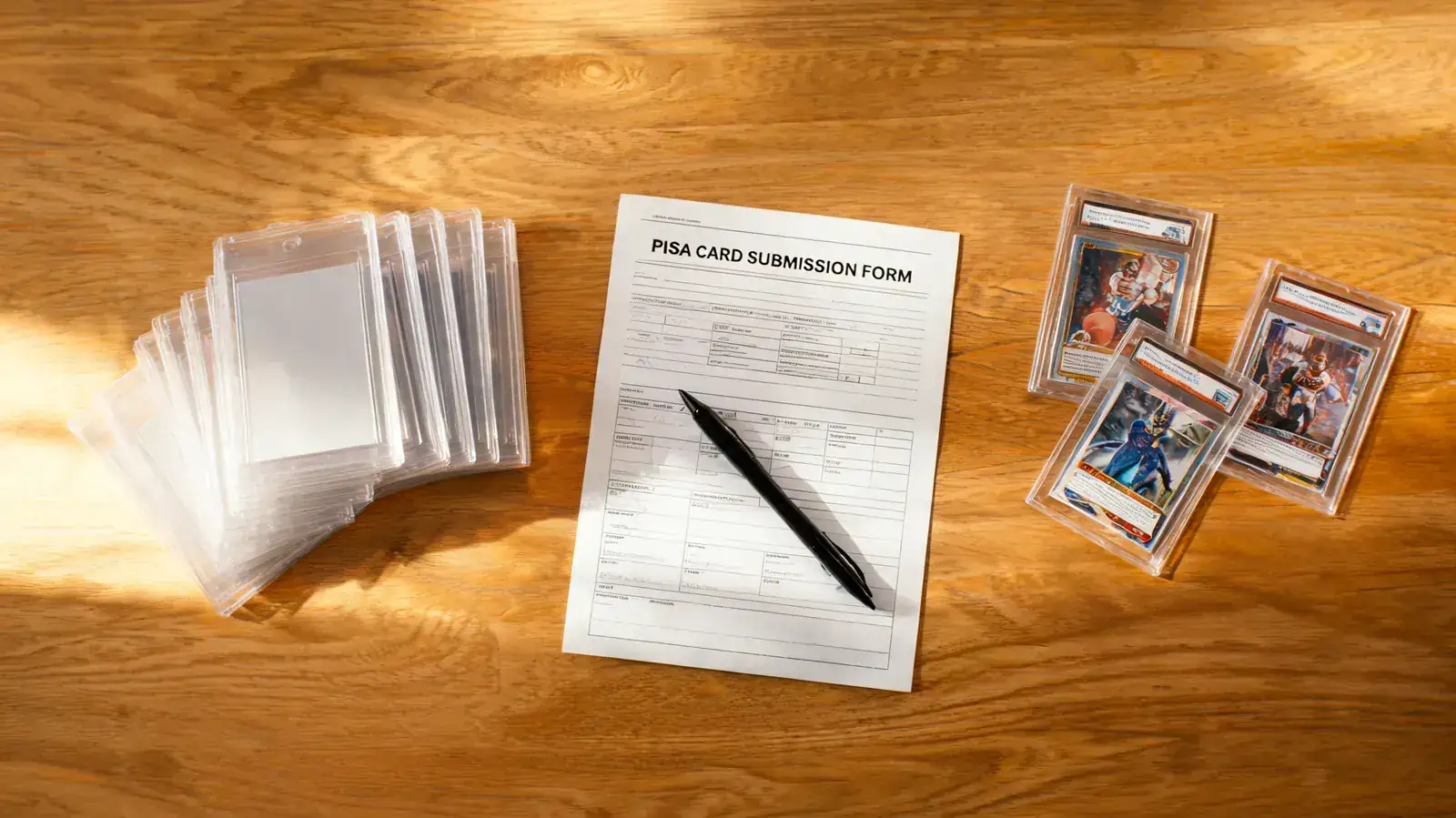
The first time I sent cards back from PSA I thought I had packaged them perfectly. Penny sleeves, top loaders, bubble mailers, the works. Then I read the return note tucked inside the box. PSA does not accept rigid top loaders for standard submissions. They want semi-rigid holders, specifically the kind that let a grader slide the card out without fighting with a stick or scratching the surface. My order came back unprocessed. I paid return shipping, re-packed everything correctly, and lost three weeks off my estimated turnaround. That mistake cost me real money, and it is the kind of thing nobody warns you about until it happens.
Since then I have submitted well over two hundred cards to PSA, SGC, and CGC. Every single one went in using Cardboard Gold Card Saver 1 semi-rigid holders. I order the 200-count pack because my submissions come in 20-card batches and I always want enough on hand without scrambling before a deadline. This is my honest long-term take after years of using these things, including what goes wrong when you buy knockoffs, how to slide a card in without killing a corner, and what to do with the holders once your graded slab comes back.
The Quick Verdict
The submission standard for a reason. Semi-rigid, grader-friendly, and built to protect corners during shipping. The 200-count pack is the right volume for any serious submitter.
Amazon Check Today's Price →If you are planning a PSA or SGC submission, this is the holder they actually want to see.
Cardboard Gold Card Saver 1 in the 200-count pack is the most efficient quantity for regular submitters. Check current pricing before your next submission window.
Amazon Check Today's Price on Amazon →How I Have Used Card Saver 1 Over the Years
My first intentional use of Card Saver 1 holders was after the top-loader rejection I mentioned above. A collector in my local card group explained what PSA actually wants, pointed me to the Cardboard Gold 200-count on Amazon, and told me to order nothing else. That was about three years ago. In that time I have used these for PSA bulk economy submissions, SGC standard submissions, and one CGC batch for some older baseball and Pokemon cards.
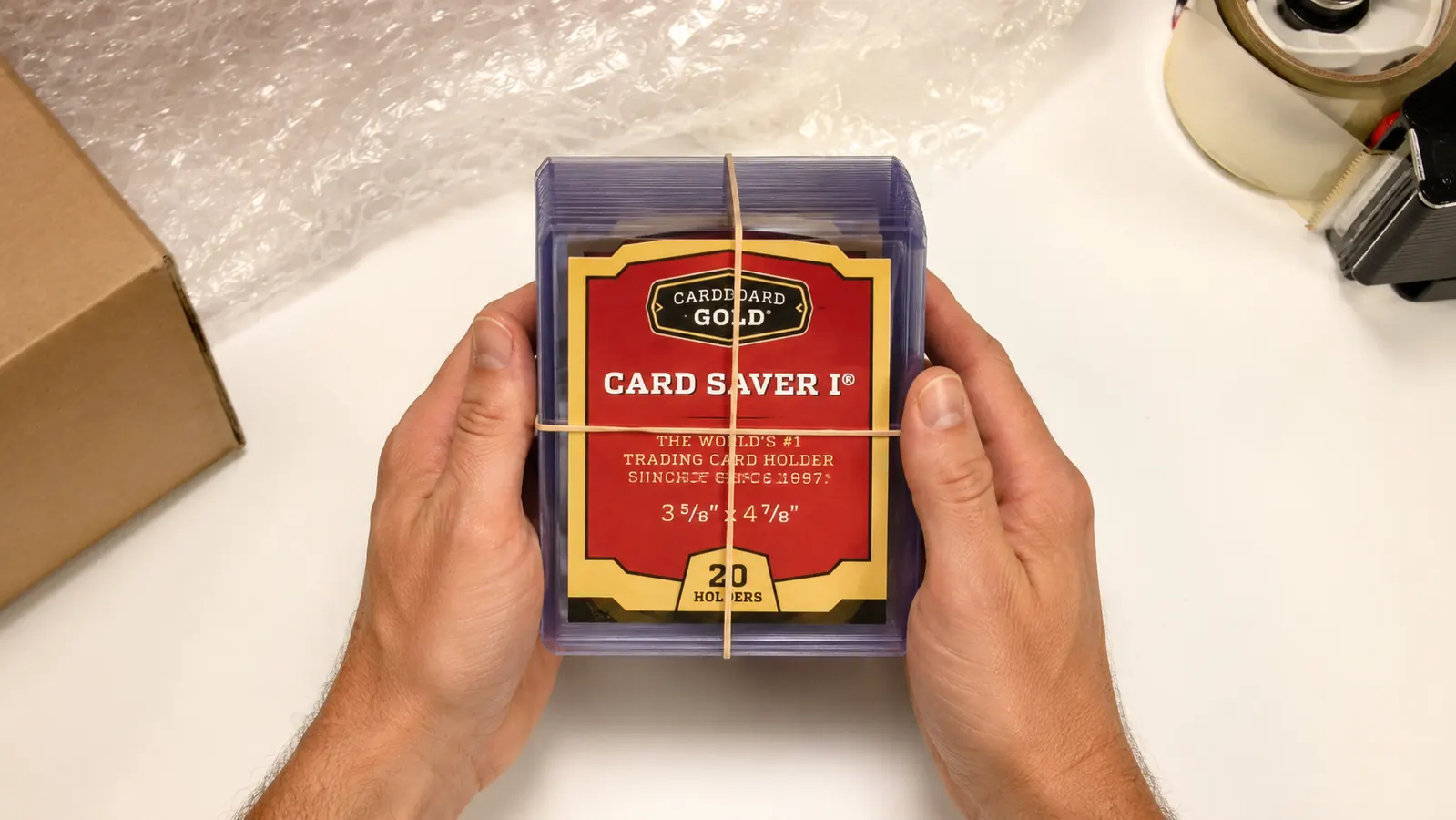
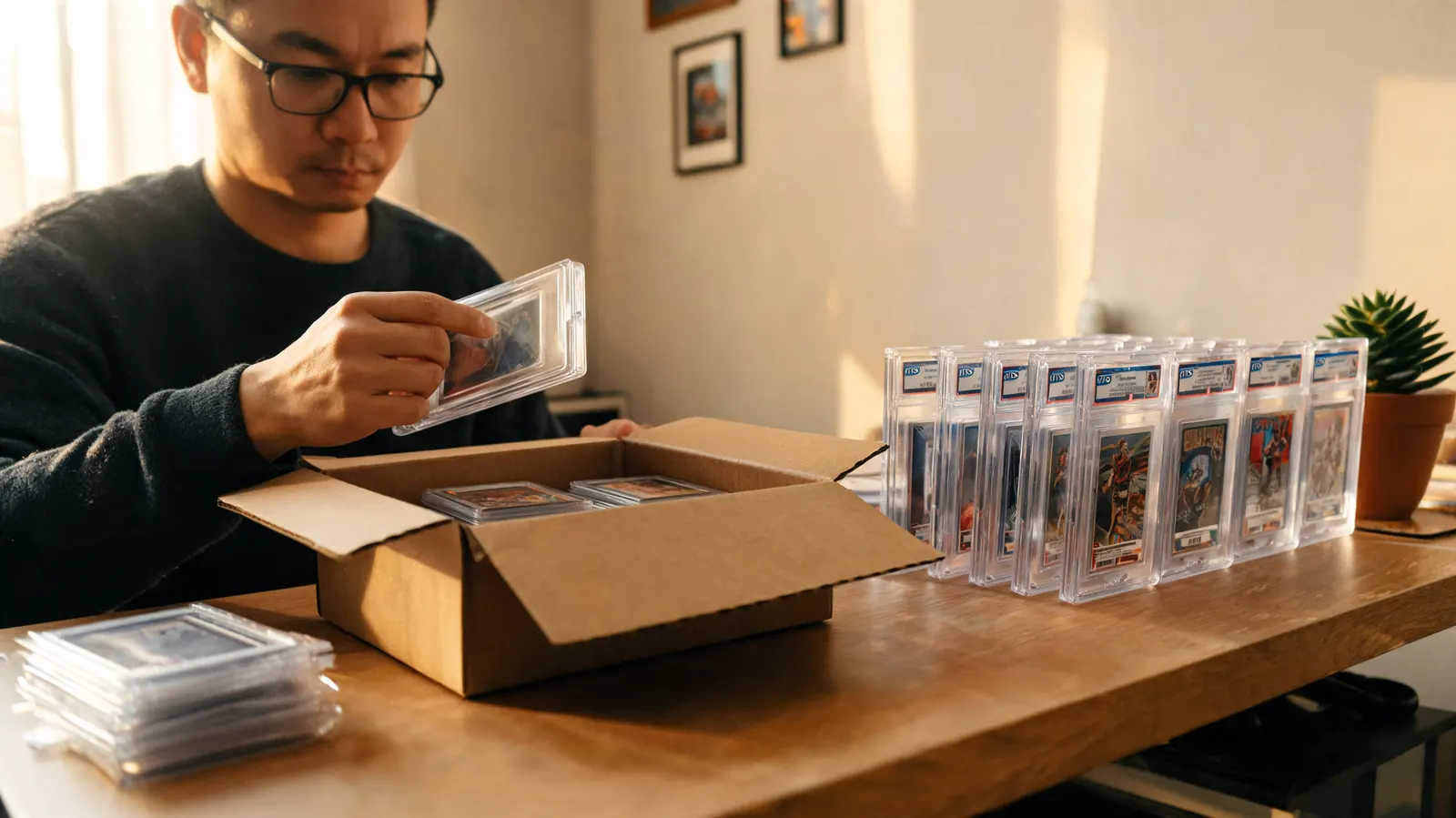
My workflow is consistent. Every card going to a grader gets a fresh penny sleeve first, then slides into a Card Saver 1. I bundle them in groups of 20 with a rubber band, consistent with how submission services organize their batches. The 200-count pack handles 10 full batches, which covers most of a heavy quarter if you are a regular submitter. I have burned through probably four or five of these packs since I started, and the consistency across every order has been solid.
One thing that took me a few submissions to internalize is that the Card Saver 1 is not a display holder. It is a transit and storage holder specifically designed for grading workflows. The clarity is decent but not museum-quality. You are not framing these. You are protecting the card during a journey that involves a padded mailer, a postal sort, a reception desk, and a grader's workstation. For that specific job, nothing does it better.
Why Graders Actually Prefer Semi-Rigid Holders
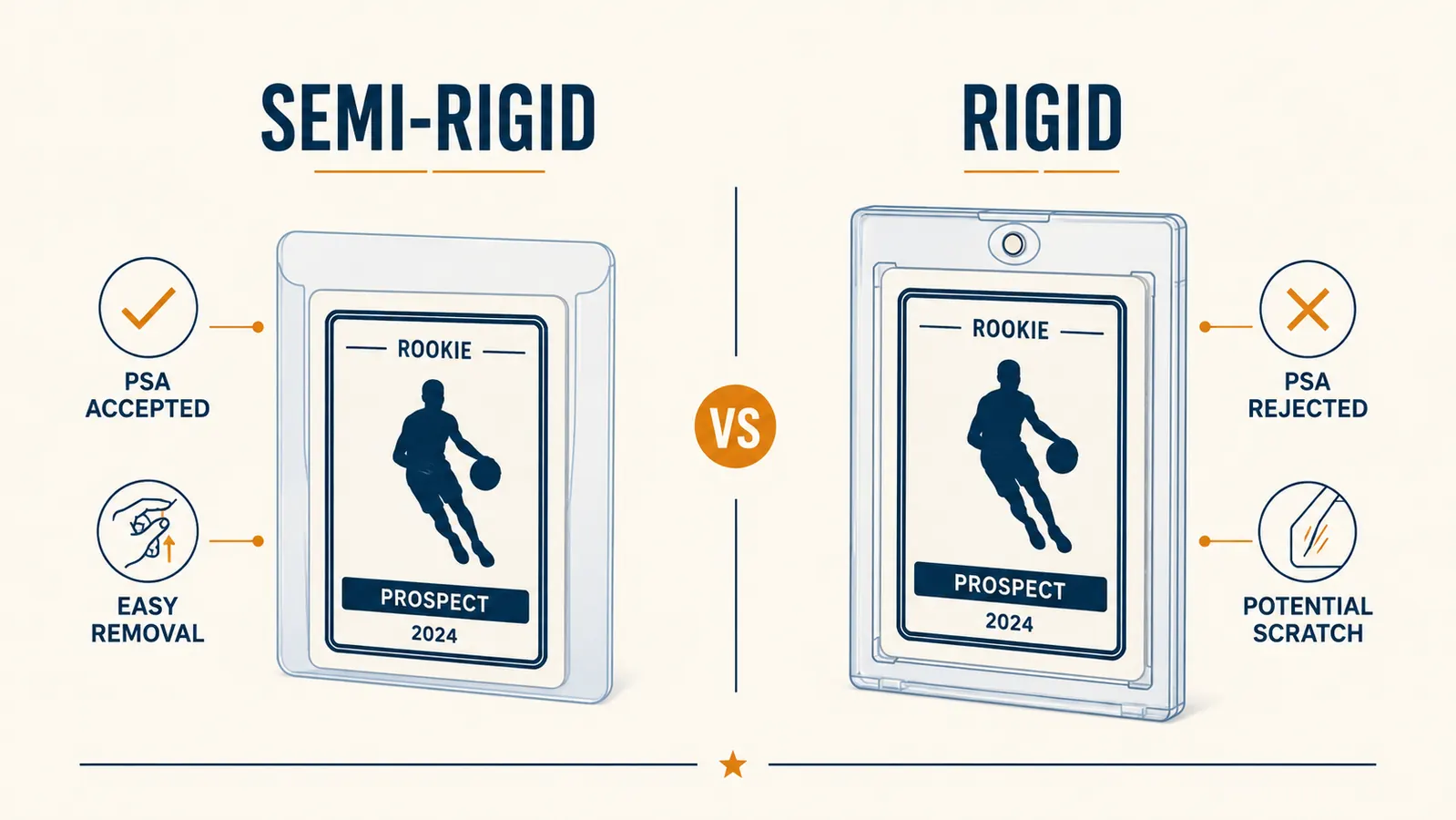
The core reason PSA and SGC require semi-rigid holders instead of hard plastic top loaders comes down to card removal speed and surface safety. A grader processes hundreds of cards per shift. With a rigid top loader, getting the card out requires either a soft-stick tool or significant pressure against the card's surface. Both introduce risk. A stick can nick a corner or leave a mark. Pressure from the holder's walls can create a fine scratch on the card face if the penny sleeve shifts slightly.
A Card Saver 1 is semi-rigid, meaning it holds its shape well enough to protect corners during shipping but flexes just enough that a grader can press the open end and pop the card out cleanly in about two seconds. No tool required. The card comes out face-forward, edges untouched, exactly how it went in. For a grader running an eight-hour shift through a pile of 400 submissions, that efficiency matters. For you as a submitter, it means your card's grade is evaluated on the card itself, not on handling marks introduced during intake.
The flex also matters for corners specifically. A fully rigid holder can act as a lever if the card shifts in transit. A semi-rigid holder absorbs minor impacts without transferring them directly to the card. Corner damage is the most common reason cards grade lower than expected, and submission packaging is one of the few corners-at-risk moments you can actually control.
Corner damage is the most common reason cards grade lower than expected, and submission packaging is one of the few moments you can actually control.
What Happens When You Submit in the Wrong Holder
I already mentioned my own top-loader rejection. But the problems go beyond just using a rigid holder. I have talked to collectors who sent cards in team bags, penny sleeves alone, and even small ziplock bags. The grading companies have intake guidelines for a reason. If your submission does not conform, the most likely outcome is a return at your shipping cost. PSA and SGC are not going to repackage your cards for you. They will box them back up as-is and send them home.
The financial hit is real. Return shipping on a 20-card submission can run you $15 to $25 depending on the carrier and weight. Add the week or two you lost waiting for the return, the time you spend repacking, and the delay on getting your grades back. A pack of 200 Card Saver 1 holders costs less than thirty dollars. There is no version of this math where using the wrong holder saves you money.
There is also a subtler risk with incorrect holders that does not involve a rejection. If a grading company accepts your submission but struggles to extract the card from a holder that is too tight or too rigid, handling marks can appear that were not there when you sent it. Blame is hard to assign after the fact, and most grading services make it clear that submission packaging is your responsibility. Using Card Saver 1 removes that variable entirely.
How to Slide a Card into a Card Saver Without Damaging the Corner
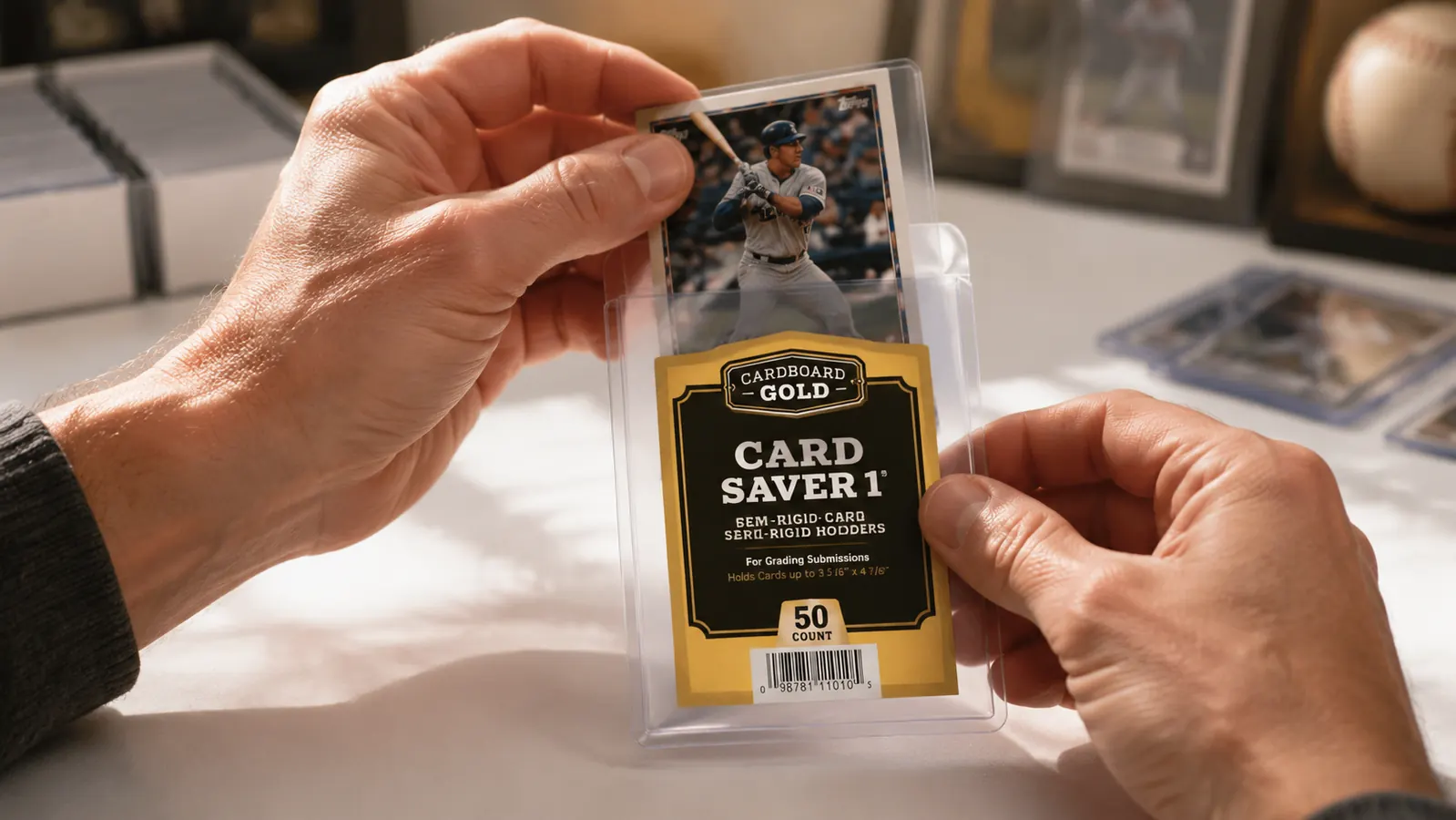
This is the step most new submitters skip over, and it is where corner dings happen on your end, not at the grader's. A Card Saver 1 has a small opening at the top. The interior channel is just wide enough to accept a standard trading card inside a penny sleeve. If you tilt the card at any angle while inserting it, the corner hits the side wall of the holder and bends.
The right technique is straight-down entry, not angled. Hold the Card Saver 1 in one hand with the open end up. Hold the sleeved card in the other hand by the long edges, never by the corners. Line the card up exactly parallel to the holder opening, then slide it down with even pressure on both long sides simultaneously. It should drop in with a soft resistance, not a fight. If you are forcing it, the card is probably catching a wall. Stop, realign, and go again. Once you have done this fifty times it becomes automatic, but the first few require deliberate attention.
One note on thick cards: the standard Card Saver 1 is sized for regular trading cards, typically in the 20pt to 35pt range. Thick Pokemon cards like ex or VMAX cards, or thick vintage cards that have been stored with warping, may fit too snugly. Test the fit before you commit a high-value card to a holder. If it requires force to enter, that same force will be required to exit, and that is when damage happens.
The 200-Count Pack and Why That Volume Is Right
Cardboard Gold sells Card Saver 1 in a few quantities. The 200-count is the one I always order and the one I recommend to anyone who submits cards more than once or twice a year. Here is the practical math: PSA and most submission services organize cards in batches of 20. Ten batches fill a 200-count pack. That is a full quarter of submissions for a moderately active collector without having to reorder mid-cycle.
Smaller packs are available but the per-holder cost goes up meaningfully. If you only submit cards occasionally, a smaller quantity might make sense, but the 200-count is the one that shows up on every grading-prep checklist in collector communities for a reason. It aligns with real submission volumes and it costs less per unit than the smaller options.
I keep mine in a shallow cardboard box on the shelf next to my grading supplies. They stack flat, take up minimal space, and are ready to grab the night before a submission deadline. Having 200 on hand also means I am never tempted to reuse a holder that has taken damage in shipping, which leads to the next section.
Cardboard Gold vs Knockoff Brands on Amazon
This is the section I wish someone had written for me earlier. Cardboard Gold is the original Card Saver 1 manufacturer. Their holders are what grading companies tested and approved. There are cheaper semi-rigid holders on Amazon that look nearly identical in the listing photos but are not the same product. I have tried two of them.
The differences show up in two places: plastic consistency and opening width. The knockoff packs I tested had visible variation within the same pack. Some holders were stiffer than others. A few had slightly tighter openings that required more force to insert a card. One had a burr on the interior wall of the channel that I only noticed after I pulled the card out and checked it under a light. That kind of defect in a 50-cent holder is catastrophic when you are protecting a card worth several hundred dollars.
Cardboard Gold's manufacturing is consistent. Every holder in every pack I have ordered has behaved the same way. The plastic has the same flex, the same clarity, and the same smooth interior. When you are submitting 20 cards at a time and any one of them could grade an 8 instead of a 9 based on a single surface interaction, you do not want to introduce variability into that equation to save a few cents per holder.
What I Liked
- PSA, SGC, and CGC all accept and expect these holders for standard submissions
- Semi-rigid flex lets graders remove cards quickly without tools or surface risk
- 200-count pack aligns with standard 20-card submission batch sizing
- Consistent plastic quality across packs, no burrs or tight spots on interior walls
- Corners stay protected in padded mailers without the lever-risk of a fully rigid holder
- Works with penny-sleeved standard trading cards across baseball, Pokemon, and MTG
Where It Falls Short
- Not sized for thick cards above roughly 35pt, which means some modern Pokemon cards are a squeeze
- Clarity is functional but not display-quality, these are transit holders not showcase holders
- Cheaper knockoffs on Amazon look almost identical in listing photos, easy to order the wrong thing
- No resealing mechanism once the card is inside, so upright storage requires care to avoid the card sliding out
What to Do With Card Savers After Your Grades Come Back
When PSA, SGC, or CGC returns your submission, the cards come back in their graded slabs, not in your Card Saver 1 holders. The graders keep the holders, or they discard them, depending on the service. You do not get them back. So every submission cycle you are consuming holders from your stock, which is why the 200-count makes sense for regular submitters.
That said, there are good uses for Card Saver 1 holders on cards that are not going to a grader at all. I use them as temporary storage for raw cards that I have not decided whether to submit or sell. A card sitting in a Card Saver 1 on a shelf is protected from humidity fluctuations and light handling the same way it would be in transit. It is not a long-term display solution, but for cards in a holding pattern it is better than a top loader because you can access the card quickly without the risk of a hard-plastic scratch.
I also use them when I transport cards to local card shows or group breaks. The semi-rigid protection is enough for a padded card binder bag, and the quick-access removal is useful when you are pulling cards out to show buyers. Just be careful about upright storage in a bag because the open top means a card can slide out if the holder tips forward.
Who This Is For
Card Saver 1 holders are for anyone who submits cards to a grading service, is planning to start submitting, or wants a better temporary storage option for raw cards they are evaluating. If you are sending even a single submission to PSA, SGC, or CGC, you need these. There is no workaround. The 200-count is the right quantity for anyone who submits more than one batch per year. Casual collectors who only plan a one-time submission can get by with a smaller pack, but the per-unit cost difference makes the 200-count worth considering even then.
Who Should Skip It
If you have no interest in grading and just want display protection for your raw collection, a top loader or magnetic one-touch holder is more appropriate. Card Saver 1 holders are transit and process holders, not display cases. They do not have UV protection, they are not intended for long-term permanent storage of your best cards, and they will not look good mounted on a wall. For collectors who want to protect cards for display rather than submission, a different holder category is the right call.
Your cards spend weeks in a padded mailer and on a grader's workstation. The holder is the only protection you control.
Cardboard Gold Card Saver 1 in the 200-count is the holder PSA, SGC, and CGC expect to see. Order before your next submission window closes.
Amazon Check Today's Price on Amazon →