
The first time I submitted cards to PSA, I packed everything in top loaders. I had seen other collectors do it in YouTube videos. I figured rigid equals safe, so rigid must be correct. PSA sent my entire order back unprocessed and flagged my account for resubmission. That was 34 cards, two weeks of waiting, and a very avoidable mistake.
The short answer to "Card Saver 1 vs top loader for PSA submission" is not even a competition. PSA's published submission guidelines explicitly state that cards must arrive in semi-rigid holders. Top loaders, magnetic one-touches, and screw-down cases are all listed as unacceptable submission holders. If you send cards in any of those, the submission will be rejected. Card Saver 1, made by Cardboard Gold, is the semi-rigid holder that PSA specifies by name in their own documentation.
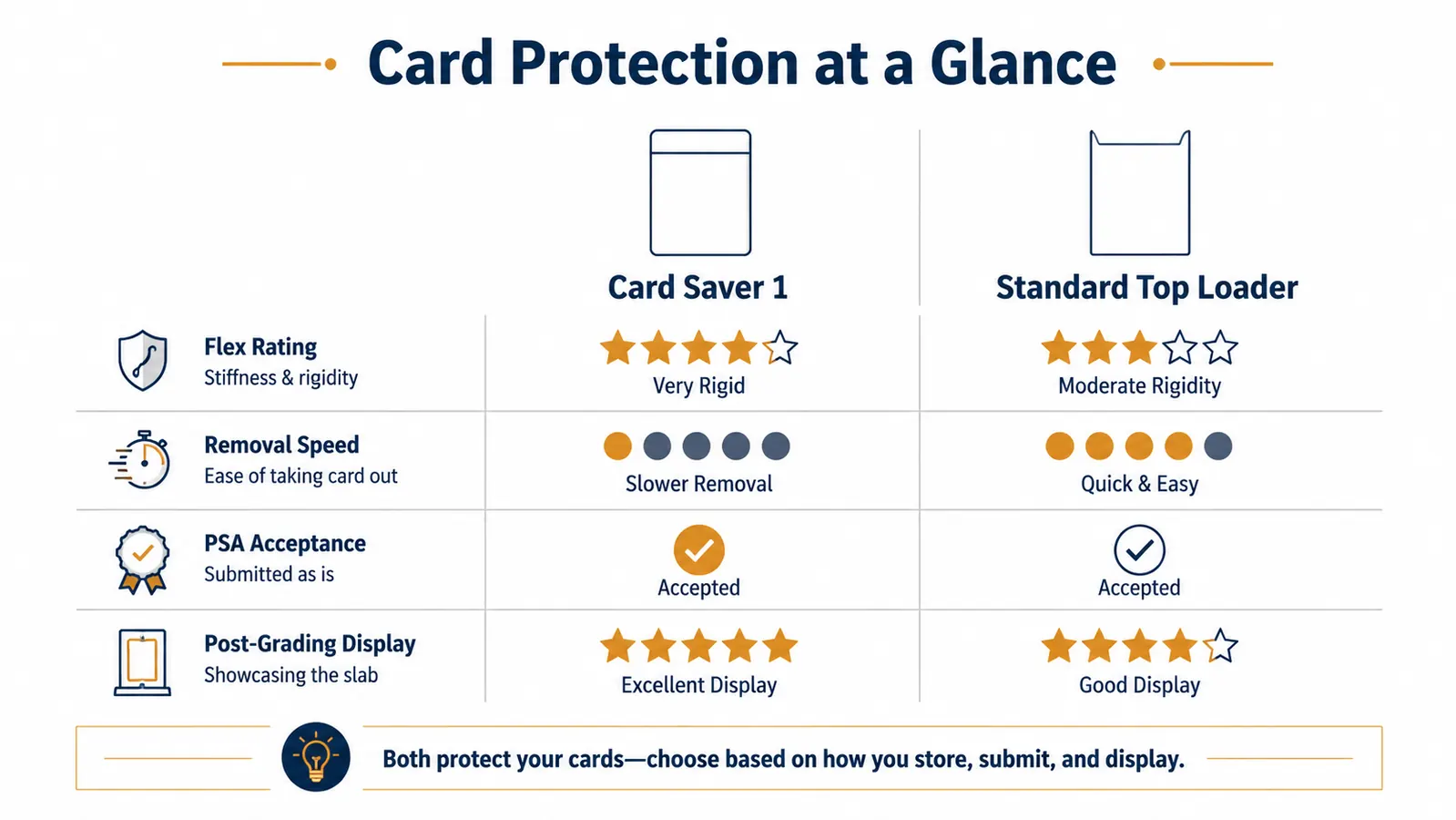
| Feature | Card Saver 1 (Cardboard Gold) | Standard Top Loader (e.g. Ultra Pro) |
|---|---|---|
| PSA Submission Accepted | Yes, explicitly approved | No, explicitly rejected |
| SGC Submission Accepted | Yes | No |
| CGC Submission Accepted | Yes | No |
| Holder Type | Semi-rigid (flexible walls) | Rigid (hard plastic) |
| Grader Removal Speed | Fast, one squeeze and slide | Slow, requires tool or force |
| Card Protection in Transit | Good (inside bubble mailer + box) | Good on its own, but rejected anyway |
| Post-Grading Display Use | No, too flexible for display | Yes, ideal for display and storage |
| Shipping Protection Layer | Not designed for standalone shipping | Works as display + protection |
| Price per Holder | About 15 cents each (200ct pack) | About 22 cents each (25ct pack) |
| UV Protection | None | Some models include UV coating |
What PSA's Actual Submission Rules Say
PSA's submission guidelines are publicly available on their site and they are not ambiguous. Cards submitted to PSA must be placed in semi-rigid card holders. The guidelines name Card Saver 1 as an accepted format. They also explicitly list what is not accepted: top loaders, penny sleeves alone, magnetic holders, screw-down holders, and any other rigid case that cannot be flexed. The reason given is workflow. PSA and SGC each process thousands of cards every single day. Graders need to remove each card from its holder quickly, inspect it, and move on. A semi-rigid holder can be squeezed at the sides so the top opens and the card slides out in under two seconds. A rigid top loader requires a knock tool or forced pressure that slows everything down and, more importantly, risks touching or dinging the card surface during removal.
This is not a bureaucratic rule for the sake of rules. It reflects how a high-volume grading operation actually works. When you understand that graders are not sitting at a quiet desk leisurely examining one card at a time, you understand why the holder format matters. A holder that shaves three seconds off each removal compounds across thousands of cards into a real operational difference. Card Saver 1 was designed specifically for this workflow, which is why it became the industry standard.
Where Card Saver 1 Wins: The Semi-Rigid Difference
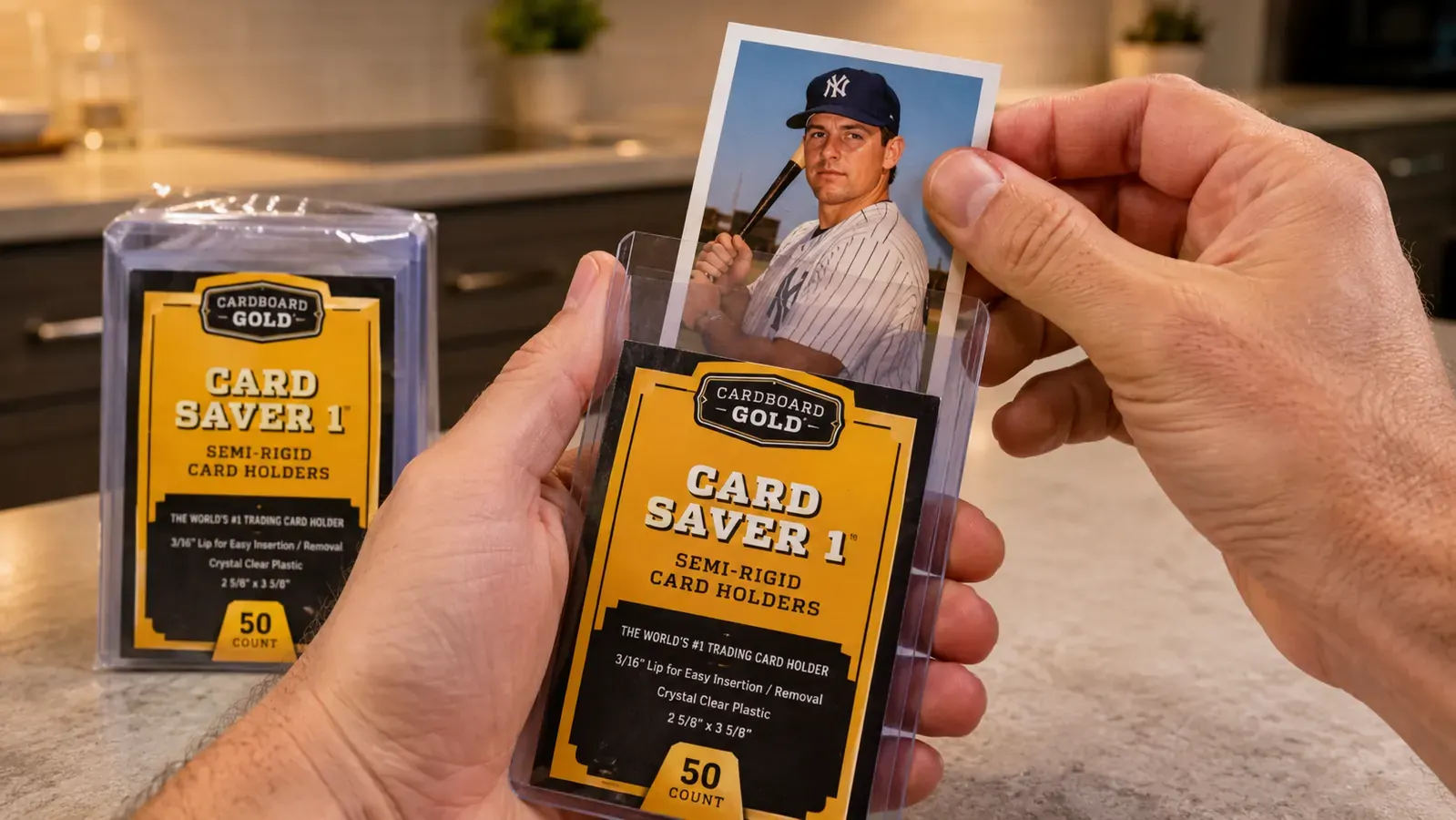
The defining physical characteristic of Card Saver 1 is that the walls flex. Squeeze the sides and the top opening widens. The card can then be lifted out by its edge without any tool and without anyone's fingers contacting the card face. This is the semi-rigid behavior that PSA's workflow depends on. A standard top loader made from rigid PVC cannot do this. The walls are fixed. The only way to get a card out of a top loader without a push-out tool is to tilt it and let gravity work, which means the card slides out against the inner walls of the holder and picks up micro-abrasions on the way. Graders are not going to spend time with a push tool on every card. They need to process volume.
Card Saver 1 holders from Cardboard Gold also come in two variants: Card Saver 1 (standard size for most trading cards) and Card Saver 2 (slightly wider, for thicker vintage cards). For Pokemon, MTG, baseball, football, and basketball standard-size cards, Card Saver 1 is the correct choice. The fit is snug enough that the card does not rattle or shift during shipping, but loose enough that it slides in and out without force. I have put hundreds of cards through them and never had a card corner catch on the holder edge.
PSA names Card Saver 1 by name in their submission guidelines. This is not a preference. It is the spec. Every other holder type, including the rigid top loaders most new collectors default to, is on their rejection list.
Where Top Loaders Win: After the Slab Comes Back
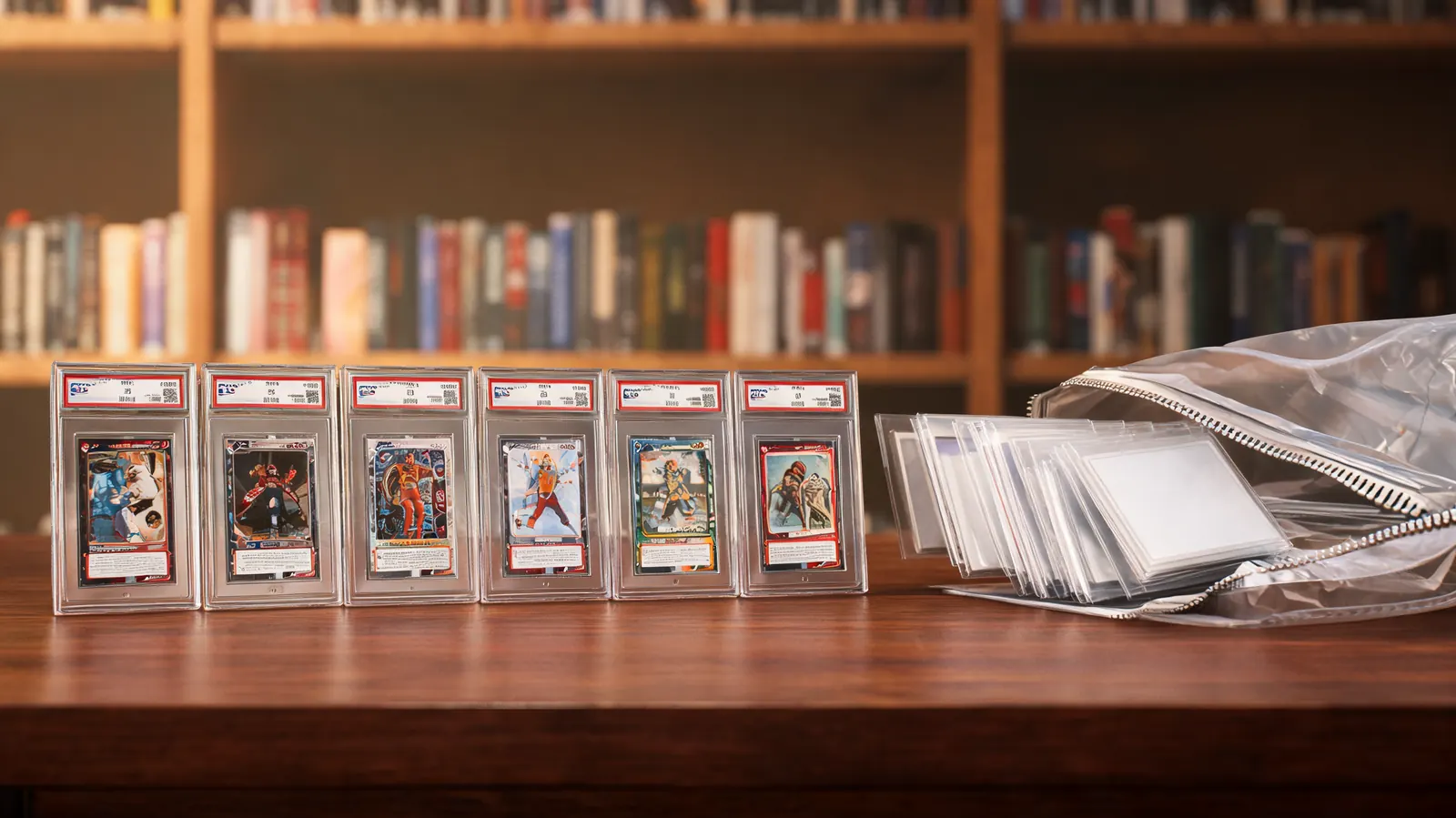
I want to be fair here because top loaders are genuinely excellent products for a different job. Once your graded card comes back in a PSA slab, a BGS case, or an SGC holder, the slab itself is the protection layer. But for the cards in your collection that are not going to grading right now, top loaders are the right answer. They are rigid, they protect corners and surfaces from contact, they are stackable, and they are cheap enough to use on every card above a few dollars in value. My bulk collection that is not going to grading lives in top loaders inside BCW storage boxes. That is the correct workflow.
Top loaders also have a place inside the submission box, even in a PSA submission. The correct packaging for a PSA order is: card in penny sleeve, penny-sleeved card in Card Saver 1, then that stack goes into the shipping box surrounded by padding. Some collectors add a top loader on the outside of the Card Saver 1 stack as an outer buffer layer inside the box. That is fine. The card itself is in the semi-rigid Card Saver 1, which is what PSA inspects. The outer top loader is just padding. That approach is actually smart for keeping the Card Saver stacks from sliding around in the box during transit.
Your PSA submission is only as good as the holder your cards arrive in.
Card Saver 1 from Cardboard Gold is the semi-rigid holder PSA explicitly recommends. The 200-count pack gives you enough for a serious submission batch and costs less than a dollar per 6 holders.
Amazon Check Today's Price on Amazon →The Rigid vs Semi-Rigid Distinction in Plain Terms
If you pick up a standard top loader and try to squeeze the long sides together, almost nothing happens. The walls are thick rigid PVC. This is intentional for display and storage purposes because you do not want a storage holder that bends when you stack cards on top of it. Now pick up a Card Saver 1. Squeeze the same way and the top opens like a mouth. You can see the gap widen clearly. The plastic is thinner and more pliable on purpose. It is still firm enough to protect the card in transit, but it flexes enough to allow fast, touchless card removal.
This distinction matters for one specific workflow: getting the card out at the grading facility. For every other workflow, rigid is actually better. Cards stored in a collection benefit from rigid walls that do not compress. Cards displayed on a shelf benefit from rigid holders that stand up straight. Cards shipped to another collector benefit from rigid holders that do not collapse under packaging pressure. Semi-rigid holders exist because of a very specific grading-facility need, and Card Saver 1 fills that need precisely.
What Happens If You Send Cards in Top Loaders Anyway
Based on my experience and what I have read from other collectors in the r/PSAcard and Blowout Forums communities, PSA will return a submission that arrives in the wrong holder type. They do not grade the cards and send a note. They return the entire unprocessed batch. You lose shipping time both ways, you lose whatever you paid for return shipping, and you lose your spot in the grading queue. Current PSA turnaround times on economy submissions are running several weeks to months depending on the service tier. Getting rejected for a packaging error and going back to the end of the line is a painful outcome for a mistake that costs about 15 cents per card to fix.
The only situation where this gets gray is with SGC specifically. SGC has historically been a bit more flexible in their holder requirements compared to PSA, and some collectors report that SGC will process cards that arrive in top loaders. I would not rely on this. SGC's own published guidelines align with PSA's in recommending semi-rigid holders. If you are submitting to any grading service and you want zero risk of rejection, use Card Saver 1 for every card in the batch.
Who Should Buy Which
If you are submitting cards to PSA, SGC, or BGS for professional grading, you need Card Saver 1 semi-rigid holders. No debate. Buy the 200-count pack from Cardboard Gold, which is the brand PSA references directly. You also want penny sleeves to go under each card before it goes into the Card Saver. The sleeve protects the card surface during the loading process. That is the complete grading-prep holder stack: penny sleeve plus Card Saver 1.
If you are not submitting to grading, top loaders remain the right choice for your active collection. Use them for cards worth protecting, stack them in BCW boxes for long-term storage, and use them in penny sleeves for any card you might resell or trade. Top loaders are not wrong. They are just wrong for one very specific use case, and that use case happens to be the one that new collectors most often get them for by mistake.
Pick up Card Saver 1 before you pack your next PSA submission.
The Cardboard Gold 200-count pack is the grading standard. At roughly 15 cents per holder, it is the cheapest insurance policy in your entire submission workflow. One rejected return costs far more.
Amazon Check Today's Price on Amazon →