
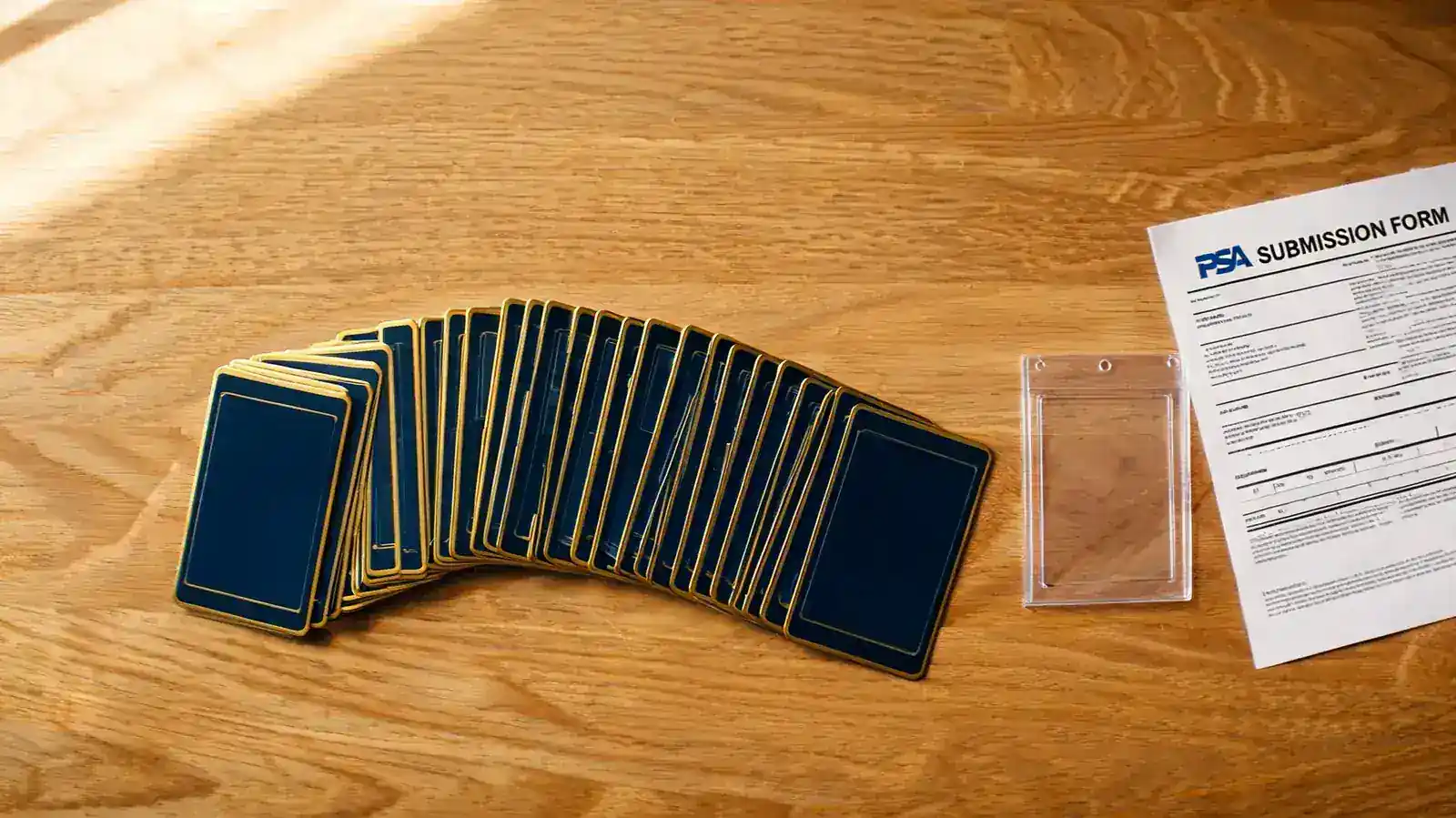
I've been sending cards to PSA and SGC since 2019, and I made every beginner mistake in the book. Wrong holders. Cards rattling in padded envelopes. A 1989 Ken Griffey Jr. Upper Deck rookie that came back with a soft corner I'm pretty sure was my fault. After that submission I sat down and figured out exactly what graders actually want, and the answer kept coming back to the same thing: Card Saver 1. Not a top loader. Not a magnetic one-touch. The semi-rigid holder with the open top that feels like a flimsy piece of plastic until you understand why it's built that way. Here are the ten reasons it became the standard, and why nothing has knocked it off that spot.
If you're building a submission, start with the right holder.
Cardboard Gold Card Saver 1 holders come in 200-count packs built for the 20-card submission batches PSA and SGC structure their orders around. Rated 4.7 stars across more than 5,500 collector reviews.
Amazon Check Today's Price on Amazon →PSA Names It by Name in Their Submission Guidelines
This is the one that matters most. PSA's official submission guidelines specifically reference Card Saver 1 semi-rigid holders as the accepted submission format. Not 'semi-rigid holders in general.' Card Saver 1 by name. When a grading company publishes a product name in its rules document, that product stops being a preference and becomes the standard. SGC and CGC have followed the same playbook. If you show up with anything else, your submission can be rejected or returned.
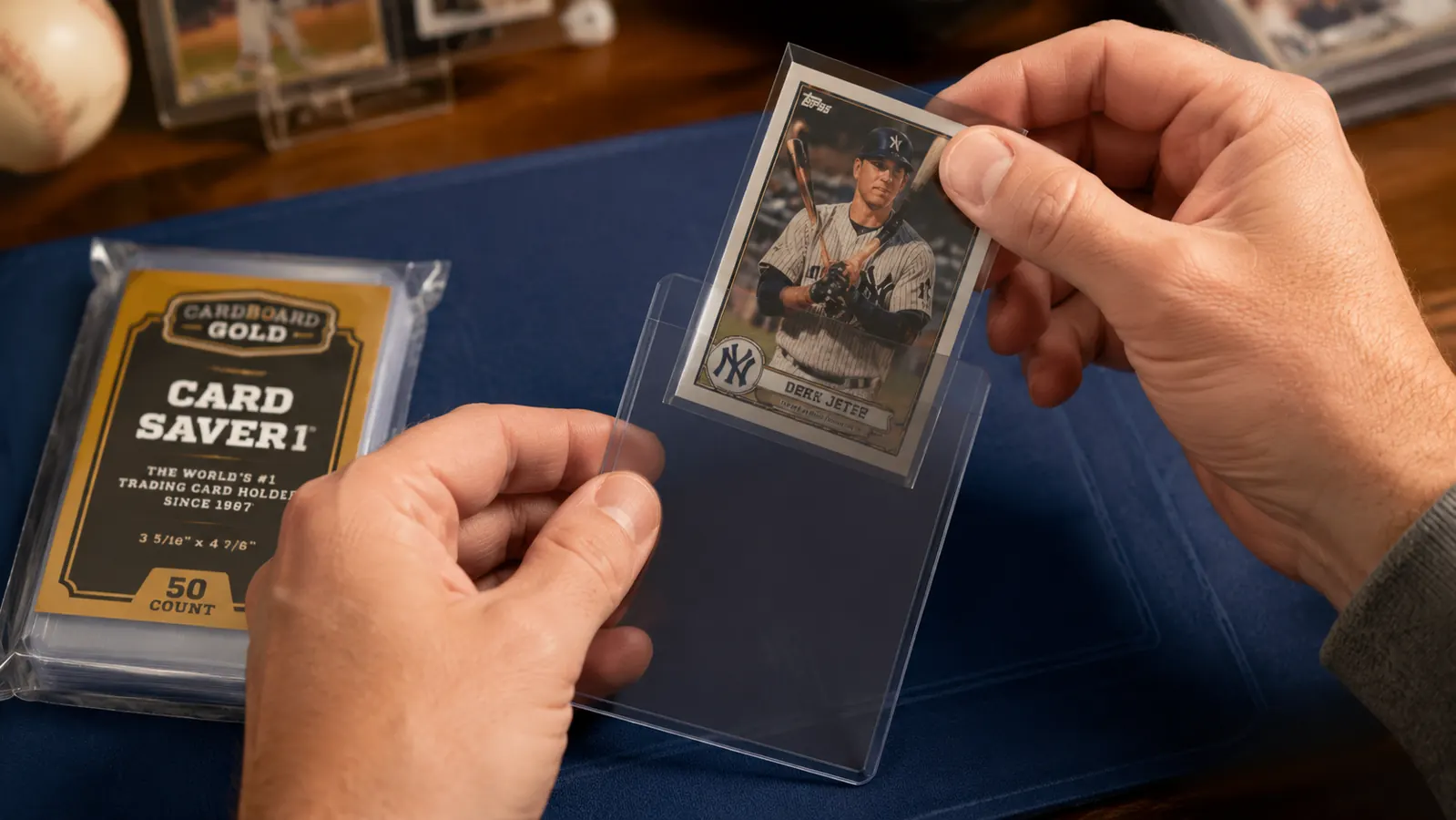
Graders Can Remove Cards in One Motion Without Touching Surfaces
Rigid top loaders are a problem at the grading desk. Graders have to grip the card itself or use a tool to extract it, and every touch point is a potential mark. Card Saver 1's semi-rigid walls flex open just enough that a grader can slide a card out cleanly in one fluid motion without putting pressure on the card face or corners. That's not an accident. That's the entire reason the holder is built with that flex tolerance instead of hard plastic.
Semi-Rigid Flex Absorbs Transit Impact Instead of Transferring It to Card Corners
A fully rigid plastic holder like a standard top loader has no give. If your submission box takes a hit during shipping, the rigid walls transmit that force directly into the card's corners. Card Saver 1 flexes slightly on impact, absorbing some of that shock before it reaches the card. It's the same reason a crumple zone works better than a solid steel bumper. For a corner-sensitive population like vintage baseball cards, that flex is the difference between a PSA 9 and an 8.
Fits Raw Cards and Already-Slabbed Dimensions Without Modification
Raw standard-size cards fit Card Saver 1 with a penny sleeve on. Standard slabs from PSA, SGC, and BGS fit the 3.5-inch wide opening without forcing. If you're doing a crossover submission where you're pulling a card from an existing slab and re-submitting it raw, you're not hunting for a holder that accommodates the card's dimensions. It slides in, stays secure, and that's that. No cutting, no jamming, no improvising.
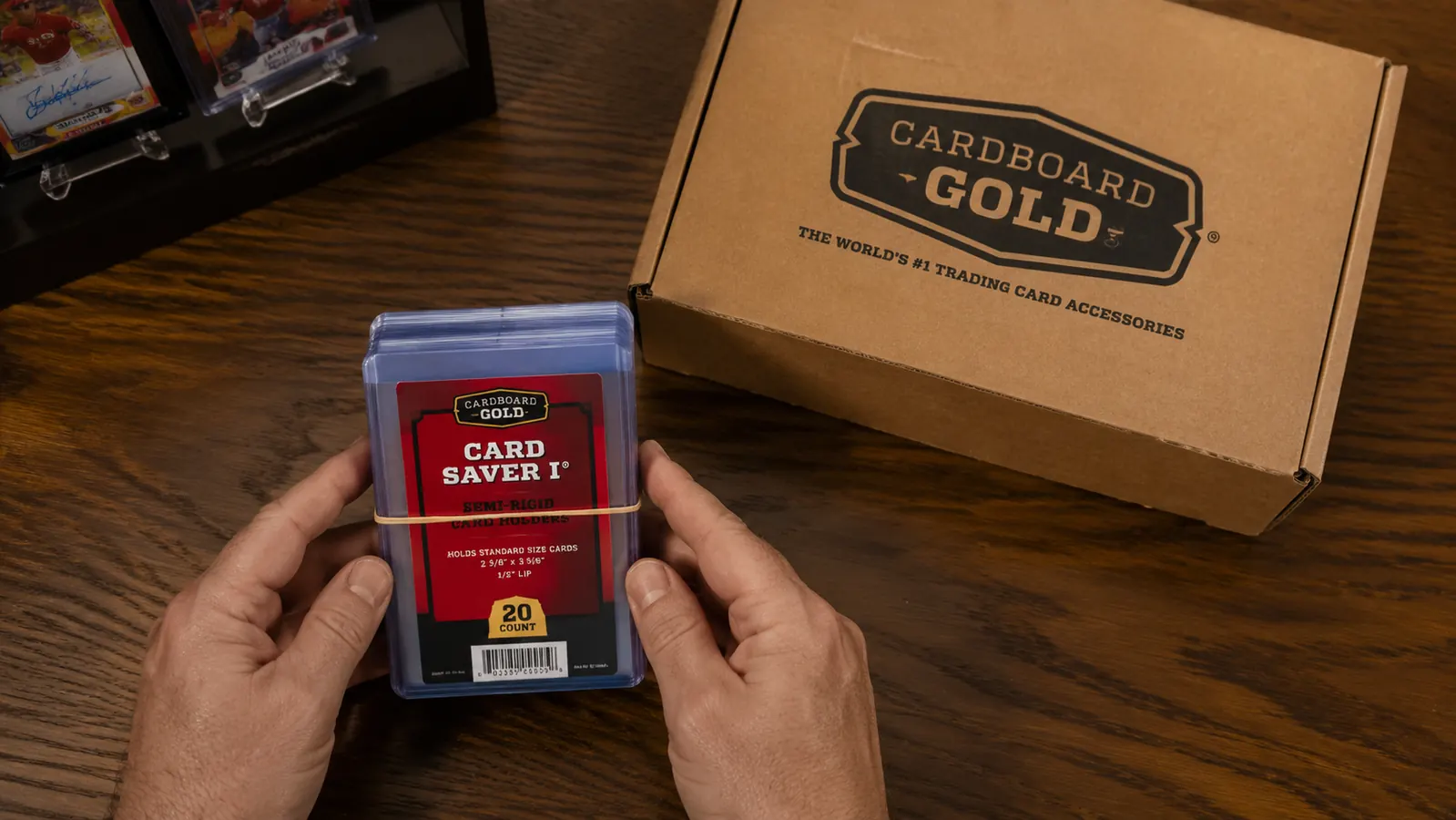
Stackable for 20-Card Submission Batches the Way Grading Services Structure Orders
PSA, SGC, and CGC all price their bulk tiers in 20-card increments. Card Saver 1 holders stack flat and stay aligned in a stack of 20 without shifting or fanning out. Twenty of them slide into a padded submission box, rubber-banded into a tidy brick. They don't splay, they don't slip past each other at angles, and they don't add unpredictable height to the stack the way rigid holders with raised edges can. It's a minor detail that saves real time when you're doing your 5th or 10th submission of the year.
Every grading service that matters has aligned on Card Saver 1 as the expected submission holder. That consensus didn't happen by accident.
Accepted by Every Major Grading Service: PSA, SGC, CGC, BGS, and HGA
PSA started it. SGC followed. CGC (which also grades sports cards alongside comics), Beckett Grading Services, and HGA all accept Card Saver 1 holders in their submission guidelines. You don't have to check five different requirement pages before every submission or stock multiple holder types depending on which service you're using that week. One holder type works everywhere. For collectors who split submissions across services based on price or turnaround time, that universal acceptance is genuinely useful.
Cheaper Per Card Than Top Loaders When You Price Them Out Honestly
At the current price, a 200-count pack of Card Saver 1 holders works out to less than 15 cents per holder. Ultra Pro 3x4 rigid top loaders in their standard 25-count retail packs run higher per unit at most price points. If you're prepping 40 or 60 cards for submission in a single quarter, the savings add up in a way that makes the top-loader habit feel like the expensive option. Card Saver 1 is not a budget compromise. It's the submission-preferred holder that also happens to be cheaper than the alternative.
Won't Yellow or Fog Like Cheap Generic Plastic Over Time
Generic semi-rigid holders sourced from no-name brands frequently yellow or develop a foggy haze within a year, especially if stored in a room with any UV exposure. The optical clarity degrades and you end up not being able to read the card clearly through the holder without pulling it out. Cardboard Gold's Card Saver 1 uses a PVC-free formulation that resists yellowing over time. For cards you're holding for weeks or months before a submission window, that matters. I've had the same pack of Card Saver 1 holders in rotation since late 2022 and they're still optically clear.
Adds Negligible Weight to Submissions, Which Matters for Large Lot Shipping
A rigid top loader is noticeably heavier than a Card Saver 1 holder. That might sound trivial until you're boxing up 80 or 100 cards and the total package weight crosses a shipping threshold. Card Saver 1 holders are light enough that a 20-card submission bundle adds almost nothing to the package weight beyond the cards themselves. Over a 100-card submission, the difference in holder weight compared to rigid alternatives is real. When you're paying per ounce for insured, tracked shipping to a grading facility, saving 2 to 3 ounces matters.
Volume Pack Sizes Match How Collectors Actually Submit Cards
Card Saver 1 comes in 50-count, 100-count, and 200-count packs. If you're doing standard PSA bulk submissions at 20 cards per order, a 200-count pack gives you exactly 10 submission batches. Nothing leftover, nothing to reorder mid-session. The 50-count works for a single submission run if you're just getting started. The sizing feels intentional because it is. Cardboard Gold built the pack counts around the actual submission workflow, not around whatever fills a retail blister pack more efficiently.
What I'd Skip Instead
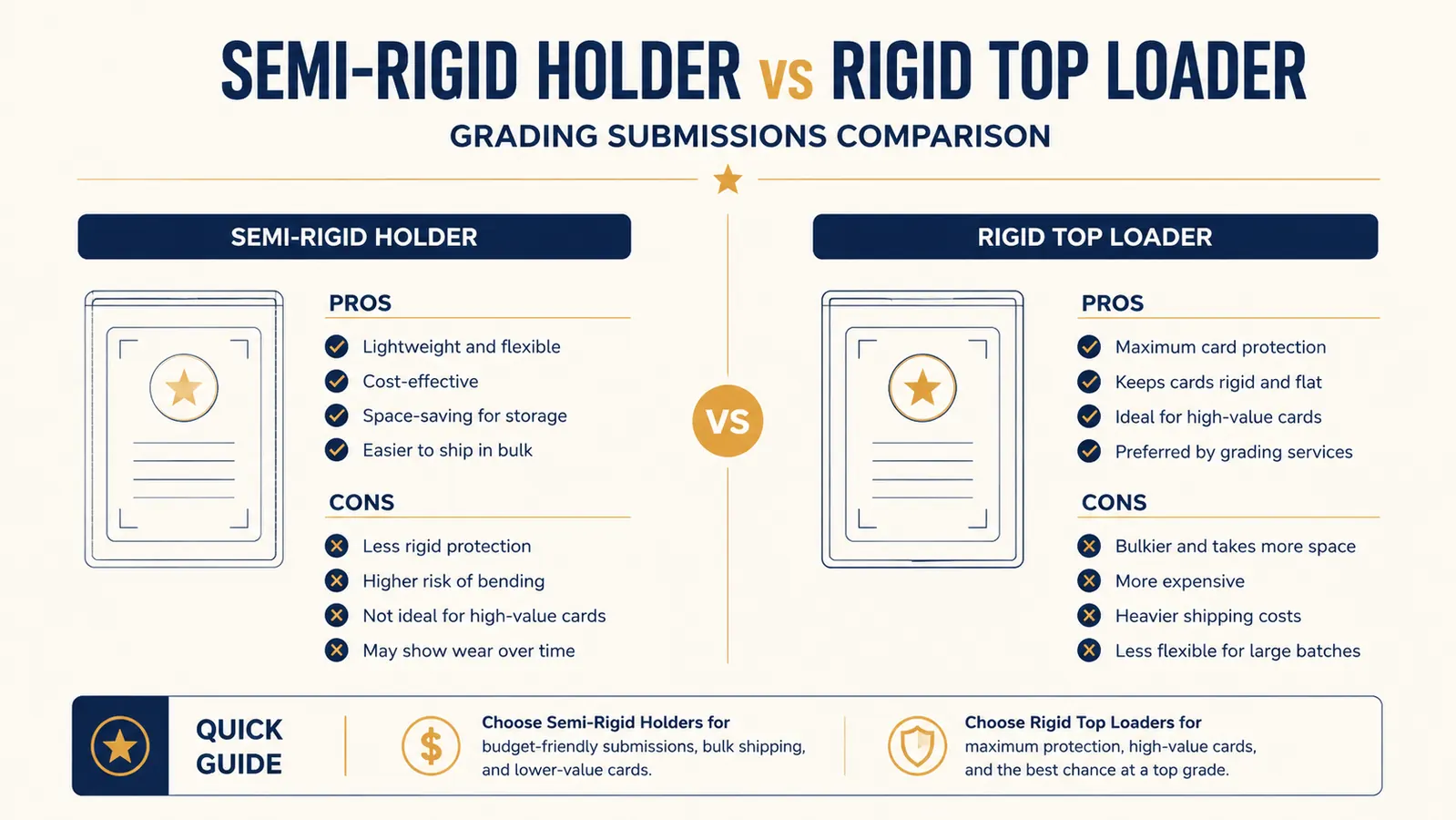
Generic semi-rigid holders from no-name sellers on Amazon look identical to Card Saver 1 at a glance. They're not. The tolerances are slightly off, the plastic formulation varies, and some grading services specifically flag non-standard semi-rigid holders in their submission review. I bought a 100-pack of an off-brand once to save a few dollars and used them for display storage only after I read the PSA guidelines more carefully. Don't make that mistake for submission purposes. Rigid top loaders fail for a different reason: graders can't extract cards cleanly without tools, and some services reject them outright at submission intake. Neither option is worth the risk against a $25 card, let alone a $250 one. If you want to understand why the rigid top loader falls short specifically for grading, I go deeper in my Card Saver 1 vs top loader comparison.
I used off-brand semi-rigid holders once, read the PSA guidelines more carefully afterward, and moved them to display storage. Some lessons are cheaper to learn from someone else.
Card Saver 1 costs less than 15 cents per card. Your next submission is worth it.
The Cardboard Gold Card Saver 1 200-count pack is the submission holder PSA approves by name, sized for the 20-card batch structure grading services use. 4.7 stars, 5,550+ reviews from collectors who've actually sent cards in. If you want the full breakdown of how it holds up over dozens of submissions, read my <a href="/card-saver-1-review-long-term">long-term Card Saver 1 review</a>.
Amazon Check Today's Price on Amazon →