
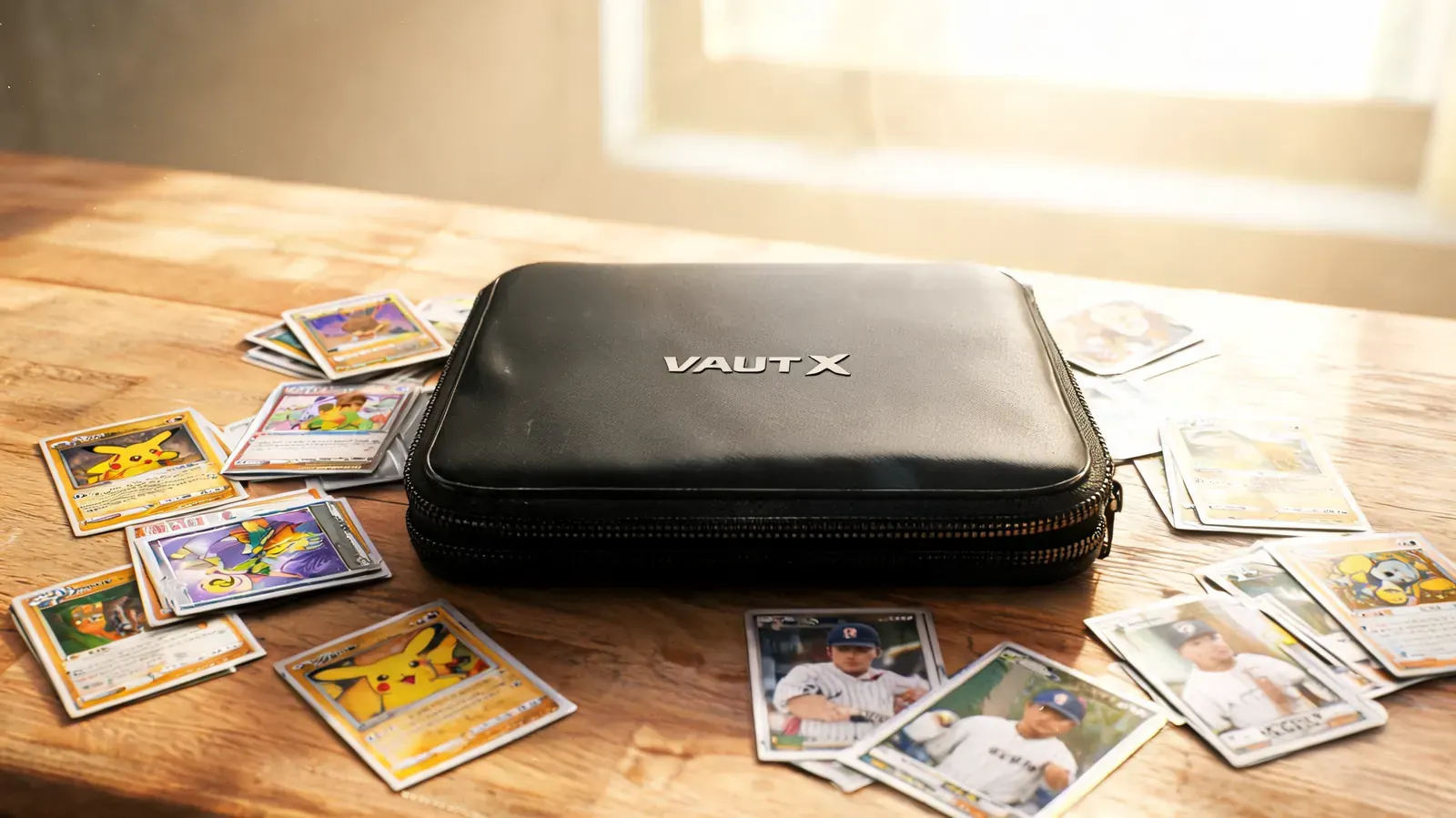
I ordered my first Vault X Exo-Tec binder after watching four separate YouTube videos where collectors held it up and called it the best binder they had ever owned. None of those videos were wrong, exactly. But all four of them skipped things I found out the hard way. Before you spend $30 on a Vault X 9-pocket zip binder, you should know what those reviews left on the cutting room floor. This is not a takedown. I still use the Vault X and it is still the binder I recommend to most collectors. But the honest version of that recommendation requires a conversation nobody on YouTube seems willing to have.
The Quick Verdict
The best 9-pocket binder on the market, but it has real limitations that YouTube hype glosses over. Know what you're committing to before you buy.
Amazon Check Today's Price →Ready to buy it anyway? Here's today's price on Amazon.
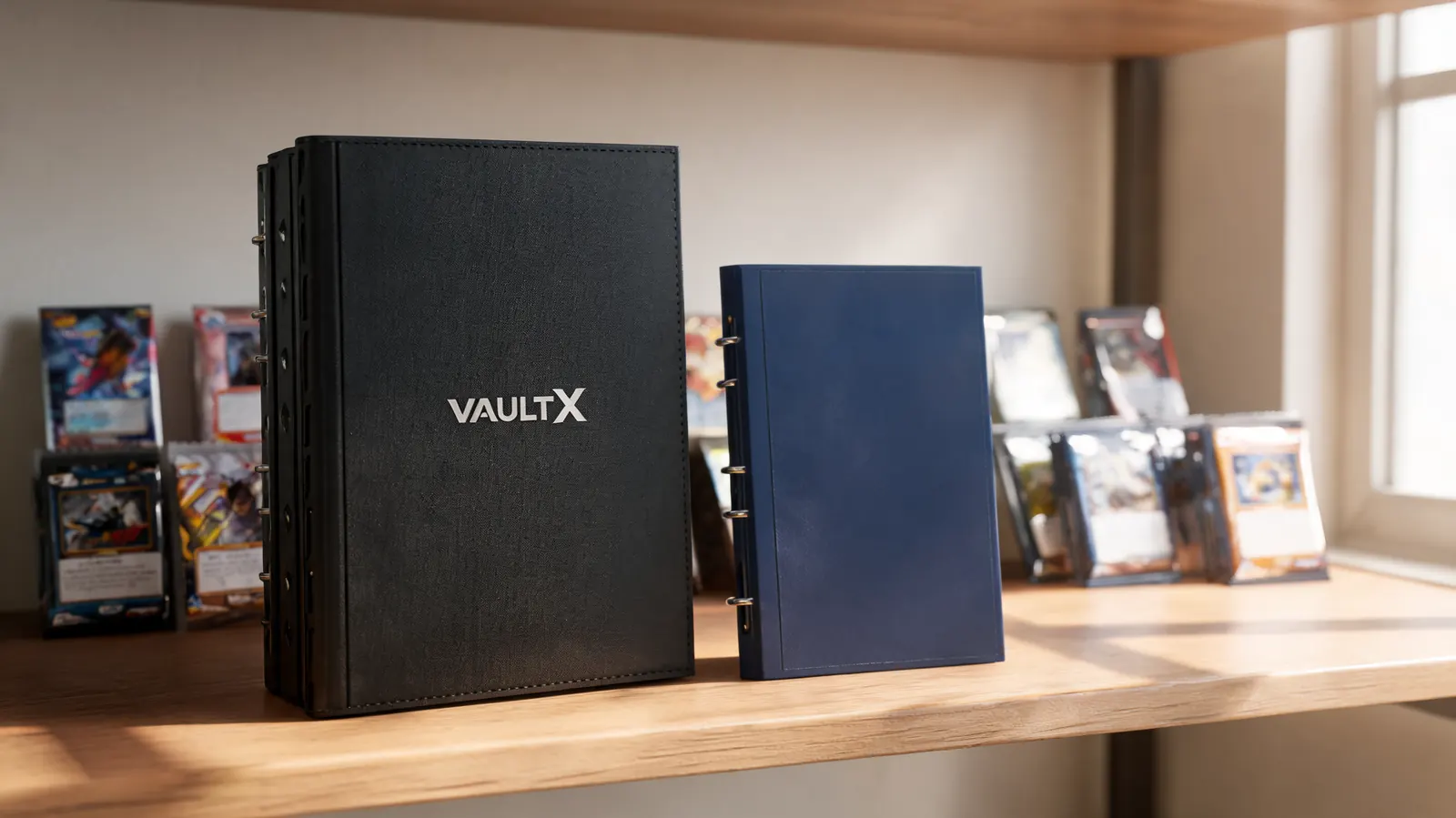
The Vault X Exo-Tec 9-Pocket Zip Binder holds 360 cards across 20 side-loading pages. It is currently in stock with Prime shipping. Check today's price before it changes.
Amazon Check Today's Price on Amazon →How I Have Used It
My main Vault X binder holds my Pokemon Scarlet and Violet master set attempt, currently at 287 cards. I load it after every Friday night opening session and flip through it about three times a week while I sort new pulls. I also have a second one I bought specifically for my favorite baseball player PC, mixing standard and some thicker etched parallels. That second binder is where I ran into most of the issues I am going to describe here. The problems are real, they are just not reasons to avoid the binder. They are reasons to go in with clear expectations.
In total I have used two Vault X binders for about fourteen months across three different collection types: Pokemon master set, baseball player PC, and a chunk of my older MTG Commander staples. That covers standard cards, slightly oversized old-school cards, and some etched foil parallels. The experience varied enough across those three uses that I think the nuance is worth sharing.
The Zipper Jam Issue: A User Error That Is Very Easy to Make
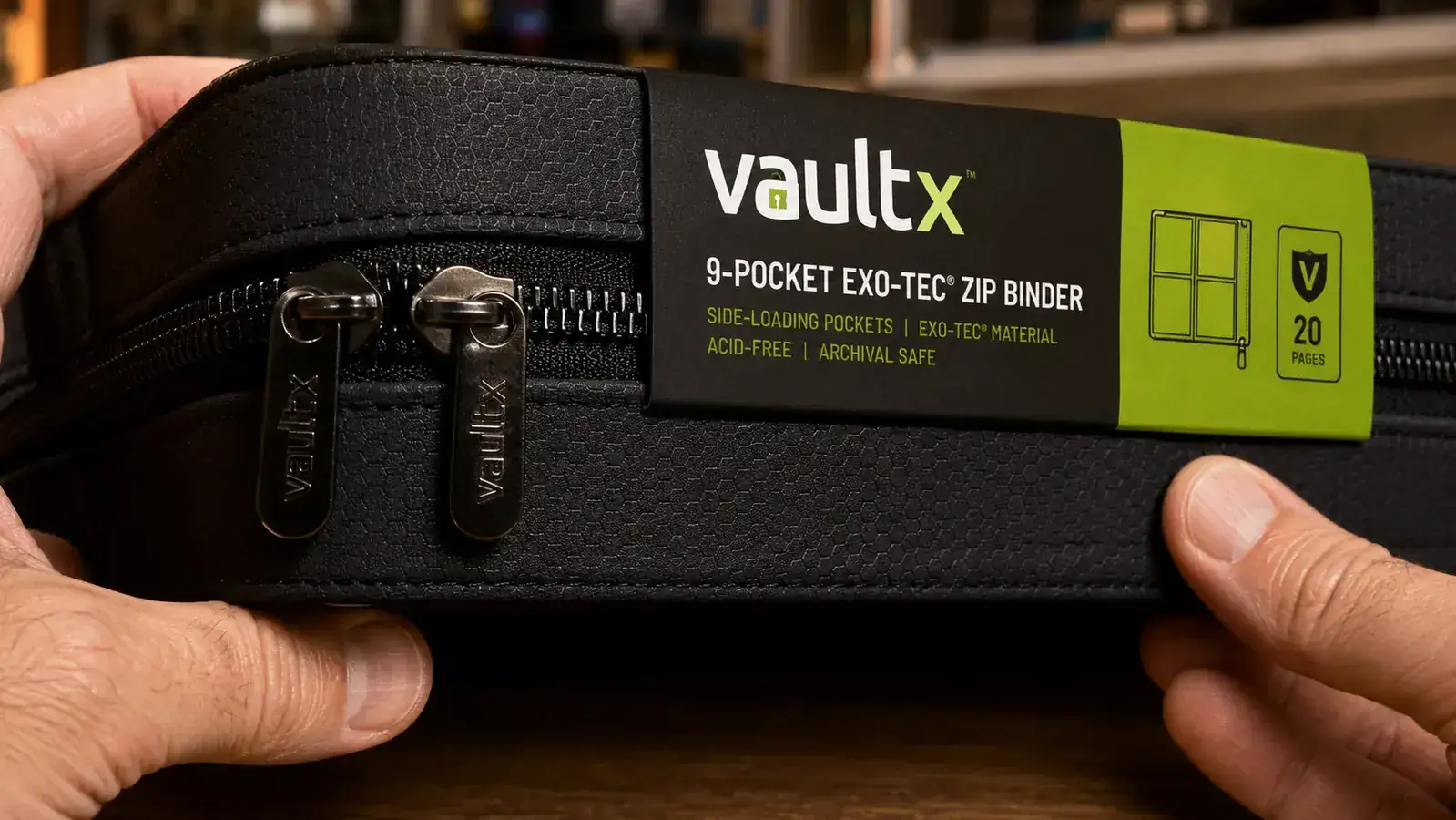
The Vault X zipper is a dual-pull design that runs three sides of the binder. It is genuinely well-built. The zipper has never failed on me structurally. But I have jammed it twice, and both times it was because I overstuffed the pages. When a 9-pocket page is carrying cards right up to the capacity of each sleeve, the outer edge of the page puffs outward just enough to sit partially in the zipper path. The moment you try to close the binder with that slight bulk, the pull catches the edge of the page material and stalls. It did not tear anything, but getting it free required patience and a steady hand.
The fix is straightforward: do not load every sleeve to its absolute max, and always flatten the pages before you zip. That sounds obvious until you are sitting on the floor at 11pm trying to close a freshly loaded binder after a big opening session. If you are the type of collector who likes a tight, dense binder, budget for an extra minute at close. The zipper itself is not the problem. The problem is the binder rewarding you for filling it and then making you pay attention before sealing it.
The 360-Card Ceiling Hits Hard If You Collect Full Sets
Three-sixty sounds like a lot. It is not if you collect modern Pokemon sets. Scarlet and Violet base set has 258 cards in the standard set, so a single Vault X covers you there with room to spare. But Obsidian Flames has 230 cards in the main set plus another 60 or so special illustration rares and alt arts if you chase them. You are suddenly at 290 cards and you have not touched gold cards or secret rares. Then you add a full set of reverse holos and you are past 460 cards, which means two binders for one set.
This is not a flaw in the design. It is just math you should do before you buy. For baseball player PCs that stay under 200 cards, it is a non-issue. For Pokemon master set builders or MTG collectors who want a format-legality binder for Commander staples, you will likely need two Vault X binders for a single collection category. At $30 each, plan accordingly.
The zipper is not the problem. The problem is the binder rewarding you for filling it and then making you pay attention before sealing it.
The Price Question: Is It Worth Three Times the Cost of a Basic Binder?
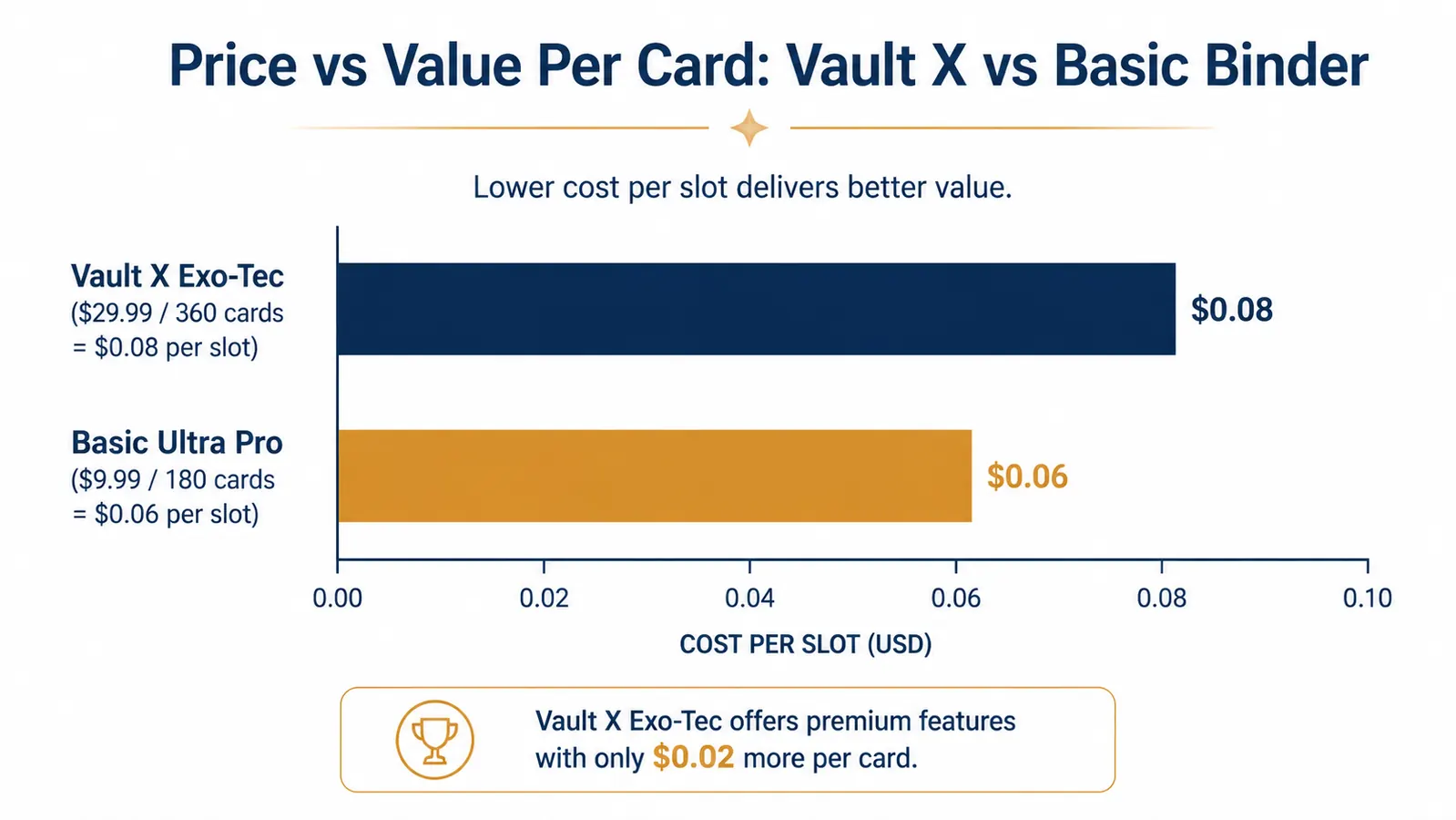
The Vault X runs about $30 at current prices. A basic Ultra Pro 9-pocket binder sits around $10. That is roughly triple the price for a binder that holds roughly twice the cards. The per-slot math ends up fairly close: about eight cents per card slot on the Vault X versus about six cents per slot on a basic binder. So you are paying a modest premium per slot, plus paying for the Exo-Tec cover material, the zipper, and the page quality.
For active collectors who handle their binders multiple times per week, that premium is easy to justify. The Exo-Tec cover does not dent, the pages do not yellow, and the zipper keeps dust out. But if you are a casual collector who opens a binder twice a year to show someone your Pokemon cards and then puts it back on a shelf, a basic $10 binder does that just fine. The Vault X is not overpriced for what it is. It is just aggressively priced for collectors who will not stress-test it. Be honest with yourself about which type of collector you are.
The Side-Loading Page Learning Curve
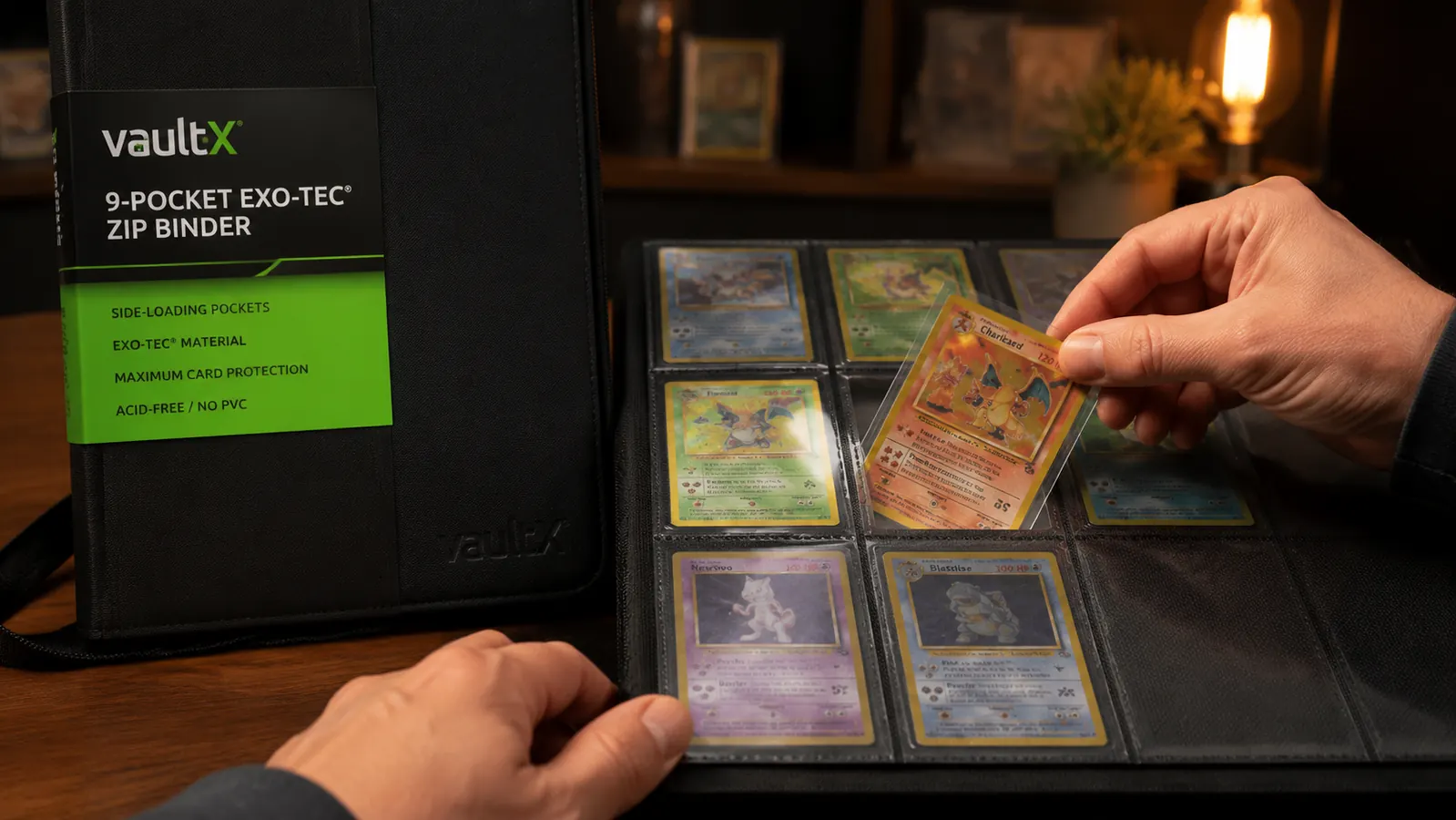
Every standard card binder uses top-loading pages. You slide a card in from the top, gravity holds it. Simple. The Vault X uses side-loading pages, meaning cards go in from the side of each sleeve. The first time you tip the binder sideways to load or remove a card, every instinct you have says the card is about to fall out. It is not. The pages have enough friction that cards stay put even if you hold the binder vertically with the spine down. But it takes three or four loading sessions before your brain stops sending alarm signals every time a card hangs over the edge of a sleeve mid-insertion.
This matters most for new collectors or anyone who is handing the binder to a kid or someone unfamiliar with it. They will see a card sitting horizontally in a sleeve that is open on the side and assume it is about to slide out. It will not, but you may spend a few minutes explaining that. The side-loading design also means thicker cards sit more securely than they do in top-loaders, because the sleeve holds the card edge rather than relying on card weight. It is genuinely better for the cards. It just feels wrong for about a week.
The Cover Fade Question After Extended Sun Exposure
Vault X markets the Exo-Tec material as durable, and in terms of puncture resistance and rigidity it is. What the listings do not address is long-term UV exposure. I have had my black binder sitting on a shelf that gets about two hours of indirect sunlight per afternoon for fourteen months. I have not noticed visible fading. But I have seen photos in collector forums of older Vault X binders, two to three years old, where the black cover has taken on a slightly gray-brown cast in the sun-exposed areas.
This is not unique to Vault X. Most fabric-and-synthetic covers will fade with UV exposure over time. The practical fix is to store the binder spine-out on a shelf away from direct sun, or to grab a binder sleeve if you are particularly worried. I am not losing sleep over it, but if you are building a display shelf and your binders will sit in a bright room, keep this in mind. A navy or burgundy color option may show fading less obviously than the black.
The YouTube Hype vs Reality Gap
There is a specific kind of YouTube card video that goes like this: the creator holds up the Vault X, flexes the Exo-Tec cover, flips through a few pages of pristine cards, says it is the best binder ever made, and puts an affiliate link in the description. I have watched dozens of those videos. They are not dishonest. The Vault X is genuinely good. But they are almost universally filmed on day one or day two of ownership, which means none of the issues I described above have had time to surface.
The zipper jam happens after you have loaded the binder two or three times. The 360-card ceiling becomes real after your second set expansion drops. The side-load anxiety fades but it takes a few sessions. The cover fade question does not emerge until year two. YouTube reviews are snapshots. This review is the full picture, and the full picture is that the Vault X is still very good. It just requires managing expectations that a first-week video cannot give you.
What I Liked
- Exo-Tec cover is genuinely rigid and resists dents and warping better than fabric or softcover binders
- Side-loading pages hold cards more securely than top-loaders, including thicker etched parallels
- Dual zipper keeps dust and moisture out, a real advantage over open-ring binders
- Pages do not yellow or cloud even after a year of regular use
- Resells at 60-70 percent of original price on secondary market, better than most binders
- Widely stocked so replacement or additional binders are easy to source consistently
Where It Falls Short
- Zipper jams if pages are overstuffed and you try to close without flattening first
- 360-card limit requires two binders for any modern Pokemon set with full reverse holos and secret rares
- Costs roughly three times more than a basic binder, a hard sell for casual collectors who rarely open their collection
- Side-loading pages create a real learning-curve anxiety that lasts several sessions
- Black cover may develop a slight UV fade after extended exposure to indirect sunlight over 2-plus years
- No expansion option, the 20-page count is fixed and you cannot add pages like a ring binder
The Resale Market: Yes, Used Vault X Binders Hold Value
One thing almost no review mentions: the Vault X has a decent secondary market. I have watched eBay and Facebook Marketplace listings for used Vault X binders over the past year. Clean used binders with no page damage consistently list and sell in the $18 to $22 range, which is roughly 60 to 70 percent of the current retail price. That is meaningfully better than most binders, which resell at 20 to 30 percent of retail if they sell at all.
The reason is simple: collectors who want a Vault X know exactly what they are looking for, and they will buy used to save $10 if the binder is in clean condition. This matters if you are buying a binder for a collection type that may change. If you move from Pokemon to baseball, you can sell a clean Vault X and recoup most of your cost. You cannot do that with a $10 Ultra Pro binder. It is still depreciation, just slower depreciation than the market average for collecting supplies.
Who This Is For
The Vault X Exo-Tec binder is built for the collector who handles their collection regularly: someone who loads cards after every pack opening, flips through pages to find specific cards for trades, and travels with the binder to locals or card shows. If that is you, the premium over a basic binder is fully justified. The Exo-Tec cover survives the bag, the side-loading pages keep cards secure during transit, and the zipper keeps dust out during storage. The product earns its price in active use.
Who Should Skip It
If you open your binder twice a year to show off your collection and it otherwise sits on a shelf, a $10 Ultra Pro binder does that job. If you are building out a master set that will exceed 360 cards regularly, run the math on two Vault X binders at $30 each versus a ring binder with unlimited page inserts. And if you are buying a binder for a young collector who is just getting started, the side-loading page anxiety plus the zipper care requirements make a simpler top-loading binder a more forgiving starting point. The Vault X is not the right binder for every collector. It is the right binder for a specific kind of collector, and most people reading this are exactly that kind of collector.
If you're that collector, the Vault X is still the move.
The Vault X 9 Pocket Zip Binder holds 360 cards across 20 side-loading Exo-Tec pages with a dual zipper closure. Now that you know what you're committing to, check today's price on Amazon and see if it ships Prime to your address.
Amazon Check Today's Price on Amazon →