
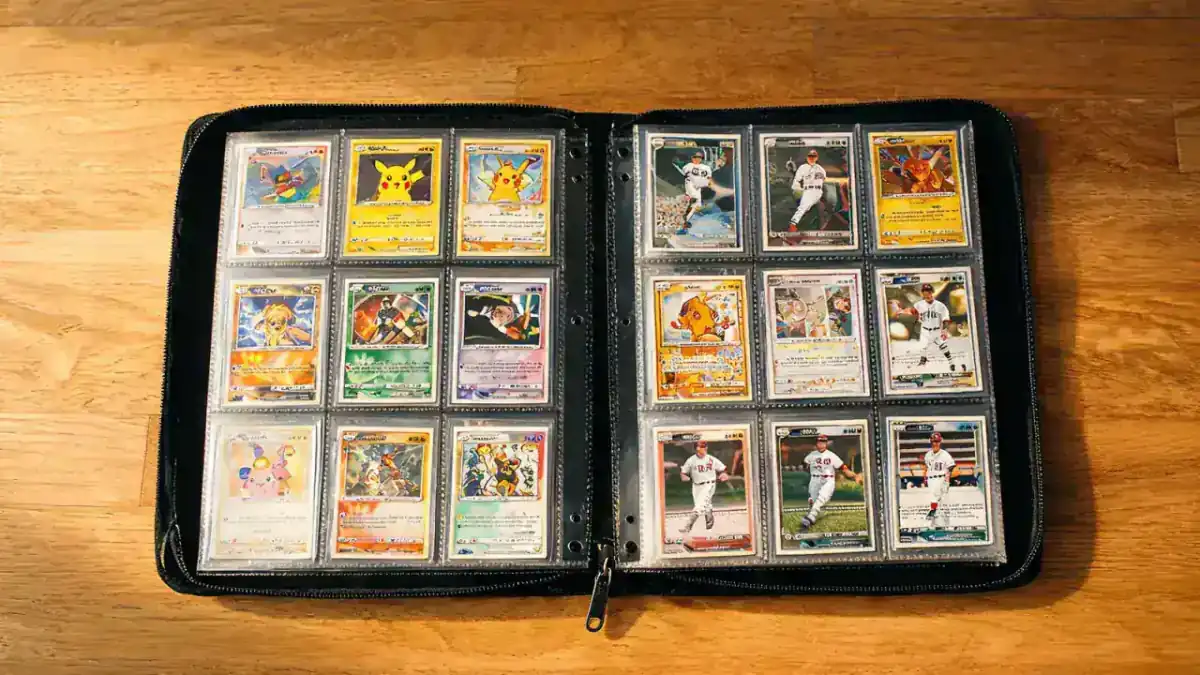
If you have spent any time in card collecting YouTube or Reddit in the past two years, you already know this debate. The Vault X Exo-Tec binder has eaten into Ultra Pro's binder market share faster than anything I have seen in this hobby in a long time. Collectors who used to default-buy Ultra Pro Pro-Binders without thinking are now stopping to ask: is Vault X actually worth the switch? I have kept both binders in my collection setup and used them back to back for over a year across Pokemon, baseball, and MTG. Here is my honest breakdown.
Short answer: if you treat your cards like assets, Vault X is the upgrade. If you are a casual collector who sorts by set and does not move cards around much, Ultra Pro still does the job without any fuss. The longer answer is in the details below, and the details actually matter here.
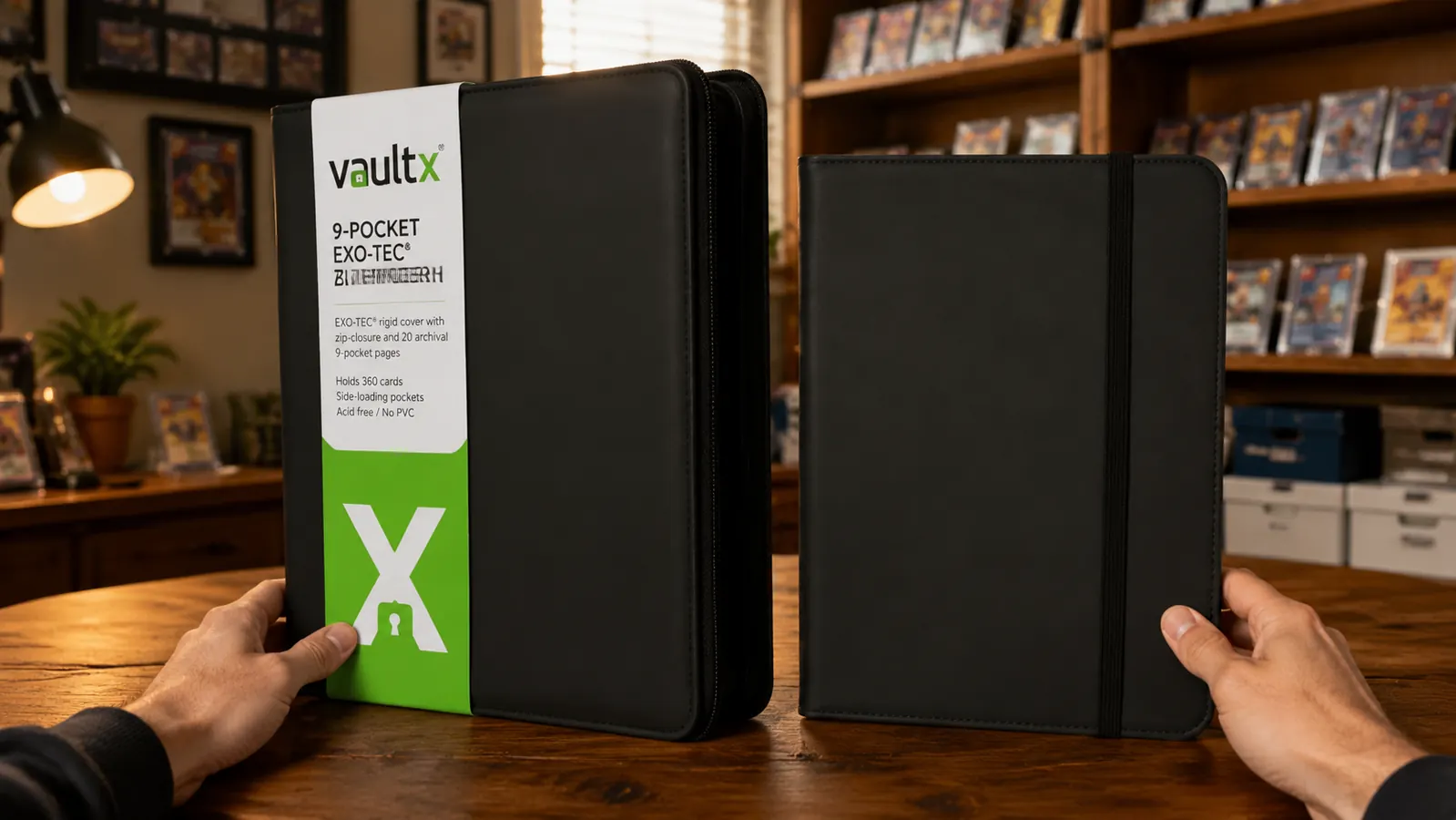
| Feature | Vault X Exo-Tec (Left) | Ultra Pro Pro-Binder (Right) |
|---|---|---|
| Page Load Direction | Side-loading (cards cannot fall out) | Top-loading (cards slide out if binder tilts) |
| Closure Type | Full perimeter zipper, locks flat | Elastic band over spine, binder can spring open |
| Shell Material | Exo-Tec rigid composite, impact-resistant | Soft PVC or faux-leather cover, flexible |
| Card Capacity | 360 cards (20 pages, 18 pockets per sheet) | 360 cards (20 pages, 9 pockets, two-sided) |
| D-Ring vs Ring-Free | Ring-free design, pages lie perfectly flat | D-ring mechanism can cause ring indent on center cards |
| Sleeve Compatibility | Fits standard sleeves, snug on penny-sleeved cards | Fits standard sleeves, similar fit |
| Weight | Slightly heavier due to rigid shell | Lighter empty, roughly same loaded |
| Typical Amazon Price | Around $30 | Around $20 to $24 for the Pro-Binder |
Where Vault X Wins: The Page Design Changes Everything
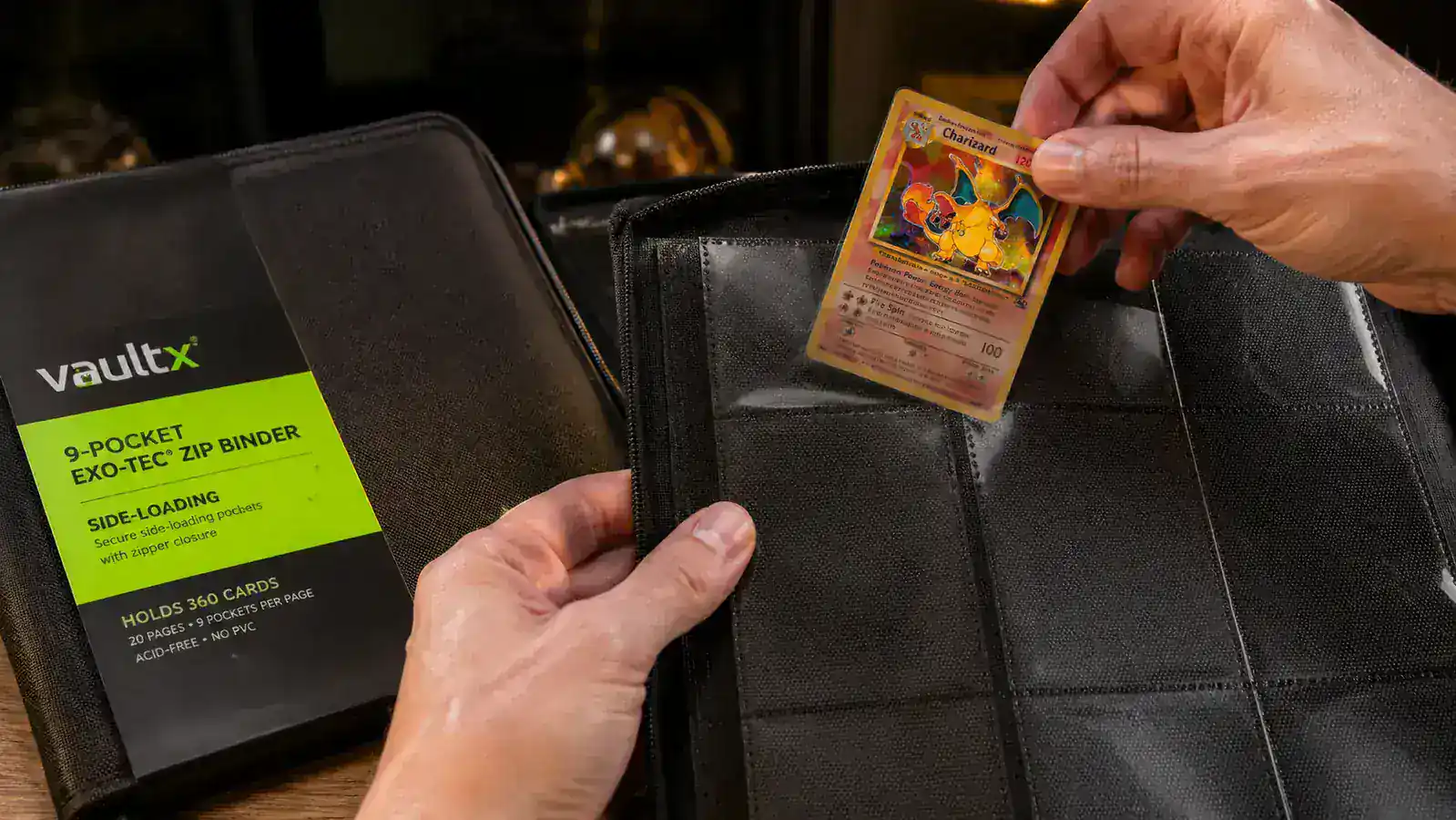
The single biggest reason collectors are switching to Vault X is the side-loading page design. In a top-loading binder, gravity is your enemy every time you tilt the book. Cards shift, they slide, and if you have a loose penny sleeve or a thicker card that is not sitting perfectly snug, it will work its way out. I lost a Near Mint Charizard holo to a corner nick because it slid in an Ultra Pro top-loading page while I was pulling the binder off a shelf. That will not happen in the Vault X. The side-loading orientation means a card has to travel sideways against gravity to escape, which simply does not happen in normal use.
The zipper closure compounds this advantage. The Ultra Pro Pro-Binder closes with an elastic band over the spine. It works, but if the binder is full, that elastic is under constant tension and the binder can pop open in a bag or on a shelf. The Vault X zipper locks the entire perimeter. You can drop the binder, shove it in a backpack, or stack it under three other binders and the contents are not going anywhere. For anyone carrying their collection to a local game store for trades, a tournament, or a show, this is not a small thing.
The side-loading pages alone are worth the price difference. I stopped losing cards to gravity the day I switched.
Where Vault X Wins: The Exo-Tec Shell Is Genuinely Different
The Exo-Tec material is not just a marketing name. It is a rigid composite shell that feels noticeably stiffer than anything Ultra Pro puts on their standard binders. Pick up an Ultra Pro Pro-Binder and the cover flexes. Pick up the Vault X and it resists. This matters if you store binders stacked on a shelf, because a soft-cover binder will bow over time under weight, which puts lateral pressure on the pages and, eventually, on the cards inside. The Vault X holds its shape.
There is also no ring mechanism in the Vault X. Traditional binders with D-rings create a center spine gap in every page, and the cards in the center column of a 3x3 page sit right over that gap. Over time, with enough pressure, you can get a faint ring indent on a card's back. It does not happen fast, but graders notice it. The Vault X uses stitched pages that lie completely flat, ring-free, and the center column cards sit as safely as the outer ones.
Your cards are worth protecting. Get the binder that keeps them where you put them.
The Vault X 9-Pocket Exo-Tec Zip Binder holds 360 cards with side-loading pages, a full zipper closure, and a rigid shell that does not bow or flex. Rated 4.8 stars from over 8,000 collector reviews.
Amazon Check Today's Price on Amazon →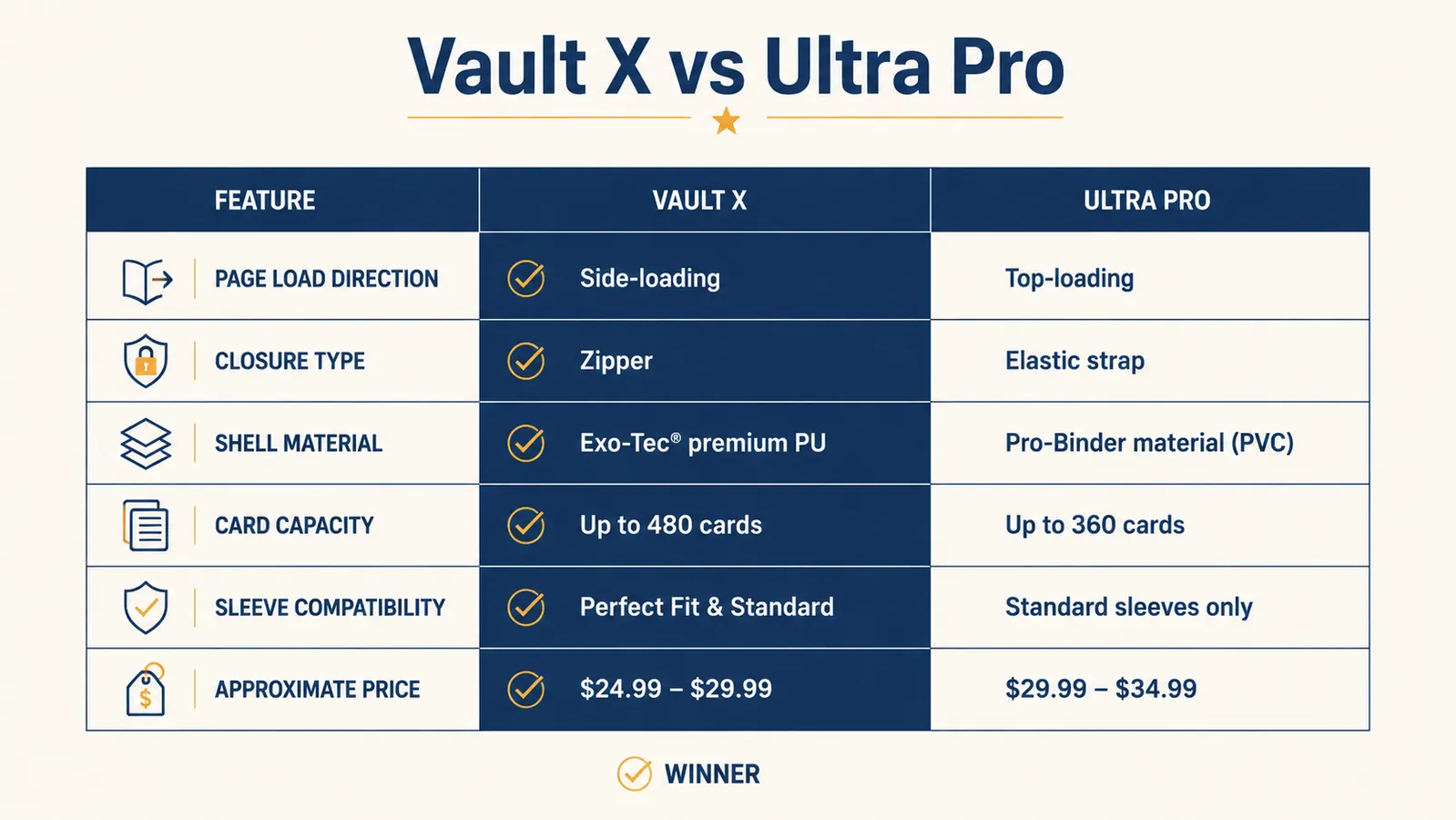
Where Ultra Pro Still Wins: Price, Availability, and the Classic Ring-Binder Setup
Ultra Pro is not finished. For collectors who organize by set and rarely move cards around, the traditional 3-ring binder setup that Ultra Pro sells separately alongside their pages is genuinely hard to beat. You can buy any standard D-ring binder, fill it with Ultra Pro 9-pocket pages, and have a system where individual pages are easy to add, remove, and rearrange. That modularity matters if you are building a master set or organizing by release date and constantly inserting new pages as sets drop. The Vault X binder is a fixed-page book, and while 20 pages is plenty for most collections, it does not flex the same way.
The price gap is also real. Ultra Pro Pro-Binders run about $20 to $24 on Amazon, and off-brand Ultra Pro pages are even cheaper. The Vault X sits closer to $30. For a casual collector or a younger collector getting started, that $8 to $10 difference adds up when you are also buying sleeves, top loaders, and storage boxes in the same cart. Ultra Pro is also available in more retail locations, which matters if you need a binder today and cannot wait for shipping. Walmart, Target, local card shops: Ultra Pro is almost always on the shelf.
It is also worth noting that Ultra Pro has a 4.7-star average across tens of thousands of reviews on Amazon. Their binders are not bad products. They are solid, they work, and millions of collectors have used them for years without complaints. The Vault X is a better product for most use cases, but Ultra Pro is a fully reasonable choice when the price matters or when you want modular page flexibility.
What YouTube and Reddit Get Right (and Where They Oversell Vault X)
The collecting community has been loud about Vault X for about two years now, and most of what you will hear on YouTube is accurate: the side-loading pages are genuinely better for card security, the zipper is more reliable than an elastic band, and the rigid shell is a real advantage for binders that travel. These are not exaggerated claims. I agree with all of them.
What the hype undersells is the capacity issue for rapidly growing collections. Twenty pages at nine pockets each gives you 360 slots. If you are actively completing sets, especially larger Pokemon or MTG sets that run 250 to 400 cards, you will fill a single Vault X fast. With a traditional Ultra Pro ring-binder setup, you just add more pages. With the Vault X, you buy another binder. That is not a deal-breaker, but budget for two binders if your collection is large. The hype also does not mention that the Vault X pages can be slightly stiff when new, which makes loading penny-sleeved thick cards a mild friction point in the first few weeks. It loosens up, but it is worth knowing.
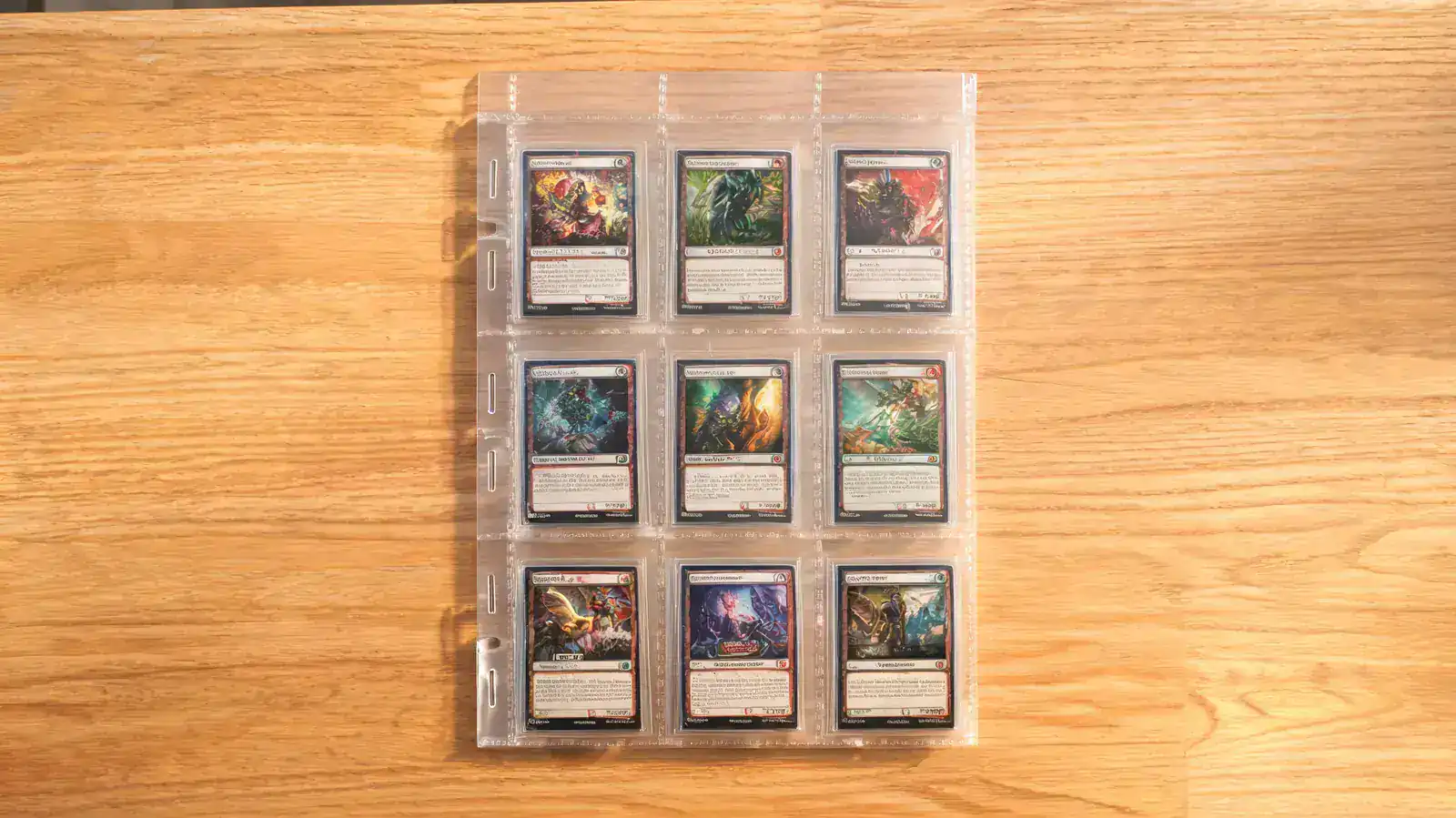
Side-Loading vs Top-Loading Pages: Why This Is the Deciding Factor
I want to spend a moment on this because it is not obvious until it happens to you. Top-loading pages are fine when the binder is sitting upright on a shelf or lying flat on a table. The moment you pick the binder up and angle it, or carry it in a bag where it might tilt, cards in top-loading pockets are free to slide. The friction of the page material slows them down, but it does not stop them, especially as pages age and the material becomes more slick.
Side-loading pages solve this by changing the pocket orientation. The card can only exit the pocket by moving sideways, which is against the natural direction of any reasonable handling. It sounds simple because it is simple. But it is a genuinely better engineering choice for a binder that carries valuable cards. I now use Vault X for anything I care about: my modern Rainbow Rare Pokemon, my graded-worthy baseball rookie candidates waiting on a submission window, and my MTG foils. Ultra Pro binders in my setup hold bulk commons and cheap stuff I could replace without heartbreak.
Who Should Buy Which
Buy the Vault X Exo-Tec binder if you carry your collection anywhere, if the cards inside have real value to you, or if you plan to trade from the binder at a local game store or show. The side-loading pages and zipper closure make it the right choice for anyone who moves their binder around or stores cards they would be upset to damage. It is also the right call for Pokemon and TCG collectors who pull holos, full arts, and alternate art rare cards and want them stored safely between trades.
Stick with Ultra Pro if you are building a master set in a fixed location, you want modular page flexibility to add and remove pages as new sets release, or you are working with a tighter budget and need to spend the difference on sleeves or top loaders instead. Ultra Pro binders work fine on a shelf at home. They just need a little more respect during transport.
If you treat your cards like assets, the Vault X is the binder that earns its keep.
The Vault X 9-Pocket Exo-Tec Zip Binder has earned its reputation in the collecting community for a reason: side-loading pages, a full-perimeter zipper, a rigid composite shell, and a ring-free design that keeps every card flat. Check today's price and see why it has 8,000+ reviews averaging 4.8 stars.
Amazon Check Today's Price on Amazon →Both binders have a place in a serious collection setup. The Vault X is the clear winner for cards you care about. Ultra Pro holds its ground for bulk organization and set-building flexibility. If you only buy one, buy the Vault X. If you are building a full system, one of each is not a bad answer.