
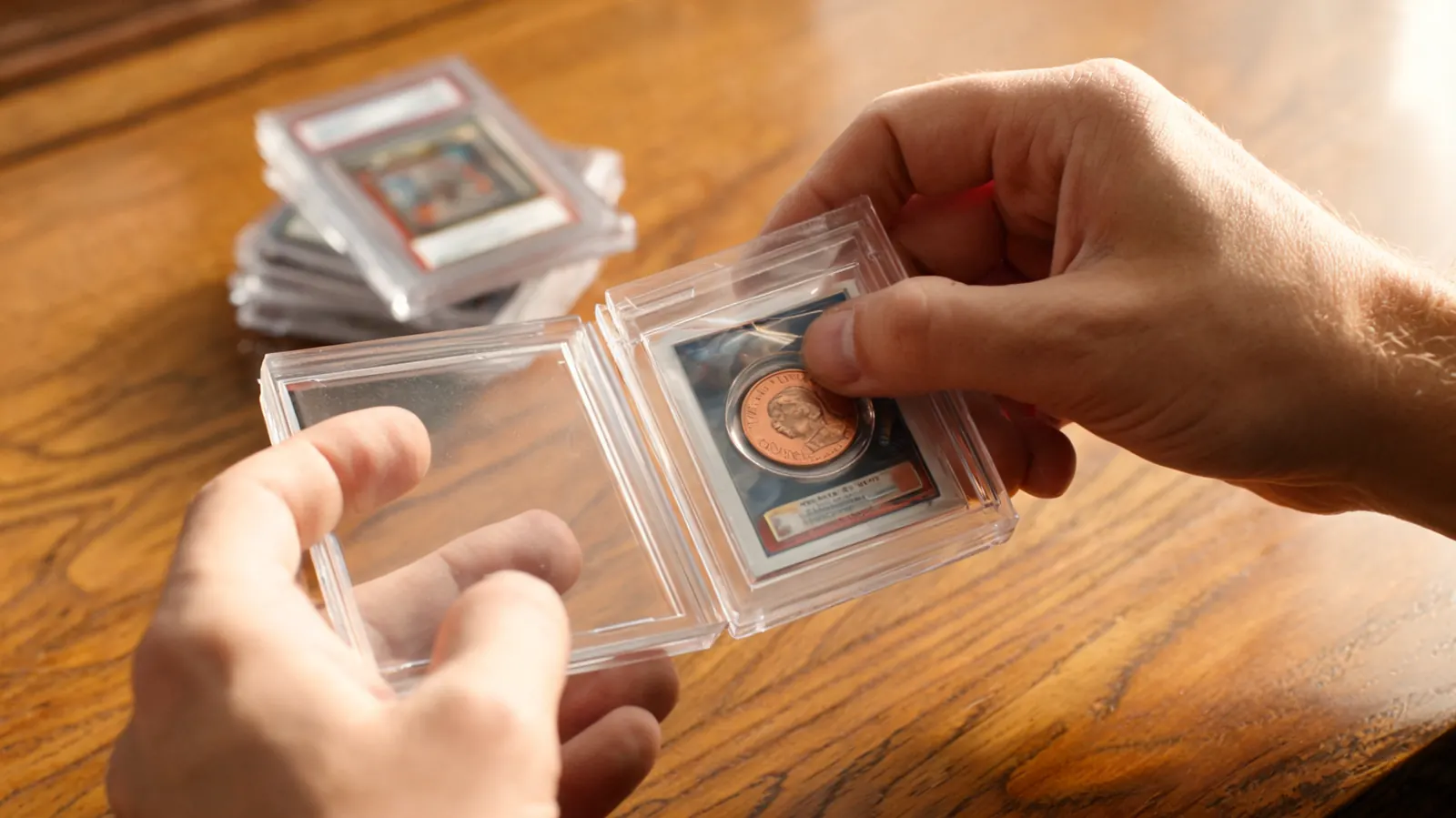
Someone in a Facebook group asked me this last month: "Do I need penny sleeves AND top loaders, or can I just use one?" It's a fair question if you're new, and honestly it's one I see searched constantly. The quick version: they do completely different things, and the answer most collectors land on is a penny sleeve INSIDE an Ultra Pro top loader, and for anything worth more than a few dollars, you want both, in the right order. But let me give you the real breakdown, because there are cases where a penny sleeve alone is perfectly fine, and cases where a top loader alone is not enough.
I've been collecting cards for over fifteen years. Baseball cards since I was a kid, Pokemon and MTG in the last decade. I've ruined cards by under-protecting them and I've wasted money over-protecting commons that nobody would ever grade. So the advice here comes from actual trial and error, not marketing copy.
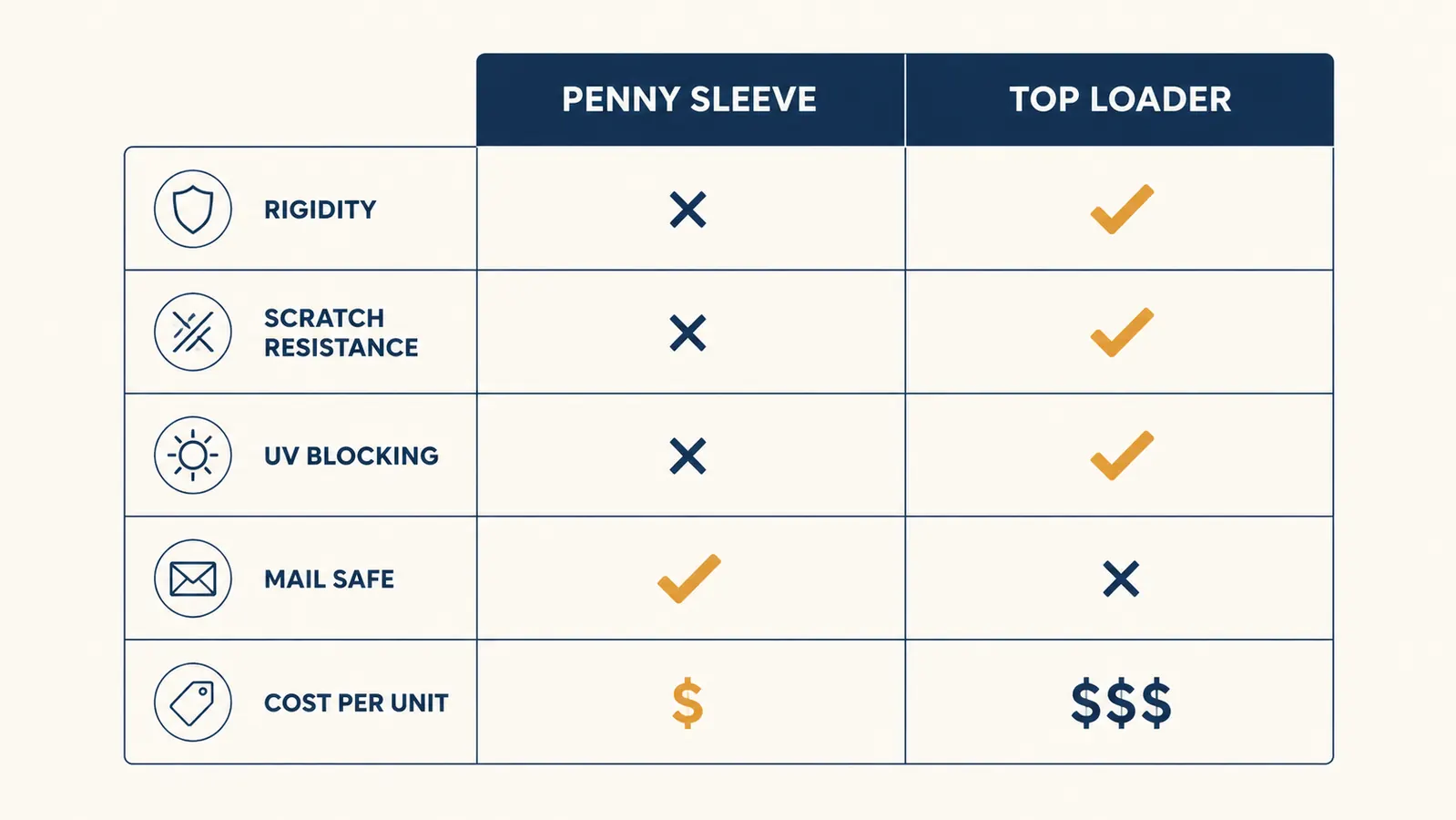
| attribute | left | right |
| attribute | left | right |
| attribute | left | right |
| attribute | left | right |
| attribute | left | right |
| attribute | left | right |
| attribute | left | right |
| attribute | left | right |
They're Not Competitors, They Work in Layers
Here is the thing people get wrong about this question: penny sleeves and top loaders are not two options you pick between. They are two layers of the same protection system. The correct workflow for any card worth protecting is penny sleeve first, then slide that sleeved card into a top loader. The sleeve acts as a buffer between the card surface and the inside walls of the loader, preventing the kind of micro-scratches you get from repeated card-to-plastic contact. The loader provides the rigidity the sleeve never could.
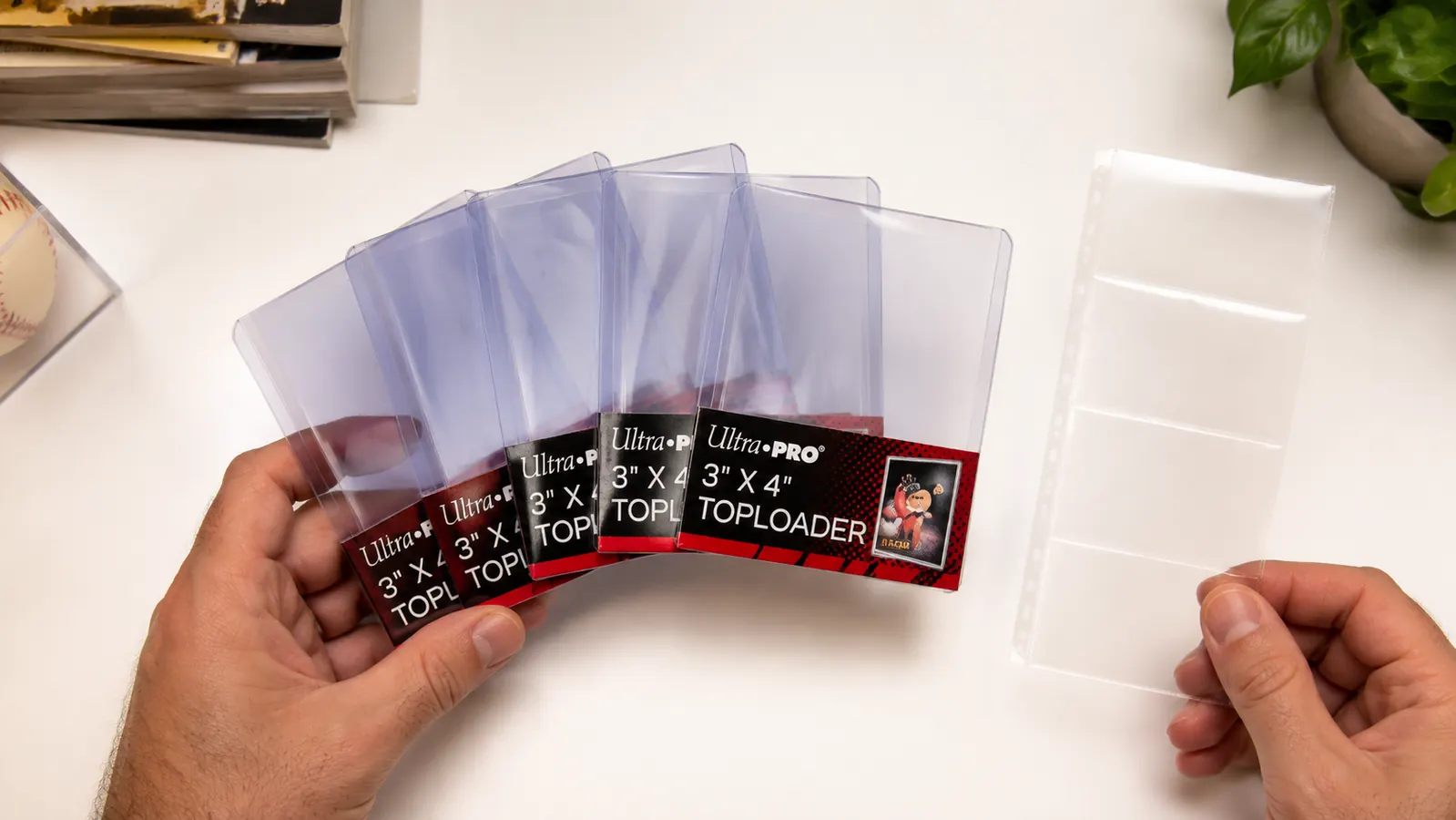
Ultra Pro's 3x4 top loaders, which I've been buying in 25-packs for years, are sized to accept a standard card with a sleeve on it. The fit is snug but not tight. A naked card inside a top loader rattles slightly and the surface is in direct contact with the plastic, that is how you get swirl marks on a card you're planning to send to PSA. Sleeve first. Always.
A penny sleeve doesn't make a card rigid. A top loader doesn't prevent surface scratches on its own. Together, they actually work.
When a Penny Sleeve Alone Is Enough
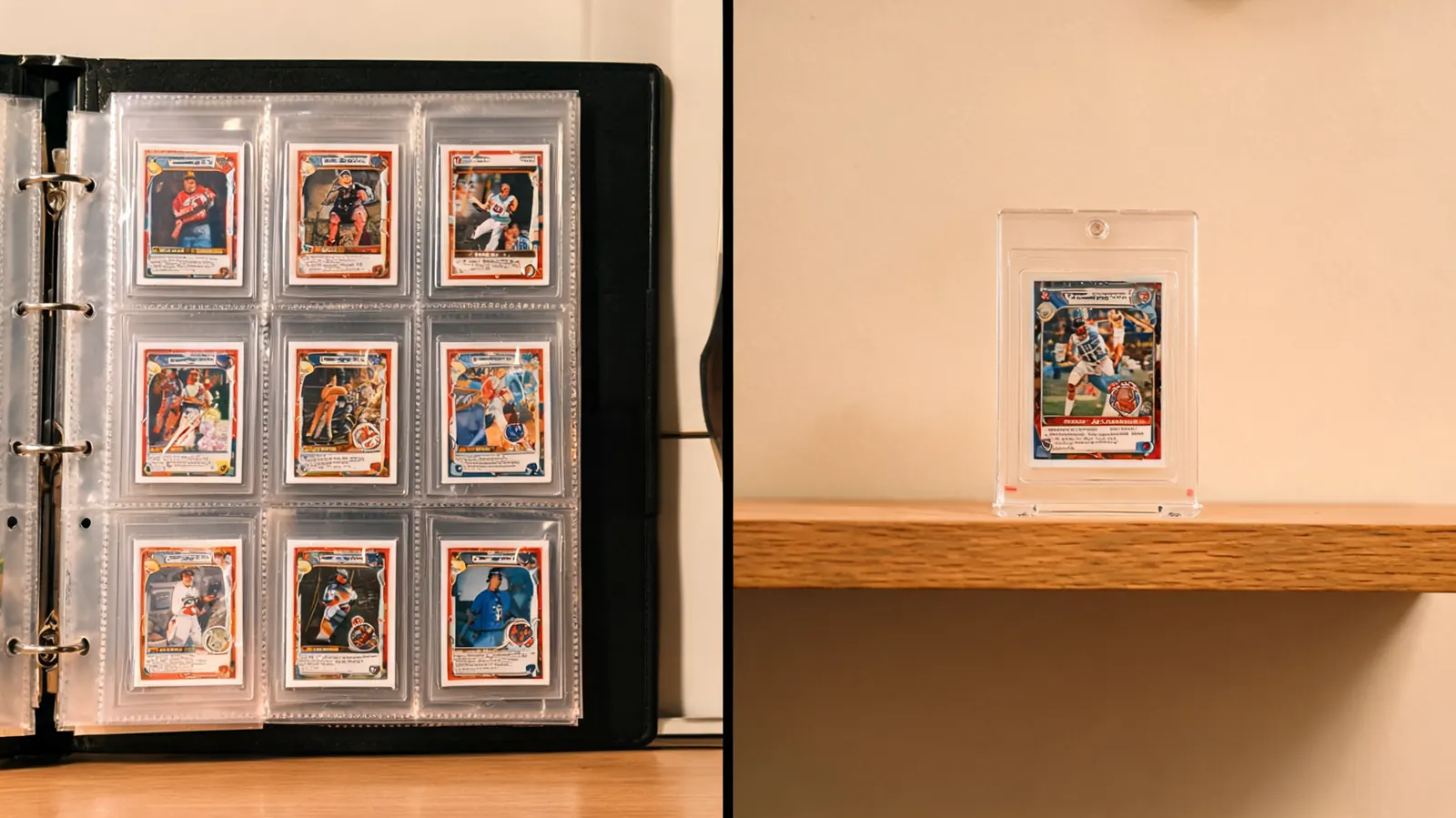
I sleeve every card that comes out of a pack. Every single one. Even bulk commons I'll never look at again. But I don't top-load everything, and I don't need to. If a card is going into a binder page for display or casual browsing, a penny sleeve is all you need. The binder's 9-pocket pages provide structure, and the card isn't getting bounced around or mailed anywhere.
Same goes for bulk storage in cardboard boxes. I have a few BCW storage boxes holding thousands of commons and mid-range parallels sorted alphabetically. Every card in there is sleeved. I'm not going to top-load 3,000 cards, and there's no reason to. The sleeve keeps surface oils and dust off the card face, and the cards are standing upright in a box that isn't moving. That's enough protection for cards with minimal financial value.
The threshold I use: if a card is worth under $5 raw and I have no grading plans for it, a penny sleeve in a binder page or storage box is sufficient. Above that, it gets a top loader too.
When You Actually Need a Top Loader
Top loaders earn their place the moment a card has real value, is being stored longer term, or is going in the mail. A rigid shell changes the risk profile completely. Cards displayed on a shelf in top loaders don't curl in humidity. Cards stacked in a box can't get corner dinged by the card next to them. Cards shipped across the country don't arrive with a crease down the middle.
I top-load anything I pulled from a box that I'm planning to sit on for a while, any rookie I grabbed at a card show, and every single card I'm prepping for a sale or trade. The Ultra Pro 3x4 is the standard size for a reason. It holds standard-sized baseball cards, Pokemon cards, and most MTG cards with no problems. For thicker cards like Pokemon full-art ex, you'll want a 55pt or 75pt loader instead of the standard 35pt-equivalent regular top loader, but the principle is the same.
Your hits deserve a rigid shell, not just a thin sleeve, grab Ultra Pro top loaders while stock lasts
Ultra Pro's 3x4 top loaders are the collector default for a reason. Rigid, clear, UV-resistant, and sized perfectly for standard cards with a penny sleeve inside. At around $5 for 25, they're not an expense worth skipping.
Amazon Check Today's Price on Amazon →Where Top Loaders Win Clearly
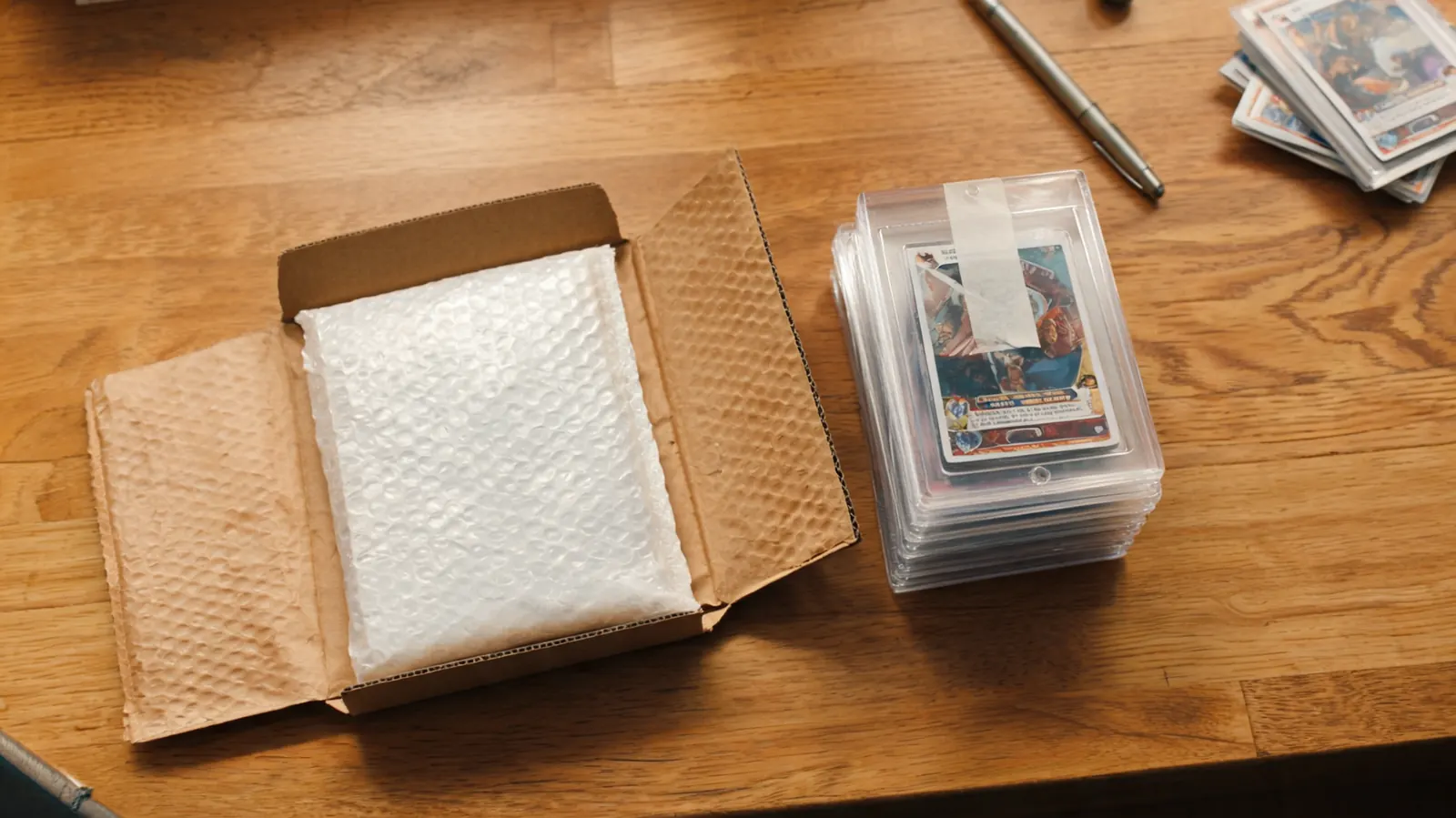
Mailing is the biggest one. I've bought cards from online sellers who shipped in a sleeve inside a regular envelope. Every single one of those cards arrived with bent corners or a ding somewhere. A rigid top loader taped at the opening and sandwiched between two pieces of cardboard inside a bubble mailer is the minimum acceptable standard for mailing a card. Period. The sleeve alone contributes nothing to postal survival.
Long-term storage is the second area where the rigid shell matters in ways a sleeve can't replicate. Cards left in penny sleeves in a hot attic or humid basement are going to warp. The sleeve moves with the card, it doesn't resist anything. A top loader holds shape and provides some environmental buffering, especially when you're stacking multiples together. Is it a perfect humidity barrier? No. But it's meaningfully better than nothing rigid around the card.
UV protection is the third, quieter advantage. Ultra Pro's top loaders are made with UV-resistant material. That matters if you're displaying a card near a window or under bright lights for extended periods. Penny sleeves offer zero UV blocking. If you have a raw card on display you care about, it should be in a top loader at minimum. A magnetic one-touch with a UV-filtered panel is even better for display, but a top loader beats a sleeve for UV resistance with no contest.
Where a Penny Sleeve Wins
Cost and volume. If you're opening a hobby box and sleeving 36 packs of cards on a Saturday night, penny sleeves are the right tool. They cost almost nothing in bulk, they go on fast, and they handle the first layer of card hygiene, which is all you need until you know what you have. Sort first, decide values, then move the keepers into top loaders.
Binder compatibility is the other area penny sleeves own. A standard 9-pocket binder page does not fit a top-loaded card. If you're building a set in a binder, every card in there should be in a sleeve, and the binder itself provides the structure. The Vault X zip binders I use for my display collections hold sleeved cards perfectly and the side-loading pages prevent cards from falling out. Top loaders have no role in a binder system.
The Real Answer: Sleeve Inside the Loader
For any card you care about, the correct answer is both, in this exact order. Slide the card into a penny sleeve. Then slide the sleeved card into the top loader. The sleeve stops the card surface from scratching against the inside of the loader. The loader stops the card from bending, corner-dinging, or getting crushed. They work in layers, and skipping either layer creates a gap in protection.
I've done this with thousands of cards now. The ones that came back dinged or scratched from storage or shipping were almost always cards where I cut one of the layers. A rookie card I sleeved but didn't top-load got corner-dinged by the card next to it. A card I top-loaded without a sleeve had surface swirls from the plastic walls when I pulled it out. Both layers matter, and the combined cost is still under thirty cents a card at current prices.
Who Should Buy the Ultra Pro Top Loaders
Any collector who is pulling cards worth more than a few dollars, storing cards they might sell or trade later, or mailing anything through USPS or eBay should have a stack of Ultra Pro top loaders on hand. At current prices for a 25-pack, they cost less than a single pack of cards and they'll protect your singles for years. The 4.8-star average across over 15,000 Amazon reviews says about everything: these are the standard because they work.
They're not the right tool for your $0.10 bulk commons in a storage box. They're not the right tool for cards going into a binder. But for everything you actually care about, they're the first thing I'd recommend after the penny sleeve itself.
Who Should Skip the Top Loaders (For Now)
If you're sorting through a bulk collection of commons and mid-range cards with no grading plans, penny sleeves alone are the right move. Buy a brick of 100 or 200 penny sleeves, sort everything, then invest in top loaders only for the cards that clear your value threshold. Buying top loaders for bulk commons is expensive and unnecessary. Get the sleeves first, sort later, top-load selectively.
Stop shipping and storing raw hits in just a sleeve, grab a 25-pack of Ultra Pro top loaders
Ultra Pro's 3x4 top loaders have been the collector default for decades. Rigid, UV-resistant, penny-sleeve compatible. If you're prepping cards for sale, trade, or long-term storage, these belong in your supply drawer.
Amazon Check Today's Price on Amazon →