
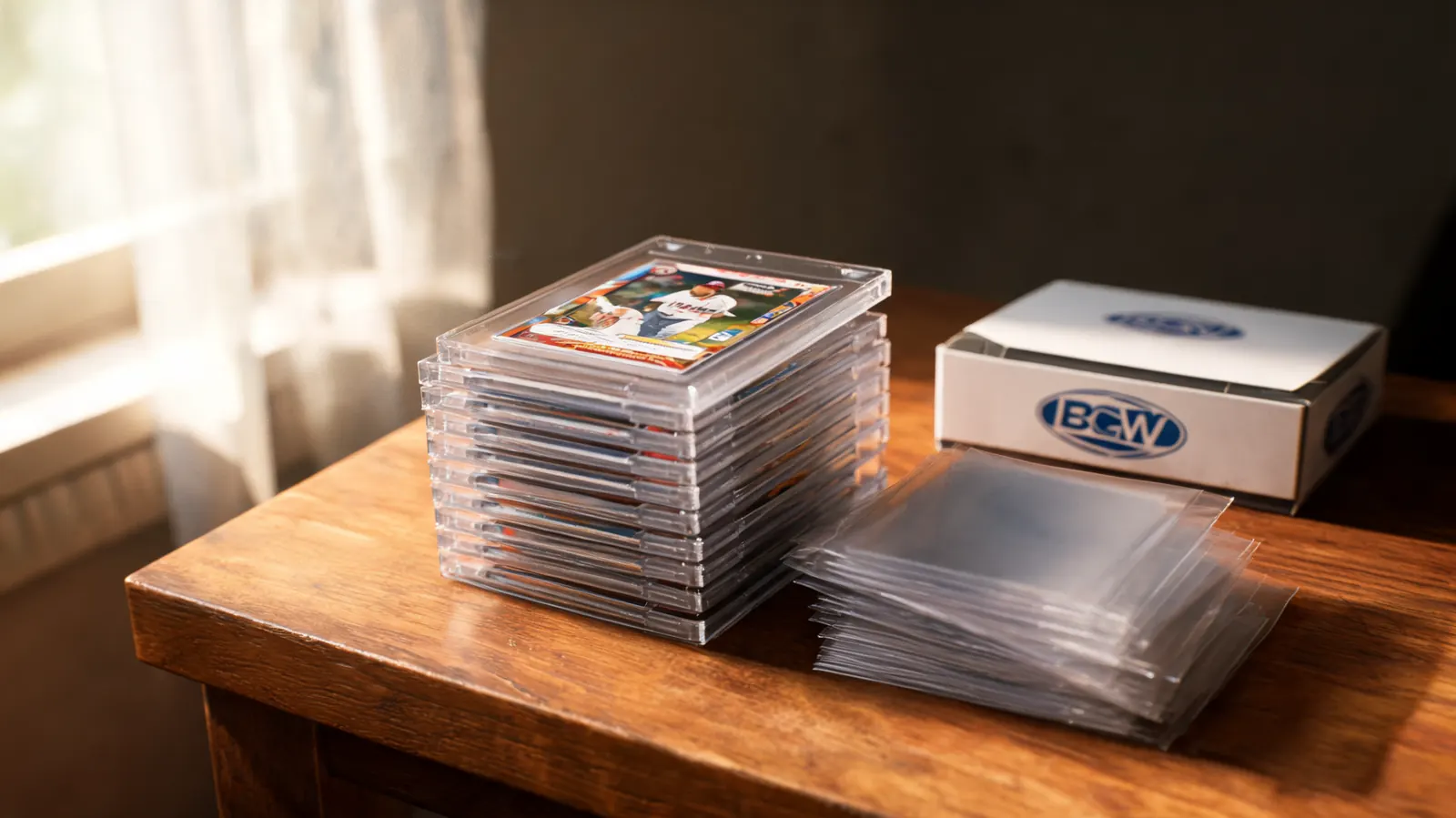
Two years ago I counted the top loaders I had on hand and got to about 340 before I stopped counting. Today that number is somewhere past 2,000, spread across shoeboxes of baseball cards, binders of Pokemon pulls, and a dedicated row in my storage shelf for anything MTG worth protecting. The Ultra Pro 3x4 standard top loader is in almost all of them. I did not set out to become an Ultra Pro loyalist. I got there the same way most collectors do: I bought a cheaper alternative once, watched a 1989 Topps Ken Griffey Jr. slide around in a bag that was barely rigid, and went back to the thing that actually works.
This review is based on two years of real daily use across baseball cards, Pokemon, and MTG. I am not going to tell you these are perfect. But I will tell you exactly what holds up, what to watch for, and when you need to step up to a thicker variant.
The Quick Verdict
The workhorse top loader for 95% of modern card collecting. Clarity stays strong, rigidity is real, and the price per unit is hard to argue with when you're protecting hundreds of cards at once.
Amazon Check Today's Price →Still using penny sleeves alone on cards worth protecting? Here's the fix.
Ultra Pro 3x4 top loaders come 25 per pack and cover the vast majority of modern standard-thickness cards. 4.8 stars from over 15,000 reviewers. If you're building or sorting your collection today, these are the ones to grab.
Amazon Check Today's Price on Amazon →How I've Used Them
My collection leans heavy into vintage and modern baseball, with a secondary shelf of Pokemon sets I've been building since the Sword and Shield era. I buy, trade, and occasionally sell, which means cards move in and out of top loaders constantly. They go into team bags for shipping, they sit in cardboard storage boxes stacked in the closet, and some of them get handled every weekend when I'm sorting or updating my collection binder. The 35pt Ultra Pro top loader is my default for anything I'm not actively displaying in a binder or putting in a one-touch.
I bought my first 100-pack from a local card shop back when I was still figuring out how to organize the 1,400 cards I'd inherited from my uncle. Since then I've gone through probably eight or nine of those 100-packs, plus a handful of 25-packs when I needed just a few for a specific project. That's enough cards processed through these things that I can give you a real answer on how the plastic holds up over time.
The short answer: it holds up well. The longer answer takes a few sections.
The Right Way to Insert a Card (Most People Skip This)
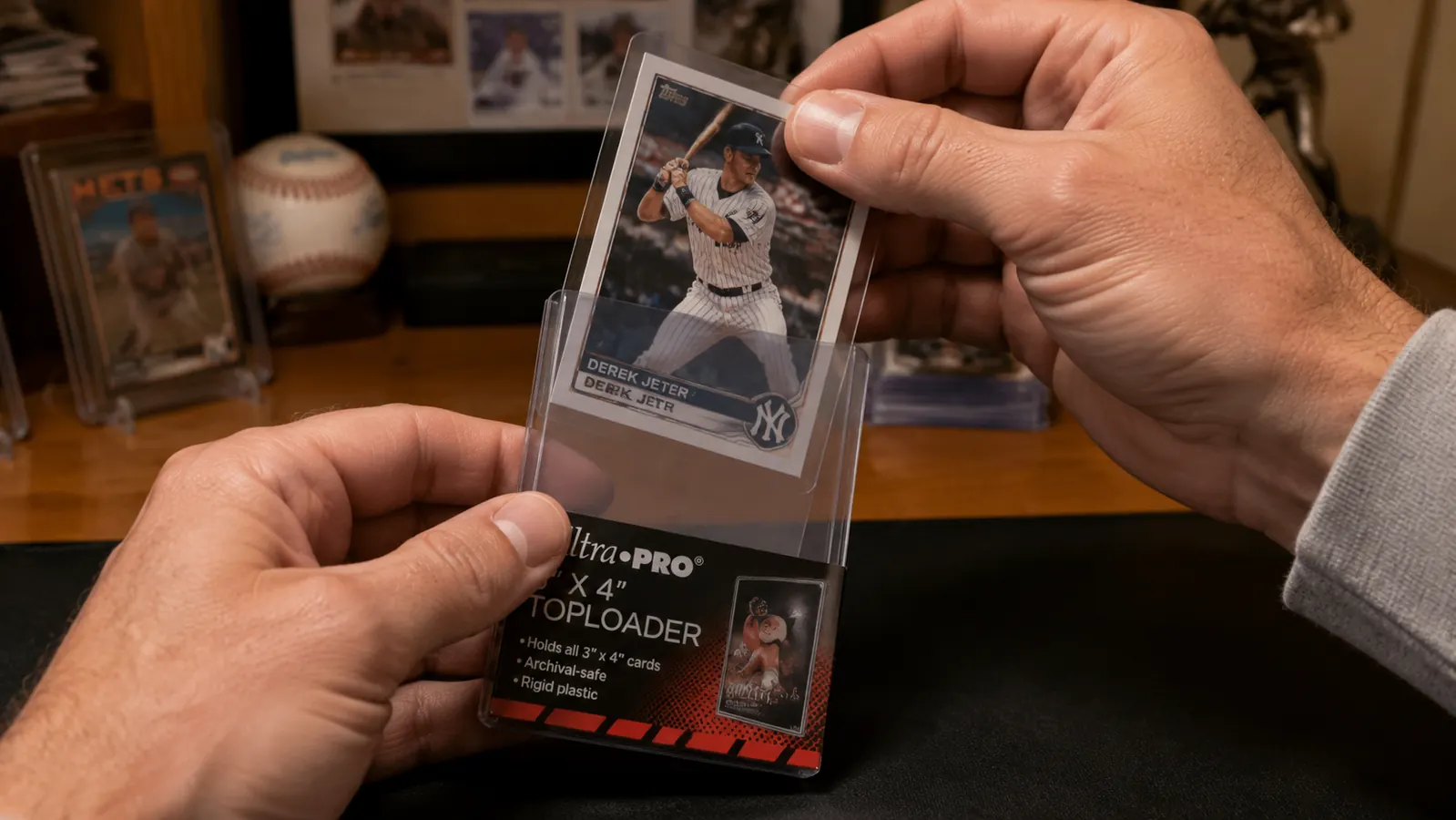
Before I get into the product itself, I want to cover the single biggest mistake I see new collectors make with top loaders: inserting a bare card. Never slide a raw card directly into a top loader. The inside walls have enough friction to catch card edges and cause micro-bends that you will not notice until you pull the card back out and hold it under light. The fix is simple: penny sleeve first, always. Slip the card into a soft penny sleeve, then slide the sleeve into the top loader from the top opening. The sleeve acts as a buffer. The card glides in smoothly and sits centered without any edge contact on the rigid plastic walls.
Once it is in, do not force the sleeve all the way to the bottom. Let it sit about a quarter inch from the top edge so there is a small gap for the sleeve to compress into when you flip the holder over. Cards should not rattle inside. If they do, your penny sleeve is too thin for the card or you have a card that is thinner than standard, which happens occasionally with older pre-1980 vintage cards. For those, use a thicker penny sleeve or double-sleeve before inserting.
Clarity Over Time: Ultra Pro vs Cheap Off-Brand Top Loaders
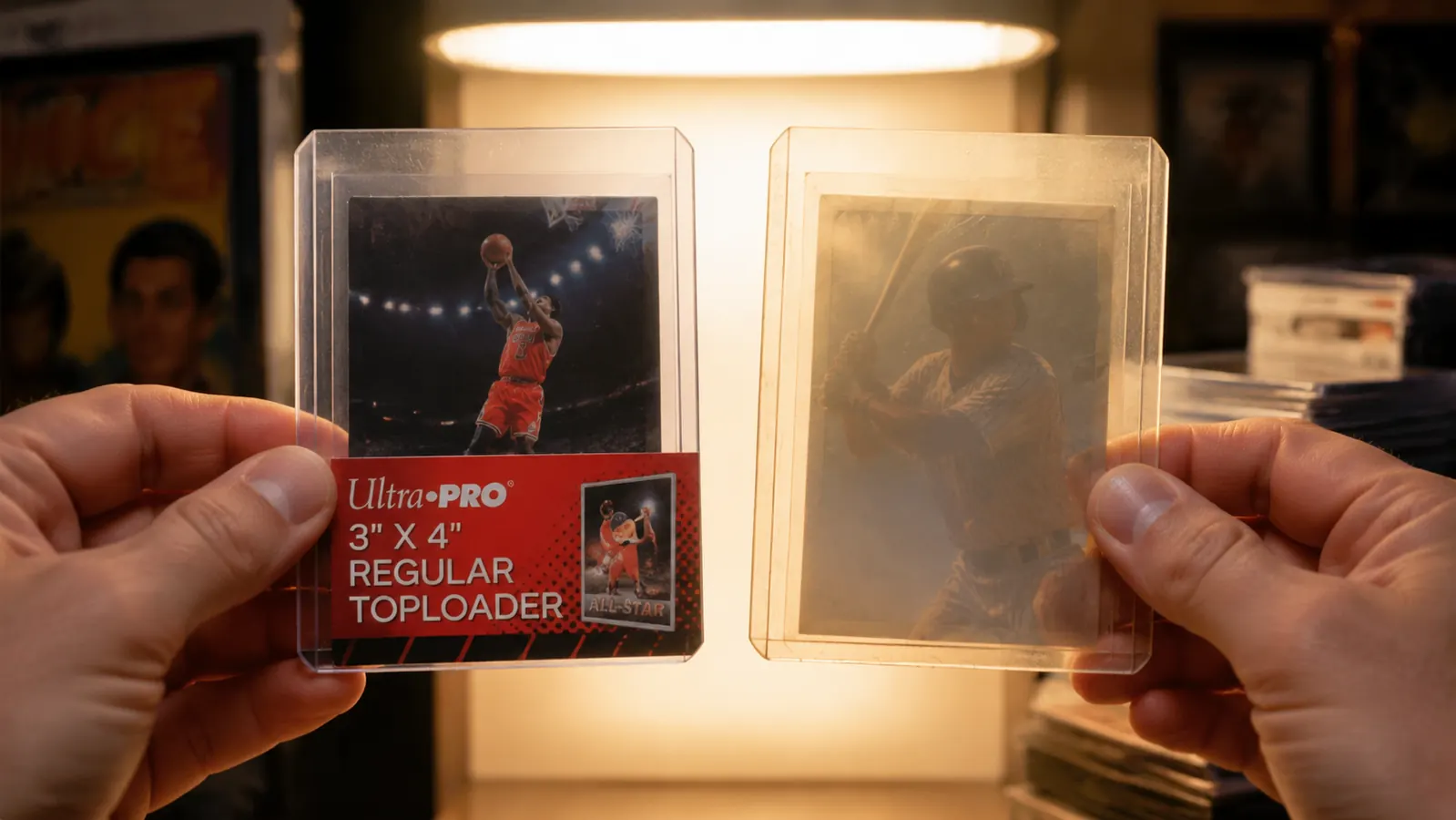
This is where Ultra Pro earns its reputation. I have compared them side by side against the no-name top loaders that show up in bulk eBay lots, the kind you get 200 of for $12. When both are brand new, the difference is small but visible. The Ultra Pro plastic is clearer, with less of that faint blue-grey tint you see in cheaper versions. After six months of storage in a cardboard box, the difference becomes significant. The cheap loaders start to develop a faint haze on the interior walls, especially where the card makes contact with the sleeve. Ultra Pro stays clear.
I ran a rough test: I pulled fifteen of my older Ultra Pro loaders that had been in storage for about eighteen months and held them up next to fifteen off-brand loaders I bought a year ago. The Ultra Pros looked nearly identical to new. The off-brands had a noticeable cloudiness that made the card harder to see clearly. If you are storing cards you intend to photograph or grade in the future, that clarity difference matters a lot.
After eighteen months in storage, my Ultra Pro loaders looked nearly identical to new. The off-brand alternatives had developed enough haze that I could not read the card number through the plastic.
Rigidity and Card Protection: What Actually Keeps Cards Safe
A top loader is only as useful as its rigidity. The whole point is to give a card a hard outer shell that distributes pressure from stacking, shipping, and handling. Ultra Pro's 3x4 standard top loader is stiff enough that I can press on the front face fairly hard and the card inside does not flex. That matters when you have fifty top-loaded cards rubber-banded together in a shipping box and the postal carrier does something creative with the package.
The corners of the Ultra Pro are the weak point, and this is true of every rigid top loader I have used. A sharp corner impact at an angle can crack the plastic, usually at the bottom two corners. I have had this happen twice in two years, both times from drops onto hard floors rather than shipping damage. The cards were unharmed because the sleeve plus the remaining rigid walls still did their job. That said, if you are storing particularly valuable cards, a top loader goes inside a team bag, full stop. The bag catches the loose shards if the plastic cracks and keeps the card contained.
Thickness Guide: When to Step Up from the Standard 35pt
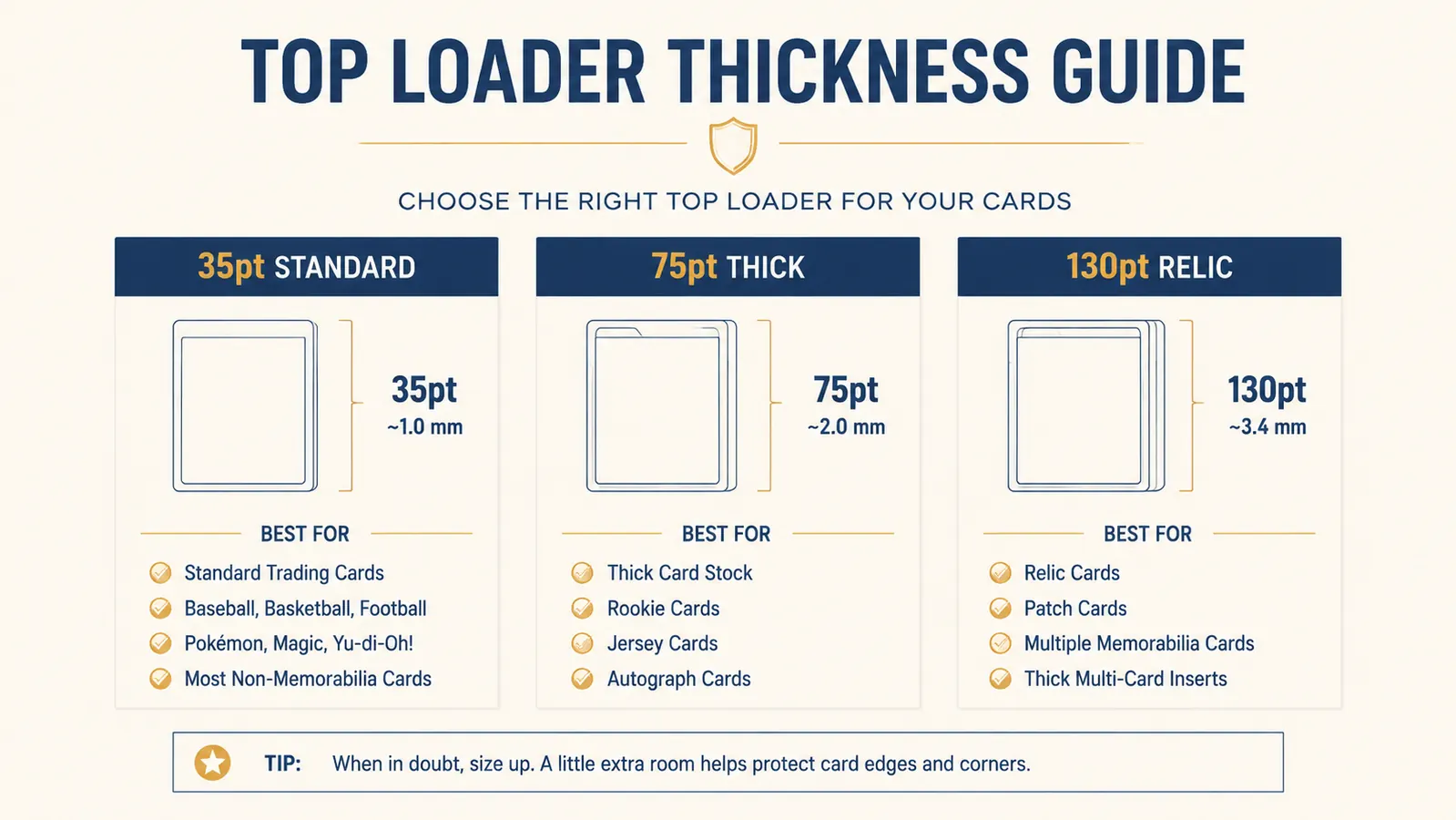
The 35pt measurement refers to the thickness of card the holder is designed for, measured in points (thousandths of an inch). Modern standard cards, including current Topps baseball, standard Pokemon cards, and most MTG base set cards, are right around 35pt. The standard Ultra Pro 3x4 fits these perfectly with a penny sleeve inside. There is minimal rattle and the card sits flat.
Where collectors get into trouble is with thicker cards. Here is the breakdown I follow based on two years of sorting through different card types. For standard modern singles across baseball, basketball, football, Pokemon, and MTG, the 35pt is correct. For thicker parallels and foil cards, particularly thicker Pokemon EX and GX cards, some modern refractor parallels from Topps Chrome, and foil rares from MTG sets, I step up to a 75pt top loader. These cards can measure 55pt to 70pt and will buckle slightly inside a 35pt holder if you try to force them in.
For relic cards, jersey cards, and auto-relic dual patch cards, you are looking at 130pt or higher. I have a 2022 Topps Triple Threads auto-relic jersey card that measures about 120pt and would destroy a standard 35pt holder. For vintage cards from the 1960s and 1970s with thicker cardstock, measure first. Some pre-1975 Topps cards are closer to 55pt to 65pt and need the 75pt holder. The standard 35pt fits most cards from 1980 onward without issue.
The Team-Bag-and-Tape Ritual for Shipping
Selling and trading means shipping, and shipping top-loaded cards has a right way and a wrong way. The wrong way is dropping a bare top loader into a bubble mailer and hoping for the best. I have received cards shipped that way and watched them slide around inside the mailer until a corner of the top loader punched through the bubble wrap padding and bent itself into a new angle. The card survived but barely.
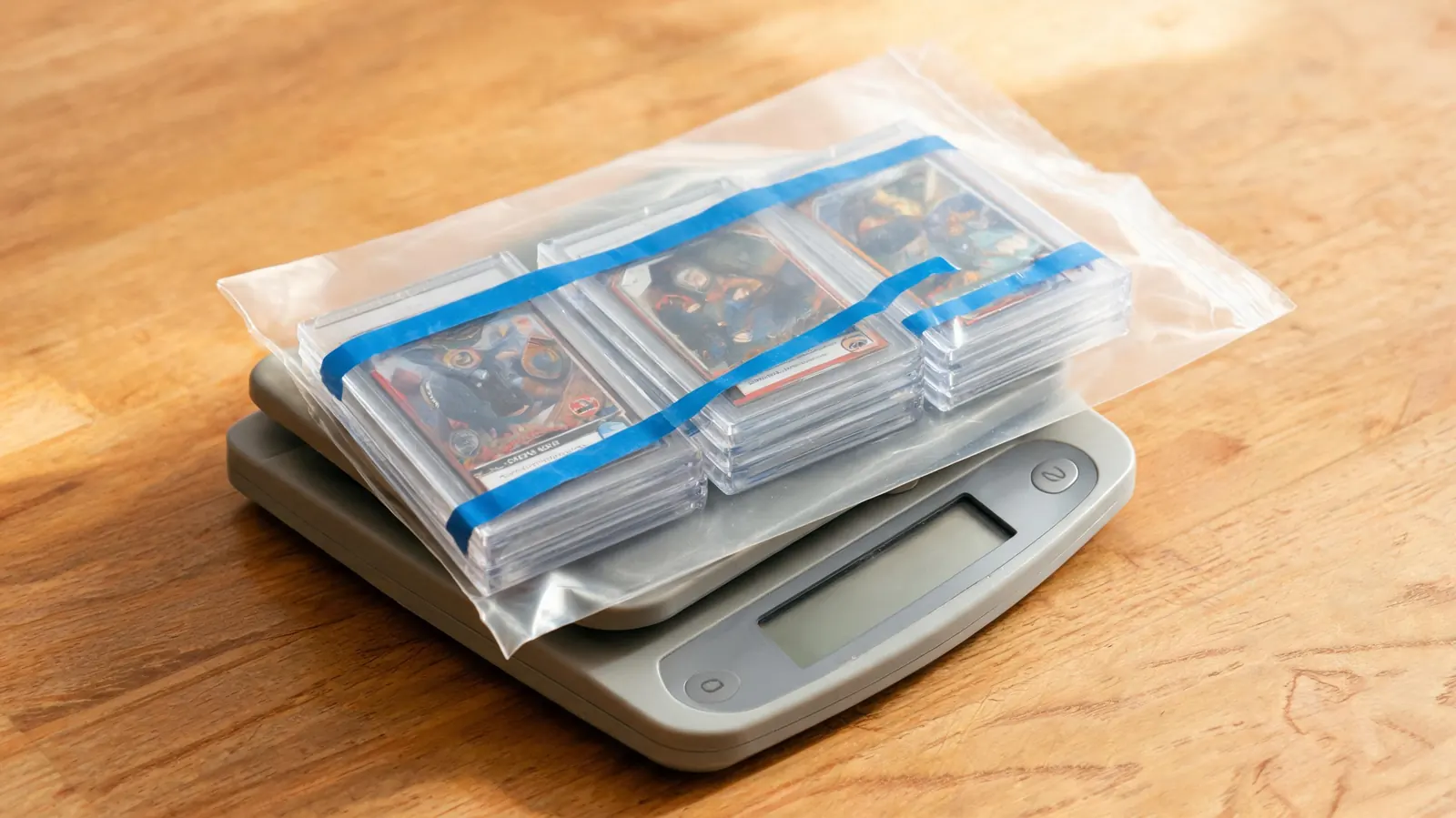
The right way is a three-step ritual I have used on every card I've shipped for the past eighteen months. First, the card goes into a penny sleeve. Second, the penny sleeve goes into the top loader. Third, I seal the open top of the loader with a small strip of blue painter's tape folded over the edge. Blue painter's tape is low-tack, does not leave residue on the plastic, and will not degrade the card inside from adhesive outgassing. Then the sealed top loader goes into a team bag, the bag gets sealed, and the whole unit gets sandwiched between two pieces of cardboard cut from cereal boxes inside the bubble mailer. This approach has produced zero damaged-in-transit cards in approximately 140 shipped packages.
Managing 500-Plus Top Loaders: A System That Actually Works
Once you have a collection of any real size, the top loaders themselves become a storage problem. I currently have around 600 in active use and another 200 or so empty in reserve. The active ones live in BCW monster boxes arranged by card category: vintage baseball in one section, modern baseball in another, Pokemon in a third, MTG in a fourth. Each top loader gets a small strip of white address label on the bottom edge with a penciled category code so I can pull cards without reading every label.
The empty reserves stay in their original packaging, stacked flat in a small plastic bin on my shelf. When I rip a pack and pull something worth protecting, the process is immediate: penny sleeve from the penny sleeve drawer, top loader from the bin, card goes in while I'm still at the break table. Waiting to sleeve cards is how corners get dinged. The system is only useful if you actually use it in the moment.
One thing I changed after my first year was separating cards I intend to grade from cards I am just storing. Cards going to PSA or SGC do not live in top loaders for long. They go into Card Saver 1 semi-rigid holders, which is what the grading companies prefer for submission. Top loaders are for long-term personal storage, display, and shipping. Get that separation right and you stop reaching for the wrong holder at the wrong time.
What I Liked
- Clarity holds up after 18-plus months in storage, much better than off-brand alternatives
- Rigid enough to protect cards from stack pressure and casual handling
- Fits standard 35pt modern cards from baseball, Pokemon, MTG, and basketball perfectly with a penny sleeve
- 4.8-star rating from over 15,000 Amazon reviewers: not a small sample size
- Low cost per unit, especially in the 100-pack, making it practical to protect bulk collections
- Open-top design makes insertion and removal easy without tools
Where It Falls Short
- Corners can crack on hard drops; for high-value cards, always pair with a team bag
- Only covers standard 35pt cards: thicker variants require separate 75pt or 130pt purchases
- No built-in closure: you need painter's tape or a team bag seal for safe shipping
- Single-use feel: the plastic does pick up scratches over time from repeated card insertions
Who This Is For
The Ultra Pro 3x4 top loader is the right answer for any collector building or maintaining an active collection of modern standard-thickness cards. If you are buying singles, ripping packs, sorting bulk, or shipping cards to buyers, this is the format you need. It is affordable enough to use on mid-value cards, not just your best pulls, which is the habit that actually protects a collection. It is also widely available, so you are not hunting down specialty suppliers when you run out mid-project. If you collect modern baseball, Pokemon, or MTG in any serious volume, you should have at least 100 of these on hand at all times.
Who Should Skip It
If your collection is exclusively high-value singles headed to PSA or SGC, you should be using Card Saver 1 semi-rigid holders instead. Grading companies prefer the flexibility of Card Savers for submission; top loaders can be harder to remove cards from without touching the card surface. If you are storing thick relic or jersey cards, you need the 130pt version, not the standard 35pt. And if you are looking for a long-term display solution for your best cards, a magnetic one-touch holder gives you the UV protection and visual presentation that a top loader cannot. Top loaders are a storage and transport tool, not a display tool. Know the distinction and you will never grab the wrong thing again.
Two years later, this is still what I reach for first when a card needs protecting.
Ultra Pro 3x4 top loaders: 25 per pack, rated 4.8 stars from 15,000-plus collectors. The workhorse of any serious collection. Check today's price on Amazon and stock up before you run out mid-session.
Amazon Check Today's Price on Amazon →