
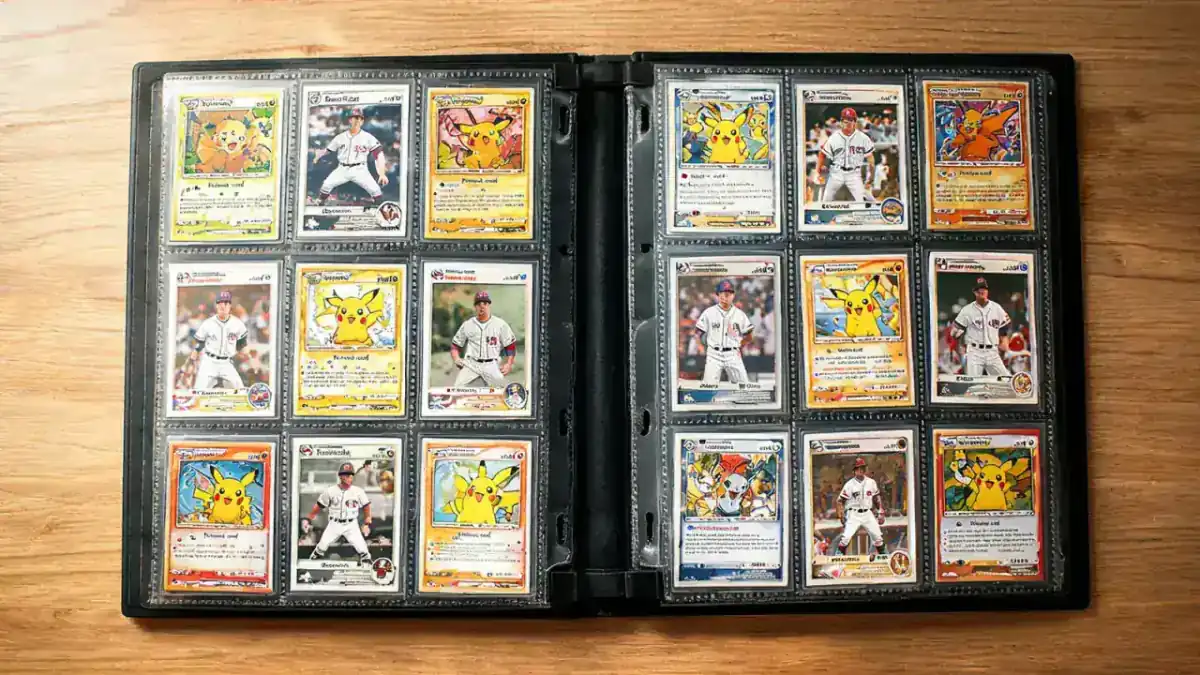
My first binder was a disaster. I bought a cheap three-ring binder from an office supply store, loaded it with top-loading pages, and stuffed roughly 400 cards in without any plan. Within six months I had bent corners from cards sliding around, warped pages from uneven pressure, and I could never find anything without flipping through the entire binder front to back. Sound familiar? This guide is the system I wish I had built from the start.
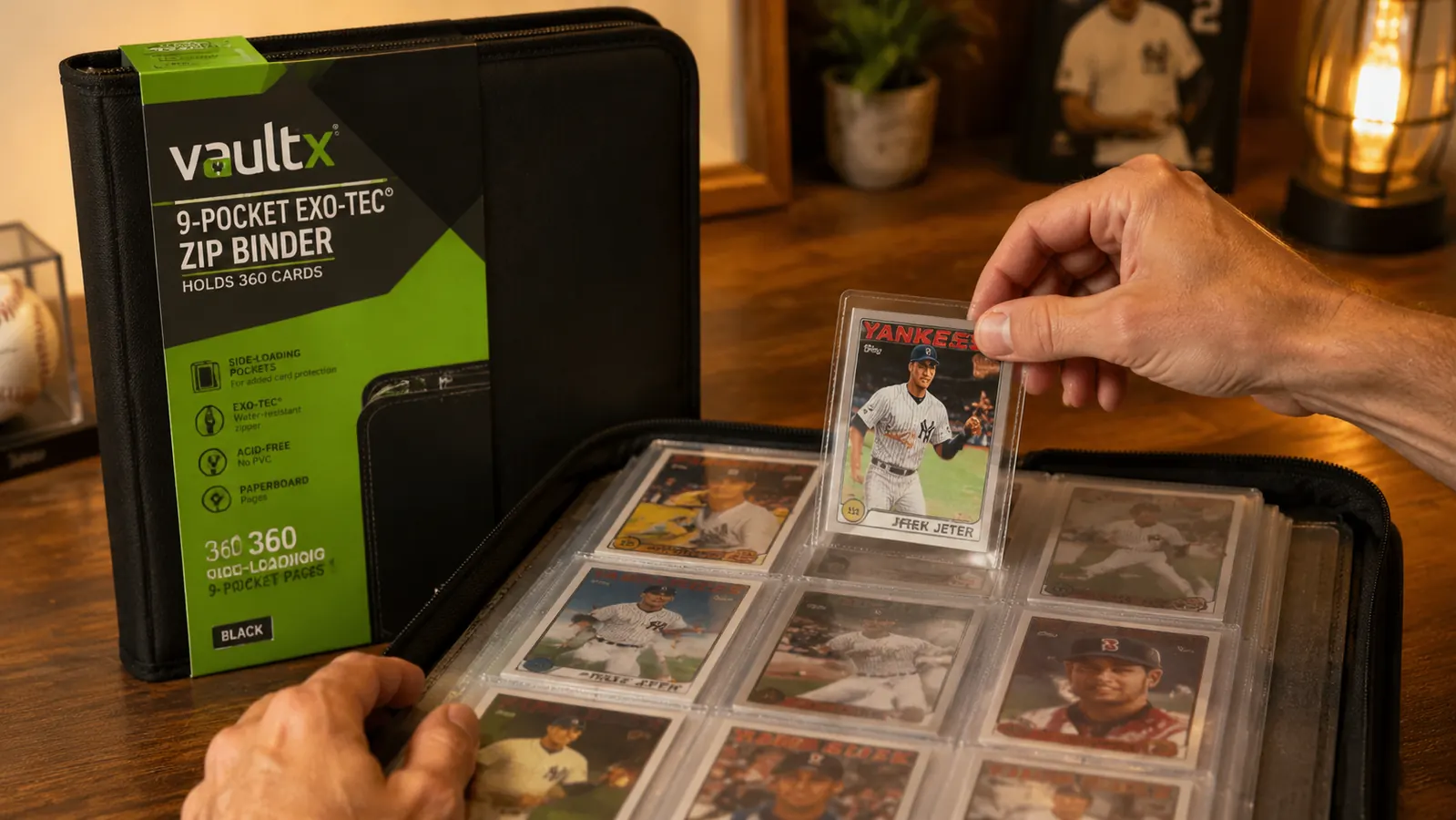
The binder I use now is the Vault X 9 Pocket Zip Binder. It has 20 side-loading pages out of the box and holds 360 standard cards. The side-loading pages are what make the difference. Cards cannot fall out when the binder is tilted or dropped, and the zip closure keeps dust and humidity from creeping in over time. I have three of them running across my Pokemon base set collection, my MTG Commander staples, and a baseball rookie binder. Before I tell you how to fill them properly, let me walk you through the setup steps that actually matter.
Skip the cheap binder mistake. The Vault X holds 360 cards with side-loading pages and a zip close.
4.8 stars from 8,280 collectors. The pages stay put, the zipper holds, and the Exo-Tec material doesn't crack like cheaper alternatives do after a year of handling.
Amazon Check Today's Price on Amazon →Step 1: Pick Your Sort Order Before You Touch a Single Card
The biggest mistake collectors make is opening the binder first and sorting as they go. You end up halfway through and realize you want to rearrange everything. Decide your sort logic before you start. Here are the four that actually work, depending on what you collect.
By set is the most common and works well for Pokemon and MTG. Cards from the same print run stay together, and the set number printed in the card's bottom corner becomes your sequence. If you are building toward complete sets, this is the only sort that makes sense. By player is the standard for baseball and basketball collectors. One player per page or section, organized however you want within that grouping. This works especially well for player collectors who are hunting specific rookies and parallels. By rarity keeps your holo, rare, and ultra-rare cards separated from commons and uncommons. The advantage here is being able to flip straight to your best cards for trading sessions. By team organizes baseball or basketball collections by franchise. Works well if you are a team collector or live and die with one organization.
Pick one sort order and stick with it for the entire binder. Hybrid systems where you sort by set on even pages and by player on odd pages always fall apart by page 15. Make the call before you open the binder.
Step 2: Pre-Sort the Cards Into Stacks on a Table First
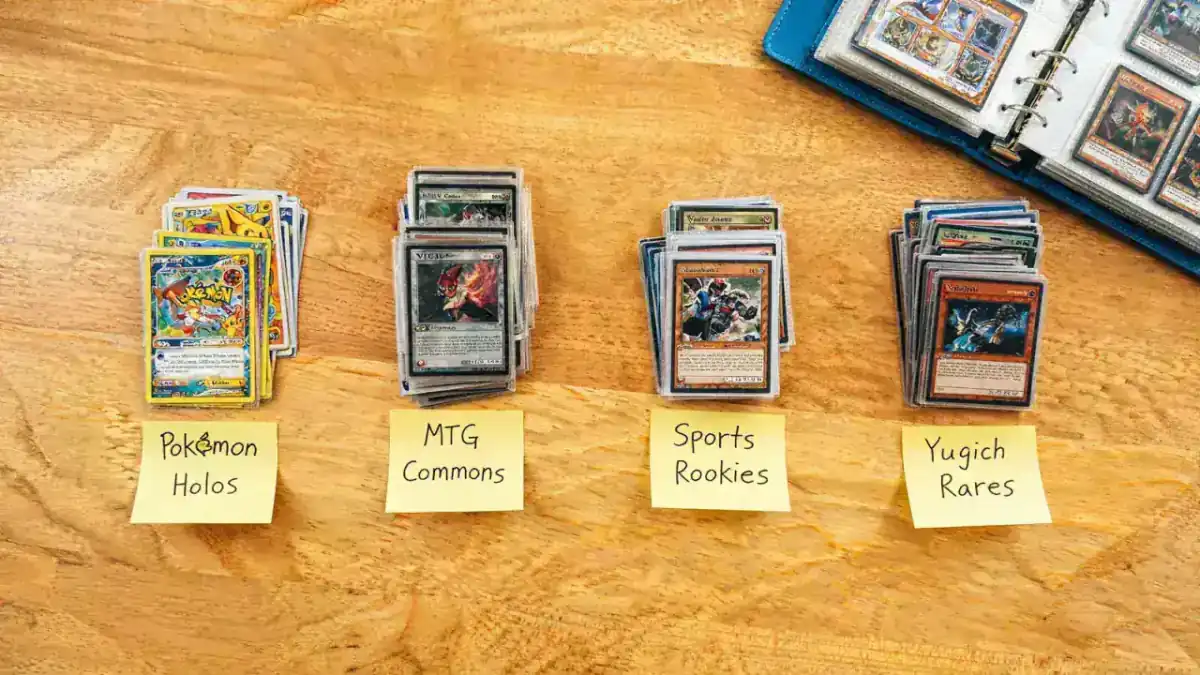
Once you know your sort order, spread all the cards out on a flat surface and build physical stacks before loading anything. If you are sorting 500 cards by set, you might end up with 12 to 15 stacks. For a player sort, each player gets their own pile. This step takes 20 to 30 minutes on a 500-card lot, but it cuts your actual loading time in half and prevents you from having to pull cards back out to insert something you missed.
Use small sticky notes as temporary labels on each stack so you can step away and come back without losing your place. Once the stacks are finalized and ordered left to right in the sequence they will appear in the binder, you are ready to load.
Step 3: Insert Cards into Side-Loading Pages the Right Way
Side-loading pages are slightly less intuitive than top-loaders if you have never used them before. The pocket opening faces the spine of the binder, not the top. You slide the card in from the side, angling it slightly so the near edge clears the pocket lip before letting the card fall flat. Do not force it straight in. Angle, then flatten. If you try to push a card in parallel to the page you will catch the corner and create a micro-bend.
Fill all nine pockets on a page before moving to the next one. Leaving empty pockets mid-page creates uneven pressure that can warp the page over time if the binder is stored standing upright. If you run out of cards before filling a page, put that page at the back. Partially filled pages belong at the end, not scattered through the middle of the binder.
Should cards be sleeved before going into the binder? For common and uncommon cards, no. For rare cards, holos, or anything you actually care about, yes. A standard penny sleeve keeps the surface of the card from picking up micro-scratches from the page material over years of use. Do not use top loaders or thick holders inside binder pages. They create pressure that will permanently crease adjacent pages and eventually crack the pockets.
Fill all nine pockets before moving to the next page. Half-empty pages stored upright warp the page over time, and warped pages start bending cards.
Step 4: Page Layout Strategy for Different Collection Sizes
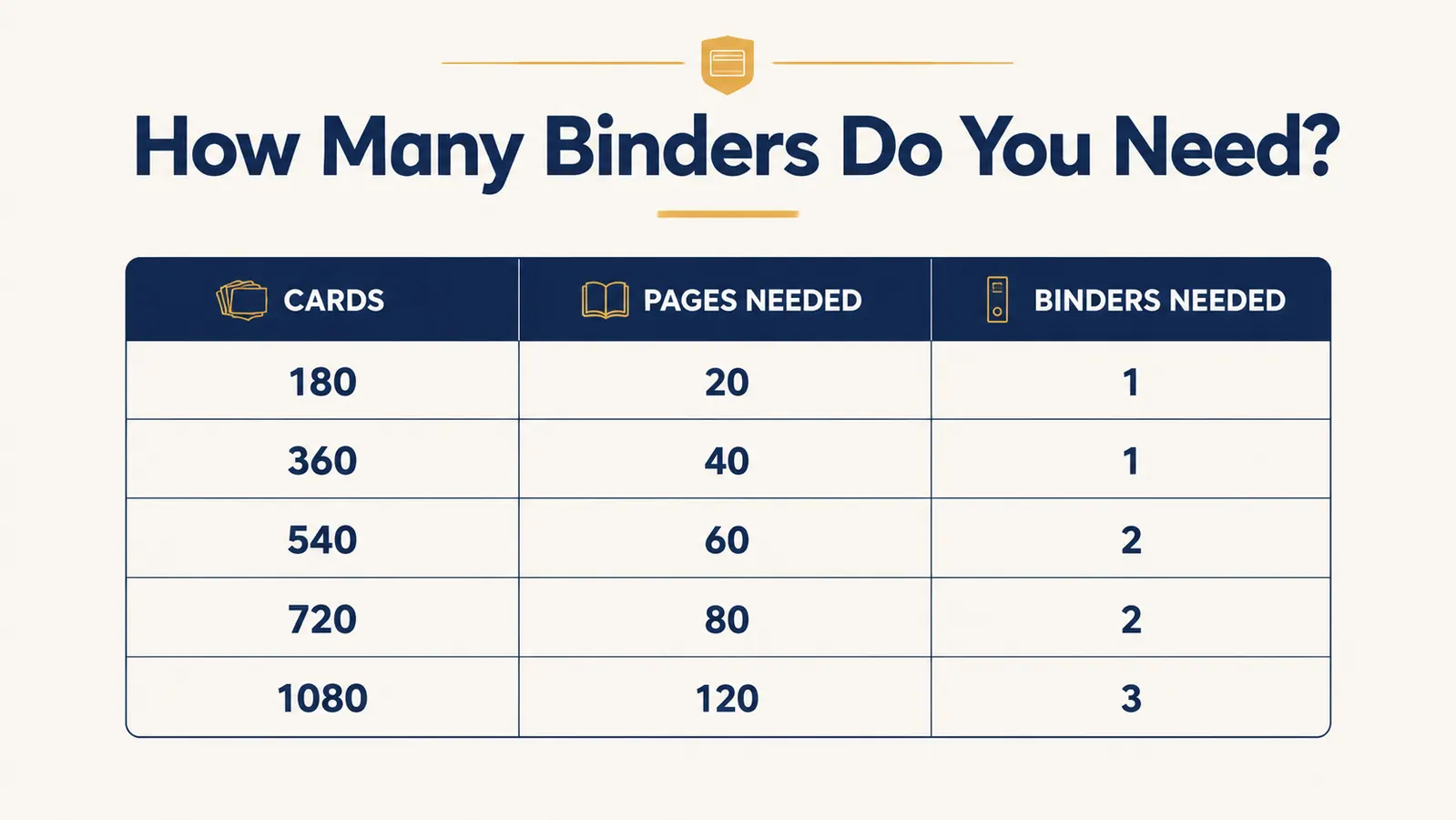
A single Vault X binder holds 360 cards across 20 pages of 9 pockets each. Here is how that maps to real collection sizes so you know how many binders you need before you buy.
For 180 cards you need 20 pages, which fits exactly in one Vault X binder. For 360 cards, one binder, all 20 pages full. For 540 cards you need two binders, with the second one half full. For 720 cards that is two full binders. For 1,080 cards you are looking at three binders. A 1,000-card lot, which is a common bulk purchase size for baseball cards, will fit across three binders with about 60 cards to spare for overflow. Budget accordingly before you start.
On page layout within a binder, you have two approaches. The first is singles-per-page: each page holds exactly one row per player, one row per set block, or one row per team. Clean, easy to navigate, but you use more pages. The second is full-set pages: an entire page of 9 cards from the same set or player, which is how master set collectors typically organize. Both work. The choice depends on whether you prioritize easy browsing or efficient use of space.
Step 5: Dividers and Labels So You Can Actually Find Things Later
Blank index cards cut to the size of a trading card make inexpensive dividers. Write the set name, player name, or team on the top edge with a fine-tip marker and slip them into the first pocket of each new section. They will stick up just above the pocket opening and act as a visual tab when you flip through. Dollar store index cards work fine. You do not need to buy branded card dividers unless you want to.
For binder spines, a small strip of masking tape with the collection name written in marker takes five seconds and saves you from pulling three binders off the shelf to find the right one. Label the front too if you have more than two binders with similar contents. I use a label maker for my MTG binders and hand-writing for everything else. Either works.
Step 6: What Should Never Go in a Binder
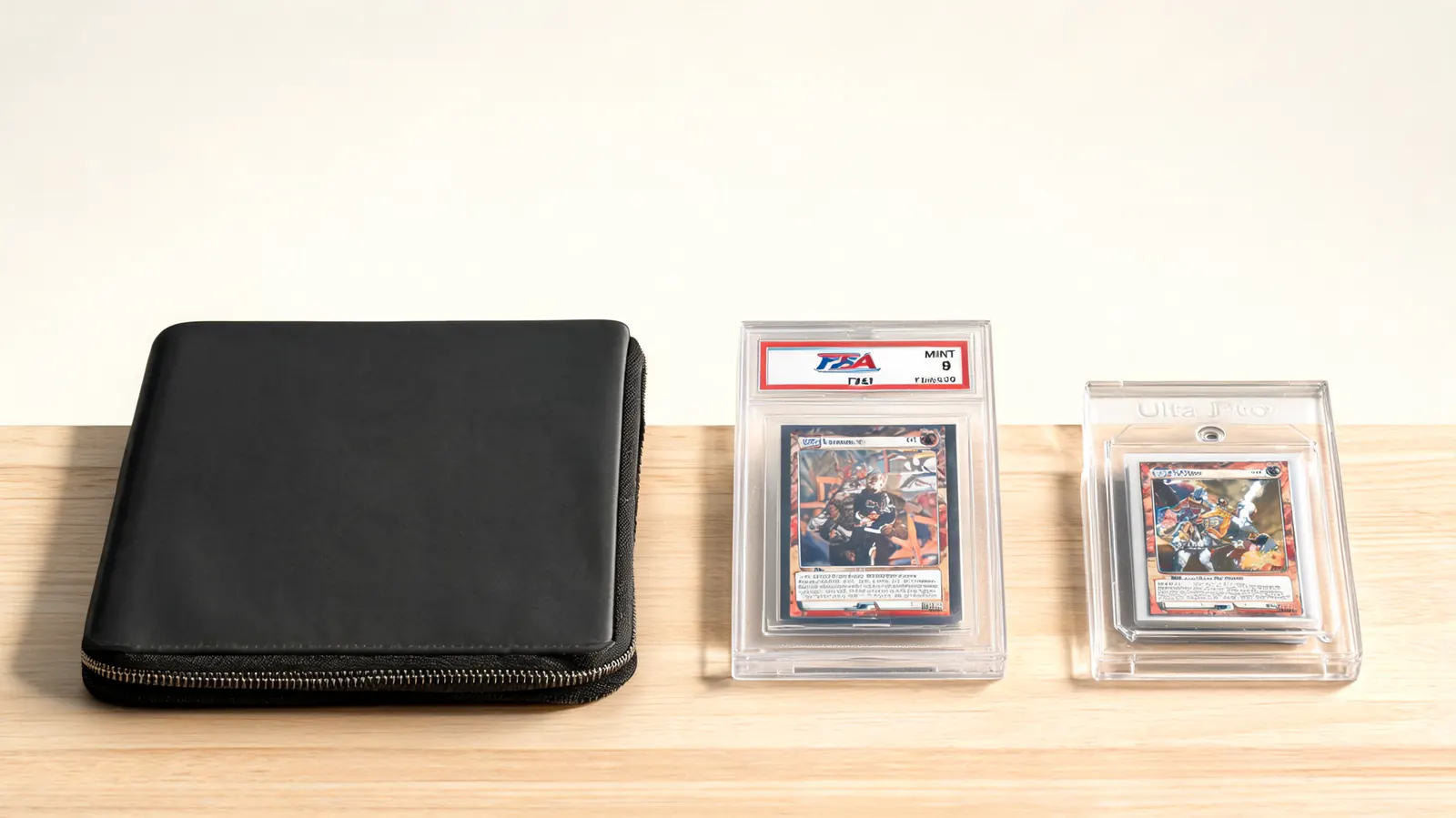
Graded slabs stay out of binders. Full stop. A PSA 9 or 10 card in a graded case is too thick for any 9-pocket page and the rigid case will crack the page pockets within a few insertions. Graded cards belong in acrylic cases, display stands, or slab-specific storage boxes.
Ultra-thick relics and jersey cards stay out of binders. Standard binder pages are designed for cards between 20pt and roughly 60pt in thickness. Patch cards, thick relics, and anything with embedded materials sit in the 130pt to 200pt range. They do not fit. Force them in and you will split the pocket seam. These go in magnetic one-touch holders or screw-down cases and live in a box, not a binder.
Any card worth more than about $100 in raw form should be seriously considered for a rigid holder instead of a binder. A binder is a low-friction browsing tool, which means the card gets handled more often. More handling means more risk of surface wear, corner dings from page friction, and humidity exposure if the binder is stored in a less than ideal spot. High-value raw cards belong in a one-touch or top loader until you decide whether to grade them or keep them raw in protected storage.
Step 7: The Six-Month Maintenance Ritual
Binders need a check-in every six months, especially if they are stored in a basement, garage, or anywhere with humidity swings. Pull the binder off the shelf and flip through every page looking for two things: warping and page yellowing.
Page warping happens when moisture gets into the binder over time or when the binder has been stored with uneven pressure on one side. Warped pages press against cards and can create a permanent curve in the card if the pressure is left in place for months. If you see any page warping, move those cards to a fresh binder and discard the affected pages. Do not try to flatten warped pages. They do not fully recover.
Page yellowing on older PVC-based pages is a sign of off-gassing, which can damage cards over years of contact. Vault X pages are acid-free and PVC-free, which is one of the reasons I use them instead of older generic binder pages. If you have cards in older pages with any yellowing, move them. The risk is not worth it for cards you actually care about. A fresh set of pages costs a few dollars. Replacing a card that has been chemically damaged by bad pages is not possible.
The six-month check takes about 15 minutes per binder. Put it in your calendar now. Collections that get checked stay in good condition for decades. Collections that sit untouched for three to five years can develop problems that are not reversible.
What Else Helps
If your collection outgrows binders, the logical next step is a BCW storage box for bulk cards that do not need to be in a browsing format. Binders handle your display and reference collection. Storage boxes handle everything else. The two systems work together rather than competing. For cards headed toward PSA or SGC submission, they come out of the binder entirely and go into Card Savers before shipping. See the linked how-to guide for organizing baseball cards with top loaders for how that sorting process works before you decide which cards go into which format.
The Vault X 9 Pocket Zip Binder is where I'd start if you're setting up your first proper binder system.
Side-loading pages, zip closure, Exo-Tec material, and 20 pages included. Holds 360 standard cards and comes in multiple colors. Rated 4.8 stars from over 8,000 collectors.
Amazon Check Today's Price on Amazon →